Program Notes
Shéhérazade & Sibelius
NOV 6-8, 2026
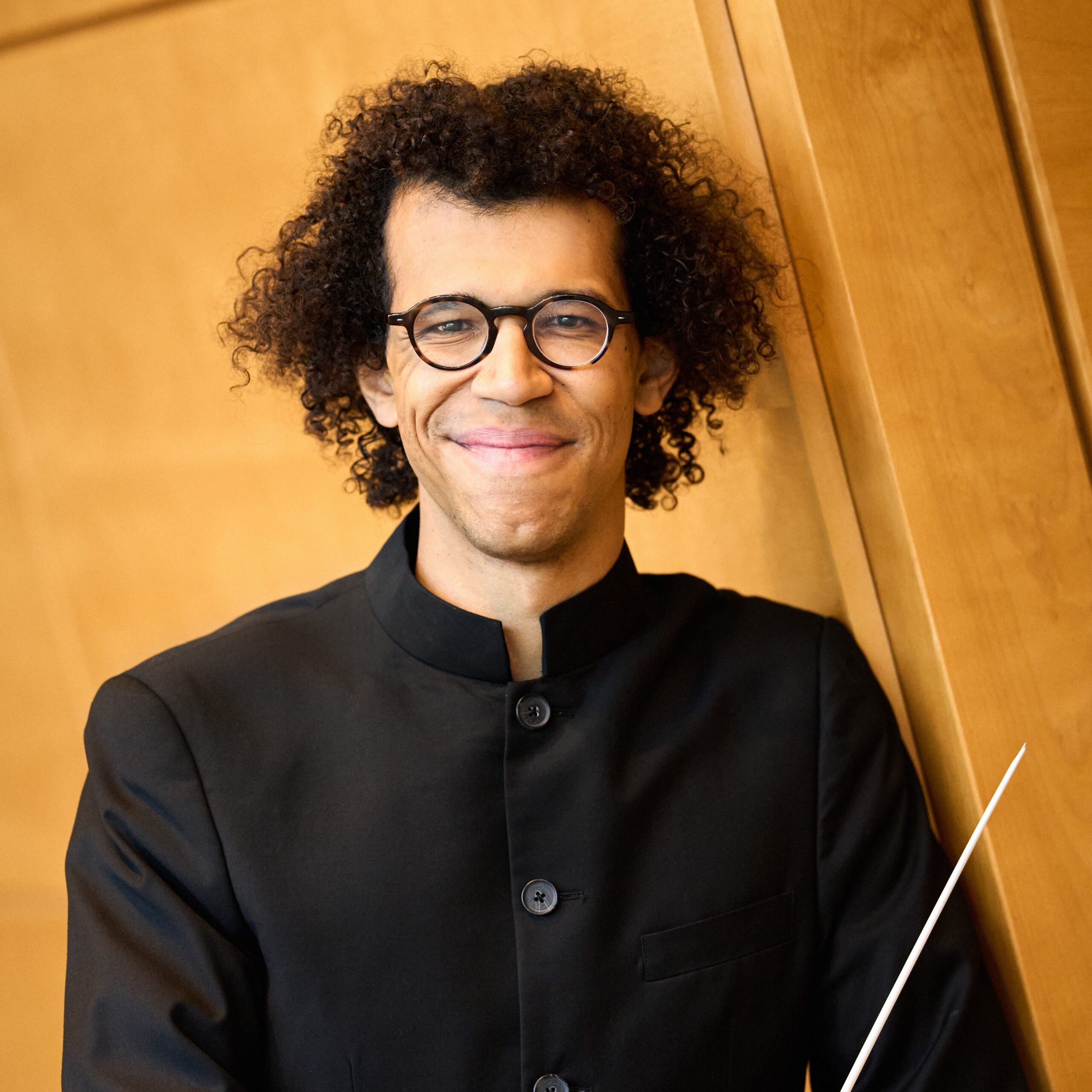
Sunday, November 8, 2026 | 2:00 PM MEYERHOFF
Pre-Concert Diwali Celebration – Program Notes
Grace-Evangeline Mason
Born October 1994 in West Midlands, England
Currently resides in the U.K.
Instrumentation: Two flutes, piccolo, two oboes, English horn, three clarinets (third doubling bass clarinet), two bassoons, contrabassoon, four horns, three trumpets, three trombones, tuba, timpani, bass drum, snare drum, vibraphone, tom toms, tam tam, glockenspiel, harp, and strings.
First performed by BBC Philharmonic Orchestra conducted by Mark Wigglesworth, July 18th 2023 as part of the BBC Proms at the Royal Albert Hall, London.
‘ABLAZE THE MOON’ (2023) for orchestra is inspired by the poem ‘Tonight’ by the American lyric poet, Sara Teasdale (1884-1933). The melodies in the piece follow the lines of the poem, which are full of vivid descriptions and begin ‘The moon is a curving flower of gold, the sky is still and blue; The moon was made for the sky to hold, and I for you.’
In this short concert opener, the image of the moon as a flower of gold hanging in a dark sky is alluded to by atmospheric passages that begin in the circling woodwinds. These are contrasted with deep punctuations in the strings suggesting the vast darkness that surrounds it. These forceful interjections ignite the woodwinds to intersperse, fall, and spiral, momentarily accentuating the inky backdrop of the sky. The music drives forward through the expanse, with the horns and brass building the texture, until the piece opens out into an ethereal, and celestial space as ‘the sky is luminous; eternity was made for them, to-night for us.’
Grace-Evangeline Mason, 2023
Maurice Ravel
Born March 7, 1875 in Ciboure, France
Died December 28, 1937 in Paris, France
Instrumentation: Two flutes, piccolo, two oboes, English horn, two clarinets, two bassoons, four horns, two trumpets, three trombones, tuba, timpani, tambourine, suspended cymbal, bass drum, cymbals (pair), keyboard, glockenspiel, snare drum, tam tam, triangle, two harps, celeste, and strings, in addition to the soprano soloist.
Around 1900, Maurice Ravel was one of the founding members of the Apaches, a group of forward-looking young French artists, including writers, painters and composers, who claimed to share a passion “for Chinese art … Cézanne and Van Gogh, Rameau and Chopin, … the Russians and Debussy.” Another member was the poet/painter/composer Arthur Justin Léon Leclère (1874-1966), who adopted the exotic nom de plume Tristan Klingsor after two leading characters in Richard Wagner’s operas; the Apaches’ meetings were often held at his home. In 1902, Klingsor completed a collection of 100 poems inspired by the tale of Scheherazade in the Thousand and One Nights as expressed musically by Nikolai Rimsky-Korsakov in his famous orchestral tone poem. The theme of Klingsor’s poems was the allure of the lands and cultures of Asia to European observers.
One year later, in 1903, Ravel chose three of these poems for his second work on this theme; the first had been a Shéhérazade Overture, written in 1898. He had Klingsor declaim his selected poems over and over for him, so Ravel could capture the rhythms and stresses of his readings accurately in his music. Originally, the song triptych opened with “La Flûte enchantée” and closed with “Asie,” but Ravel later altered this to make “Asie” the first number. This change makes for an unusual musical and expressive trajectory because “Asie” is more than twice as long as the other songs and uses by far the largest, lushest orchestra. In this order, the songs move from the epic and grand to the intimate and personal.
Set in the haunting and rarely used key of E-flat minor, “Asie” evokes the exotic attractions of the various lands of Asia from the Middle East to China. Klingsor had structured his poem with repetitions of the words “Je voudrais voir” (“I would like to see”). In Michael Steinberg’s words, “Each ‘je voudrais’ is a springboard from which to plunge into new realms of harmonies and sounds,” as Ravel paints vivid pictures of the beauties — and cruelties — of the places to which our magic ship of the imagination, “spreading its purple sails,” carries us. The singer’s lines are molded closely to the words like recitative over the large, subtly colored orchestra.
Steinberg calls “La Flûte enchantée”: “a masterpiece made with few notes.” The orchestra is reduced so that it is essentially a duet between the flute and the singer. While her master sleeps, a young slave girl listens in the night to the languorous song played outside by her lover, which caresses her “like a mysterious kiss.”
Ambiguity rules the final song, “L’Indifférent,” in which the singer — whose gender we do not know — longingly observes a youth whose feminine beauty obscures his own sexual identity. Though the singer signals him to stop a while, the young man saunters past. Flutes and clarinets, solo and in pairs, lead the fragile woodwind sounds, and an unresolved harmony at the end seals the ambiguous atmosphere.
Janet E. Bedell is a program annotator and feature writer who writes for Carnegie Hall, the Metropolitan Opera, Los Angeles Opera, Caramoor Festival of the Arts, and other musical organizations.
Jean Sibelius
Born December 8, 1865 in Hämeenlinna, Russian Empire
Died September 20, 1957 in Järvenpää, Finland
Instrumentation: Two flutes, two oboes, two clarinets, two bassoons, four horns, three trumpets, three trombones, tuba, timpani, and strings.
Jean Sibelius was Finland’s first and greatest musical hero. He rose to fame at the turn of the 20th century on the strengths of his First Symphony and the tone poem Finlandia, works that gave voice to a burgeoning national identity just when Finland began agitating for independence from Russia. It was also around 1900 that Sibelius’ music started appearing in concert halls around Europe, and he was particularly pleased in 1901 to receive a kind word from Richard Strauss, who was just a year older than Sibelius but already a star. Adopting Strauss’ preferred format, Sibelius planned a series of four tone poems related to the Don Juan legend, but the sketches he started in Italy and completed in Helsinki ultimately took an abstract form in the Symphony No. 2.
Sibelius disavowed any political underpinnings in the Second Symphony, but that did not stop the Finnish people from embracing it as an anthem of their struggle after the Helsinki premiere in 1902. Much of the perceived “protest” aspect of the music traces to the second movement, with its trudging pizzicato, lugubrious bassoon melody, and impassioned climaxes. The scherzo, a blur of perpetual-motion string figures and hovering woodwind lines, continues the sense of struggle.
Sibelius’ widow explained that the finale’s somber music over a spinning bass line was composed in memory of a sister-in-law who committed suicide. This unsettled material lends extra poignancy to the symphony’s ultimate resolution in a realm of uplift and triumph.
Aaron Grad has been the exclusive program annotator for the Orpheus Chamber Orchestra since 2005, and contributes program notes to various other symphony orchestras, ensembles, and presenters. His concert reviews have appeared in The Washington Post, and PlaybillArts regularly publishes his feature articles and interviews online.
Nemanja Radulovic & Double Sens in Recital
NOV 9, 2026
Ohlsson Plays Brahms
NOV 13-15, 2026
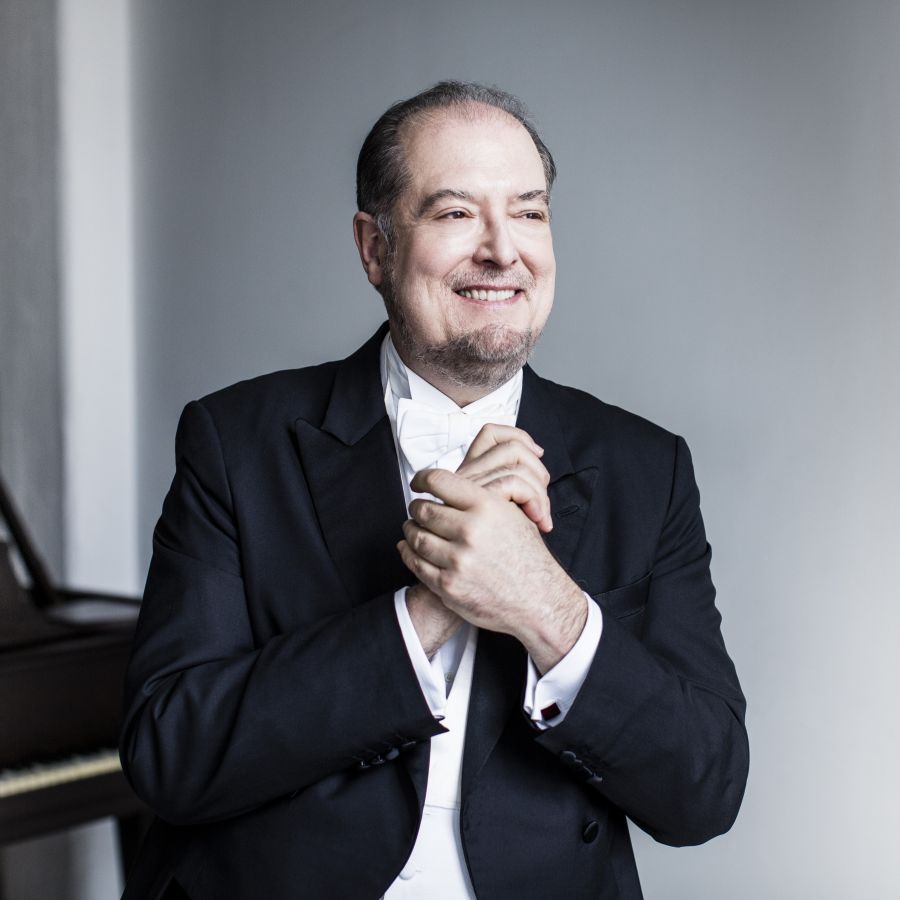
Johannes Brahms
Born May 7, 1833 in Hamburg, Germany
Died April 3, 1897 in Vienna, Austria
Instrumentation: Two flutes (second doubling piccolo), two oboes, two clarinets, two bassoons, four horns, two trumpets, timpani, and strings in addition to the solo piano.
While it may be shocking for listeners today to imagine any works by Johannes Brahms flopping, the audience was particularly hostile at the 1859 Leipzig premiere of his First Piano Concerto. Brahms himself was surprised and disheartened when the crowd hissed in displeasure at the conclusion of the piece, and the critic Edward Bernsdorf declared that the work had “nothing to offer but waste.” Although the piece’s poor reception damaged Brahms’s compositional reputation for several years, the experience spurred him to work harder at meticulously honing his craft. It was twenty-two years before Brahms, who was known to be a perfectionist, would write another piano concerto. By the time his Second Piano Concerto was completed in 1881, his compositional style had matured, and he had cemented his reputation as a celebrated master.
The Second Piano Concerto was especially successful. Even though he had long since retired from performing as a professional pianist, Brahms learned the incredibly difficult solo piano part and played it for the Budapest premiere. In the ensuing months, he performed the piece twenty-two times in different cities across Europe. Audiences at the time routinely leapt to their feet with roaring ovations at the end of the first and second movements, a stark contrast to the tepid applause, hisses, and unfavorable reviews from his first foray into the piano concerto genre two decades earlier. Brahms, too, must have been pleased with the Concerto, since it is the only one of his numerous piano works that he dedicated to his beloved teacher Eduard Marxsen.
The Second Piano Concerto is a true tour de force on many levels—the orchestration is powerful, the solo piano part is intensely virtuosic, and the sheer size of the piece is monumental. At the time, however, Brahms had taken to ironically describing his most substantial works as “miniatures.” He mentioned in a letter to Clara Schumann that he was composing “a very small piano concerto with a very small and pretty scherzo.” Yet with its expanded structure of four movements instead of the standard three, the unusual interweaving of the orchestral parts with the solo piano part, and the inclusion of a scherzo, the Second Piano Concerto is more like the grand symphonies of the time than any other nineteenth-century concerto.
From the outset of the piece, Brahms sets listeners up to have their expectations defied. After a tender horn call at the beginning of the first movement, the pianist unexpectedly interrupts the orchestral exposition with a bold cadenza spanning nearly the full range of the piano. The entire first movement is a model of refined virtuosity, full of musical fireworks and technical complexity that never spin out of control. It was unheard of for a concerto at this time to include a scherzo, and this movement is particularly full of memorable turbulence. A scherzo is a musical joke, and Brahms utilizes syncopation (musical accents on weak beats), dynamic contrasts, and melodies with unexpected twists and turns to convey humor in this scherzo. The third movement opens with an exquisite cello solo, which Brahms also used as the melody in his song “Immer leiser wird mein Schlummer” (Ever gentler grows my slumber). The final movement is sophisticated and poised and ends with a much-anticipated triumphant flourish.
PAULA MAUST is Assistant Professor of Music Theory at The Peabody Conservatory. She is the author of Expanding the Music Theory Canon and performs extensively as a harpsichordist and organist.
Emilie Mayer
Born May 14, 1812 in Friedland, Germany
Died April 10, 1883 in Berlin, Germany
Instrumentation: Two flutes, two oboes, two clarinets, two bassoons, two horns, two trumpets, three trombones, tuba, timpani, and strings.
At a time when many women composers primarily composed art songs and solo keyboard pieces, Emilie Mayer broke boundaries with her numerous large-scale orchestral works. Her impressive output includes a Singspiel, eight symphonies, seven orchestral overtures, nearly 130 songs, seven string quartets, eleven piano trios, and twenty-two instrumental sonatas. Although audiences in Berlin, Brussels, Lyons, Budapest, Dessau, Halle, Leipzig, and Munich warmly received Mayer’s music during her lifetime, her works were unfortunately forgotten after her death and have only recently begun to be performed again.
Mayer’s 1880 Faust Overture joins a number of other nineteenth-century musical works that were inspired by Johann Wolfgang von Goethe’s tragic play Faust. In the play, the disillusioned scholar Faust has grown tired of seeking transcendent experiences and feeling unfulfilled. He makes a pact to serve the Devil for eternity if the demon Mephistopheles is able to grant him one truly satisfying earthly moment. Mephistopheles then manufactures a whirlwind romance between Faust and Margaret, a pious young woman. Pursuing the relationship ultimately results in the drowning of their newborn child and the murder of Margaret’s family. Full of remorse, Margaret chooses to accept the punishment for her crimes rather than escape from prison with Faust, and she is sentenced to death. Near the end of the saga, voices from Heaven proclaim that Margaret will be redeemed.
While Mayer’s Faust Overture is inspired by the events in Goethe’s play, the piece is not an explicit musical representation of the drama as a whole. Mayer’s only specific reference to the story in the score is the indication “She is saved,” which occurs near the end of the piece when the music dramatically shifts from minor to major.
PAULA MAUST is Assistant Professor of Music Theory at The Peabody Conservatory. She is the author of Expanding the Music Theory Canon and performs extensively as a harpsichordist and organist.
Antonín Dvořák
Born September 8, 1841 in Nelahozeves, Austrian Empire
Died May 1, 1904 in Prague, Austria-Hungary
Instrumentation: Two flutes (first doubling piccolo), two oboes, English horn, two clarinets, two bassoons, contrabassoon, four horns, two trumpets, three trombones, tuba, timpani, bass drum, triangle, suspended cymbal, cymbals (pair), harp, and strings.
Composers in the nineteenth century began writing orchestral works that could aurally evoke a poem, painting, or story without using words. These so-called symphonic tone poems utilize rich orchestral colors and musical motives associated with different characters to tell the story. Antonín Dvořák wrote five such pieces in 1896, including The Golden Spinning Wheel. Yearning to return to his Czech roots, Dvořák drew on stories from Karel Jaromír Erben’s poetic ballads, and his musical motives in the symphonic tone poems closely mirror the declamatory style of the Czech language.
The Golden Spinning Wheel received its first full public premiere in London, with Hans Richter conducting. Based on Erben’s poem by the same name, the work portrays a dramatic story full of gruesome crimes, deception, love, magic, and justice. While riding in the countryside one day, a king stops for water and meets Dornička, a beautiful village girl who is sitting at her spinning wheel. The king falls in love with Dornička and asks her stepmother to bring her to the castle to marry him. What follows is an astonishingly evil plot between the stepmother and her own unwed daughter (Dornička’s stepsister). On the way to the castle, the stepmother and stepsister violently murder and dismember Dornička, and the stepsister hides Dornička’s severed feet, hands, and eyes in her luggage. She then marries the unsuspecting king, who is called away to war shortly after the wedding.
An old man who practices magic finds Dornička’s remains in the forest and decides to bring her back to life. In exchange for a golden spinning wheel, distaff, and spindle, Dornička’s stepsister willingly surrenders the missing limbs to the old man. Unbeknownst to the stepsister, the golden spinning wheel is enchanted, and when the triumphant king returns from battle the wheel sings a song that reveals the treacherous plot. Infuriated, the king returns to the forest where he is joyously reunited with the resurrected Dornička. The evil stepmother and stepsister are thrown to the wolves, the golden spinning wheel magically disappears, and Dornička and the king live happily ever after.
PAULA MAUST is Assistant Professor of Music Theory at The Peabody Conservatory. She is the author of Expanding the Music Theory Canon and performs extensively as a harpsichordist and organist.
Everything I Know: Mandy Gonzalez Sings Lin-Manuel Miranda
NOV 20-22, 2026
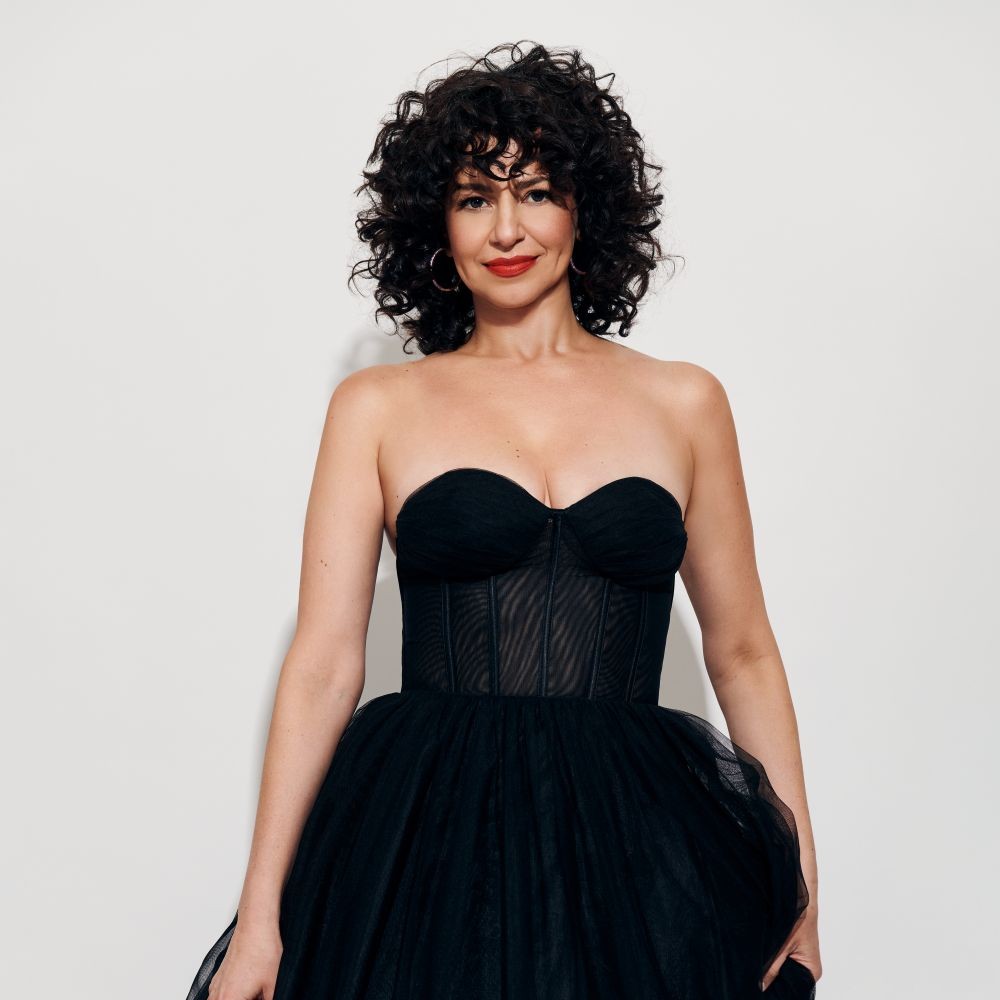
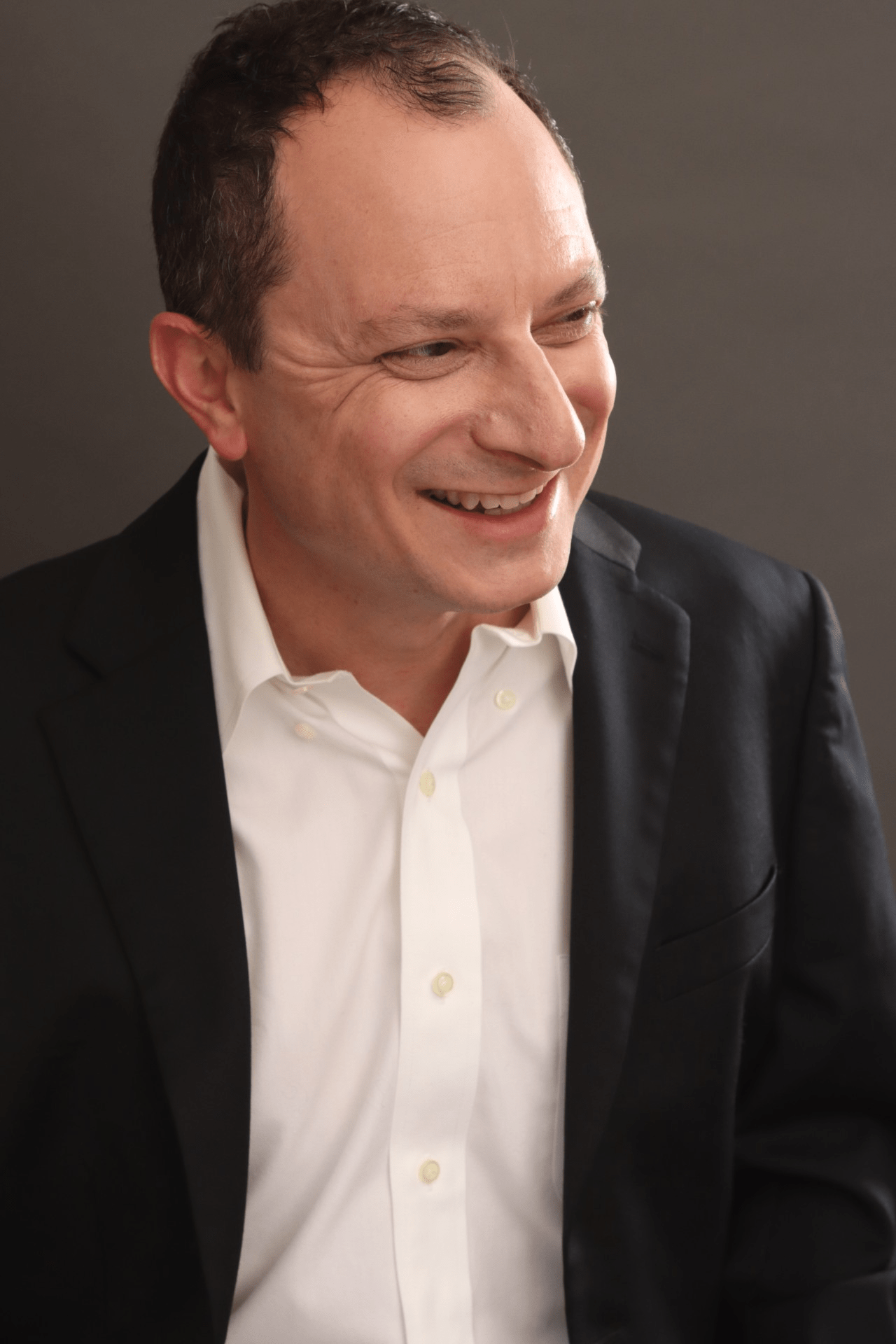
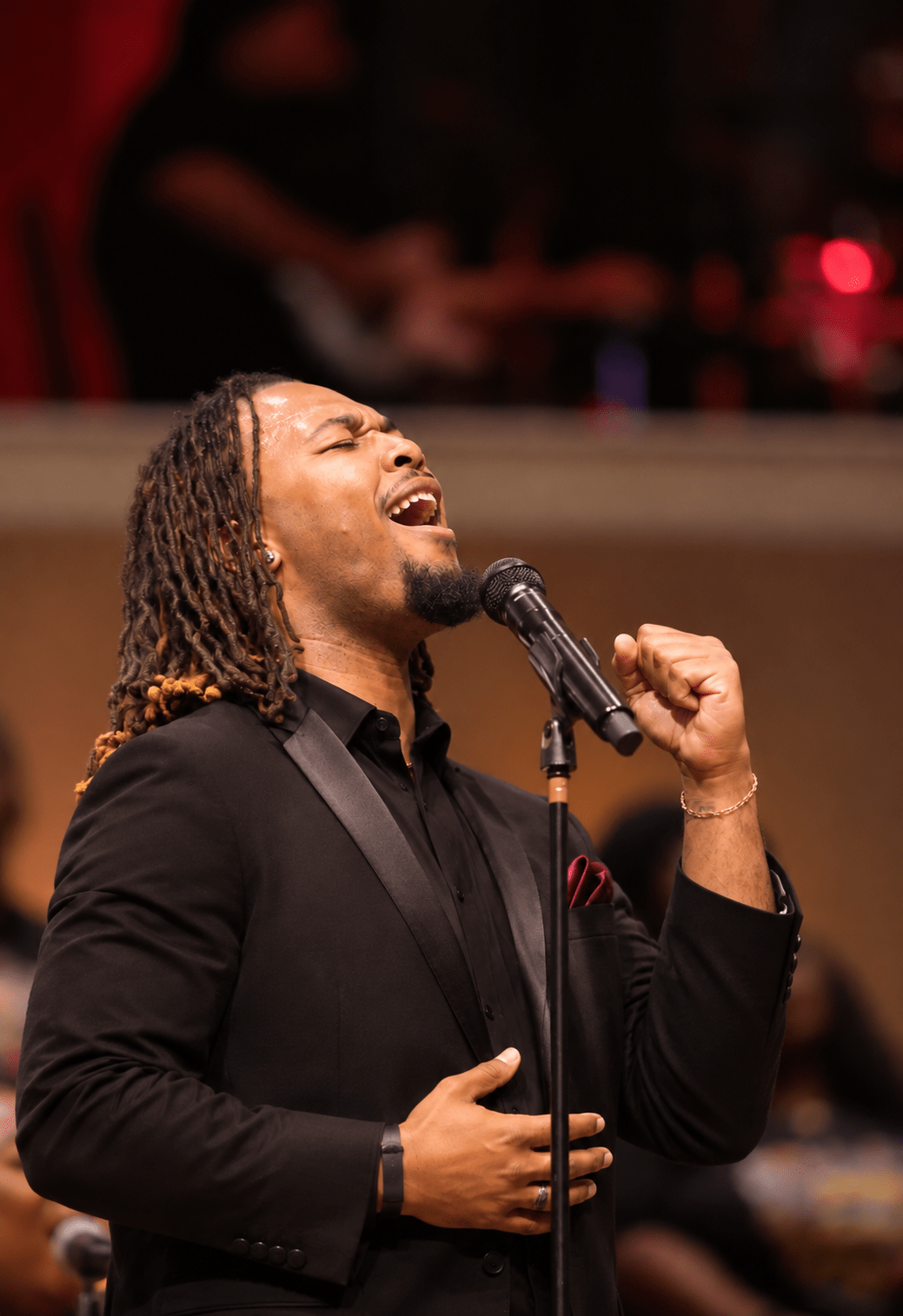
DAN LIPTON
When developing musicals in New York City, you may find yourself in the room where it happens with just about anybody in show business. That’s how I met Mandy Gonzalez, on a 2005 workshop of some show that never happened. We hit it off quickly (she hits it off quickly with everyone) and one day after rehearsal, she was off to see her friend’s rap comedy improv group. That sounded very weird yet potentially amazing to me, so I tagged along and Freestyle Love Supreme was intimidatingly fantastic. One rapper had an encyclopedic knowledge of all pop culture—including Broadway, a genre not exactly known for its proximity to hip-hop.
It’s that sense of Lin-Manuel Miranda as a cultural omnivore that we aimed to capture in this concert program, so I took it to heart in arranging our overture, which proceeds mostly chronologically through his life and times.
“Everything I Know-verture” begins at Hunter College High School in 1995, with Lin’s final project for ninth grade music class. Why, you ask? Because the roots of any major artist run deep, and when I dug through old YouTube and SoundCloud pages to find some, there was Lin leading a scrappy band of teenage jazz musicians with a toy laser gun.
“Sound Laser!” is as engaging as anything he’s written. And really, is there a better metaphor for Lin’s work than a sound laser? He’s been zapping our brains with ear candy for decades now! Strains of more Hunter-era songs (“Fetal Pig” and “Say Goodbye”) bubble up and swoosh us forward to 2003, when Freestyle Love Supreme emerged, with “We Are Freestyle Love Supreme” closing out every show: a rap with Shockwave beatboxing to funky chords from Arthur the Geniuses and King Sherman. This version of their theme nods to the last time an orchestra played it, as entrance music for Anthony “Two-Touch” Veneziale at the 2021 Tony Awards.
Musicals are not written, they’re re-written. The final version of a show might contain completely different songs than its first draft did. When In the Heights reached Broadway in 2008, only one phrase of music had survived from its initial production at Wesleyan University in 2000. It’s “En Washington Heights,” the last lyric of the opening number, and I see it as a kind of “life raft” that Lin clung to through close to a decade of working toward his dream. So that little motif leads us into the show’s now-classic opener.
After the success of Heights, Lin and friends were recruited to the musical world of Sesame Street, where he spoke to Latino kids through characters like Mando. Do you remember what “Rhymes With Mando?” The Emmy Awards do! This calypso was nominated for a 2013 Daytime Emmy for Outstanding Original Song.
Another exciting opportunity that followed Heights was Bring It On: The Musical (2012), a musical adaptation of the hit cheerleading movie. Amanda Green, Tom Kitt and Lin proved that cheering chants can cut as hard and rhyme as intricately as any rap. They also gave us a pulsing slice of electropop called “What I Was Born To Do.”
Somewhere down my rabbit hole of research, I landed on a Reddit page where Gen Z was discussing how they were “today years old” when they realized the Hamilton guy has soundtracked their lives with earworms since pre-school. Beyond Sesame Street, the Freestyle Love Supreme team was hired to help reboot the classic 1970s show The Electric Company (2009). In their very first episode, Lin-Man and Shockwave throw down the sneaky alphabetical lesson “Silent ‘E’ Is A Ninja,” which might be one of the catchiest hooks I’ve ever heard. Voila! The perfect breather before we deliver two of the most streamed songs from Hamilton (2015). And what’s there to say about that juggernaut, other than we expect you to sing along!
Hamilton led to the craziest credit of Lin-Manuel’s career: the track “Jabba Flow” from Star Wars: Episode VII – The Force Awakens (2015). He collaborated on this new cantina music with director J.J. Abrams (who is a totally legit musician!) for the intergalactic band Shag Kava, rocking steady in Maz Kanata’s castle.
Moana (2016) was the first Disney animated film with songs by Lin-Manuel. And in a flash of synergy that could only happen in the Miranda-verse, this lifelong WWE fan got to write “You’re Welcome,” a swingin’ showstopper for wrestling legend The Rock! “The Family Madrigal” from Encanto (2021) gallops ahead, and a baroque snatch of “Esperando Pelitos” from the animated TV show Big Mouth (2023) bridges us to “I Always Wanted A Brother” from Mufasa: The Lion King (2024), a total banger. Even Nicholas Britell, composer of the Succession theme, is now a Lin collaborator.
Having covered three decades of Miranda music, there’s only one place to end: En Washington Heights! That aforementioned “life raft” motif sends us back uptown, where the reggaeton lottery anthem “96,000” is blasting. Show business is a lottery, all luck and timing. Lin’s may be impeccable, but how lucky are we to be alive right now, while pop culture’s number-one fan (the greatest artists are also the biggest fans) consistently gifts us perfectly crafted pop culture?
Tonight, we get to experience the whole scope of this body of work through the iconic voice of Mandy Gonzalez. You’ll hear Puerto Rico and New York, rhyme and reason, humor and humanity, beloved modern classics and surprising deep cuts.
We’re so grateful to Lin-Manuel Miranda for the musical embarrassment of riches, and for trusting us to take you on this rollercoaster ride through his songbook. Ladies and gentlemen, the show is right this way… presenting Everything I Know!
ACT ONE
EVERYTHING I KNOW-VERTURE
music by Lin-Manuel Miranda and Various
arranged by Dan Lipton
orchestration by Julio César Barreto
ONE OF A KIND (from Vivo)
music and lyrics by Lin-Manuel Miranda
original arrangement by Alex Lacamoire
original orchestration by Jeff Kryka
concert arrangement by Dan Lipton & Dick Scanlan
concert orchestration by Julio César Barreto
SPANISH ME, ENGLISH ME (from Sesame Street)
music by Lin-Manuel Miranda
lyrics by Luis Santeiro
original arrangement by Bill Sherman
original orchestration by Joe Fiedler
concert arrangement by Dan Lipton & Dick Scanlan
concert orchestration by Kim Scharnberg
KEEP THE BEAT (from Vivo)
music and lyrics by Lin-Manuel Miranda
original arrangement by Alex Lacamoire
original orchestration by Jeff Kryka
concert arrangement by Dan Lipton & Dick Scanlan
concert orchestration by Julio César Barreto
PART OF YOUR WORLD / FOR THE FIRST TIME (from The Little Mermaid)
music by Alan Menken
lyrics by Howard Ashman & Lin-Manuel Miranda
original arrangements by Robby Merkin & Alan Menken
concert arrangement by Dan Lipton & Dick Scanlan
orchestration by Jim Abbott
BREATHE (from In the Heights)
music and lyrics by Lin-Manuel Miranda
original arrangement and orchestration by Alex Lacamoire & Bill Sherman
concert orchestration by Ryan Shirar
PRECIOSA / ALMOST LIKE PRAYING
words and music by Rafael Hernández Marín / words by Lin-Manuel Miranda & Stephen Sondheim, music by Leonard Bernstein & Lin-Manuel Miranda
arranged by Dan Lipton & Dick Scanlan
orchestration by Julio César Barreto
THE HAMILTON SUITE (from Hamilton)
words and music by Lin-Manuel Miranda
original arrangements by Alex Lacamoire & Lin-Manuel Miranda
original orchestrations by Alex Lacamoire
PART 1: MY SHOT
concert arrangement by Dan Lipton & Dick Scanlan
concert orchestration by Julio César Barreto
PART 2: SATISFIED
concert orchestration by Ryan Shirar
PART 3: THE ROOM WHERE IT HAPPENS
concert orchestration by Julio César Barreto
PART 4: WAIT FOR IT
concert arrangement by Dan Lipton & Dick Scanlan
concert orchestration by Julio César Barreto
ACT TWO
ENTR’ACTE: THE CLUB (from In the Heights)
music and lyrics by Lin-Manuel Miranda
original arrangement and orchestration by Alex Lacamoire & Bill Sherman
concert arrangement and orchestration by Jaime Lozano & Jesús Altamira
WE DON’T TALK ABOUT BRUNO (from Encanto)
words and music by Lin-Manuel Miranda
arrangement by Dan Lipton & Dick Scanlan
orchestration by Julio César Barreto
BIENVENIDO A LA FAMILIA (from Vivo)
music composed by Alex Lacamoire
orchestration by Jeff Kryka
DOS ORUGUITAS (from Encanto)
words and music by Lin-Manuel Miranda
arrangement by Dan Lipton & Dick Scanlan
orchestration by Julio César Barreto
NINA’S FIRE ESCAPE (cut from In the Heights)
music and lyrics by Lin-Manuel Miranda
original arrangement by Alex Lacamoire
concert arrangement by Dan Lipton
orchestration by Kim Scharnberg
HOW FAR I’LL GO (from Moana)
music and lyrics by Lin-Manuel Miranda
orchestration by Kim Scharnberg
LIN-MAN AND THE BEAST: A MIXTAPE
curated by Lin-Manuel Miranda
arranged by Dan Lipton & Dick Scanlan
orchestrations by Lynne Shankel
Alone (Heart) / The Story (Brandi Carlile) / Under Pressure (Queen & David Bowie) / Time After Time (Cyndi Lauper) / Save Me (Nicki Minaj) / What You Know (Ali Dineen)
EVERYTHING I KNOW (from In the Heights)
music and lyrics by Lin-Manuel Miranda
original arrangement and orchestration by Alex Lacamoire & Bill Sherman
concert orchestration by Peter L. Mansfield
CHEERING FOR ME NOW / NEW YORK, NEW YORK (from New York, New York)
music by John Kander
lyrics by Fred Ebb & Lin-Manuel Miranda
original arrangements by Sam Davis & Alex Lacamoire
concert arrangement by Dan Lipton & Dick Scanlan
orchestration by Larry Hochman
FEARLESS
music and lyrics by Lin-Manuel Miranda
orchestration by Bill Elliott
Music Copying by Jim Abbott, Daniel Gittler, Eugene Gwozdz, Dan Lipton, Kim Scharnberg, Lynne Shankel, Asher Shectman, Ryan Shirar, Evan Trotter-Wright
Special Thanks to Kurt Crowley, Alex Lacamoire, Arthur Lewis, Bill Sherman & Ian Weinberger
ADDITIONAL MUSIC CREDITS
EVERYTHING I KNOW-VERTURE
contains elements of:
Sound Laser! (9th grade music project, 1995)
Fetal Pig (from Nightmare in D Major, 1997)
Say Goodbye (1998)
words and music by Lin-Manuel Miranda
We Are Freestyle Love Supreme (from Freestyle Love Supreme)
words and music by Freestyle Love Supreme
arranged by Ian Weinberger
original orchestration by Jamie Lawrence
In the Heights (from In the Heights)
music and lyrics by Lin-Manuel Miranda
original arrangement and orchestration by Alex Lacamoire & Bill Sherman
Rhymes With Mando? (from Sesame Street)
music by Lin-Manuel Miranda
lyrics by Luis Santeiro
original arrangement by Bill Sherman
original orchestration by Joe Fiedler
What I Was Born To Do (from Bring It On: The Musical)
music by Tom Kitt & Lin-Manuel Miranda
lyrics by Amanda Green & Lin-Manuel Miranda
original arrangement and orchestration by Tom Kitt & Alex Lacamoire
Silent ‘E’ Is A Ninja (from The Electric Company)
words and music by Lin-Manuel Miranda
The Room Where It Happens (from Hamilton)
You’ll Be Back (from Hamilton)
words and music by Lin-Manuel Miranda
original arrangements by Alex Lacamoire & Lin-Manuel Miranda
original orchestrations by Alex Lacamoire
Jabba Flow by Shag Kava
(from Star Wars: Episode VII – The Force Awakens)
words and music by Jeffrey J. Abrams and Lin-Manuel Miranda
You’re Welcome (from Moana)
music and lyrics by Lin-Manuel Miranda
The Family Madrigal (from Encanto)
music and lyrics by Lin-Manuel Miranda
Esperando Pelitos (from Big Mouth)
music and lyrics by Lin-Manuel Miranda
I Always Wanted a Brother (from Mufasa: The Lion King)
music by Nicholas Jonathan Britell and Lin-Manuel Miranda
lyrics by Lin-Manuel Miranda
96,000 (from In the Heights)
music and lyrics by Lin-Manuel Miranda
original arrangement and orchestration by Alex Lacamoire & Bill Sherman
SPANISH ME, ENGLISH ME
concert arrangement contains elements of:
Sunrise (from In the Heights)
music and lyrics by Lin-Manuel Miranda
Give My Regards to Broadway (from Little Johnny Jones)
words and music by George M. Cohan
PHANTOM OF THE VAMPIRES
incidental music contains elements of:
The Phantom of the Opera (from The Phantom of the Opera)
music by Andrew Lloyd Webber
orchestration by Kim Scharnberg
PRECIOSA / ALMOST LIKE PRAYING
concert arrangement contains elements of:
Hurricane (from Hamilton)
words and music by Lin-Manuel Miranda
Maria (from West Side Story)
music by Leonard Bernstein
lyrics by Stephen Sondheim
THE HAMILTON SUITE (from Hamilton)
words and music by Lin-Manuel Miranda
concert arrangement contains elements of:
PART 1
Alexander Hamilton
My Shot
History Has Its Eyes On You
Yorktown
Dear Theodosia
Helpless
One Last Time
PART 2
Satisfied
PART 3
The Room Where It Happens
PART 4
Wait For It
My Shot
It’s Quiet Uptown
CABINET BATTLE 3 DEMO (from The Hamilton Mixtape)
words and music by Lin-Manuel Miranda
original track contains elements of:
Hail Mary (2Pac as Makaveli ft. Outlawz)
arrangement by Dan Lipton
orchestration by Julio César Barreto
LIN-MAN AND THE BEAST: A MIXTAPE
medley contains elements of:
Alone (Heart)
words and music by Billy Steinberg & Tom Kelly
The Story (Brandi Carlile)
words and music by Tim Hanseroth
Under Pressure (Queen & David Bowie)
words and music by David Bowie, Freddie Mercury, Roger Taylor, John Deacon & Brian May
Time After Time (Cyndi Lauper)
words and music by Cyndi Lauper & Robert Hyman
Save Me (Nicki Minaj)
by Warren Felder, Onika Maraj & Andrew Wansel
What You Know (Ali Dineen)
by Ali Dineen
CHEERING FOR ME NOW / NEW YORK, NEW YORK
concert arrangement contains elements of:
New York, New York (from On the Town)
words by Betty Comden & Adolph Green
music by Leonard Bernstein
Welcome to New York (Taylor Swift)
words and music by Taylor Swift & Ryan Tedder
N.Y.C. (from Annie)
music by Charles Strouse
lyrics by Martin Charnin
In the Heights (from In the Heights)
music and lyrics by Lin-Manuel Miranda
The Schuyler Sisters (from Hamilton)
words and music by Lin-Manuel Miranda
Rhapsody in Blue
music by George Gershwin
No Sleep ‘Til Brooklyn (Beastie Boys)
by Michael Diamond, Adam Horovitz, Rick Rubin & Adam Yauch
Welcome to New York City (Cam’ron ft. JAY-Z & Juelz Santana)
by Cameron Giles, Shawn C. Carter & Justin Gregory Smith
Empire State of Mind (JAY-Z ft. Alicia Keys)
words and music by Alicia J. Augello-Cook, Shawn Carter, Angela Ann Hunte, Bert Keyes, Sylvia Robinson, Janet Andrew Sewll & Alexander William Shuckburgh
New York Minute (Don Henley)
words and music by Donald Hugh Henley, Daniel Kortchmar & Jai L. Winding
Arthur’s Theme “Best That You Can Do” (Christopher Cross)
words and music by Peter Woolnough Allen, Burt F. Bacharach, Christopher C. Cross & Carole Bayer Sager
New York State of Mind (Billy Joel)
words and music by William M. Joel
On Broadway (The Drifters)
words and music by Jerry Leiber, Barry Mann Mike Stoller & Cynthia Weil
Home Alone in Concert
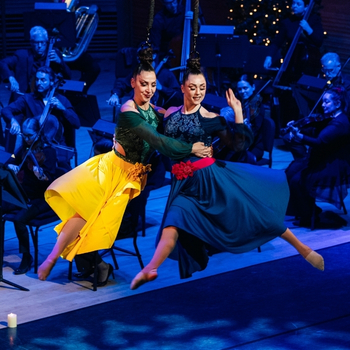
Cirque Nutcracker
DEC 11-12, 2026
Holiday Pops
DEC 19-20, 2026
Beethoven’s Ninth: New Year’s Celebration
JAN 1-3, 2027
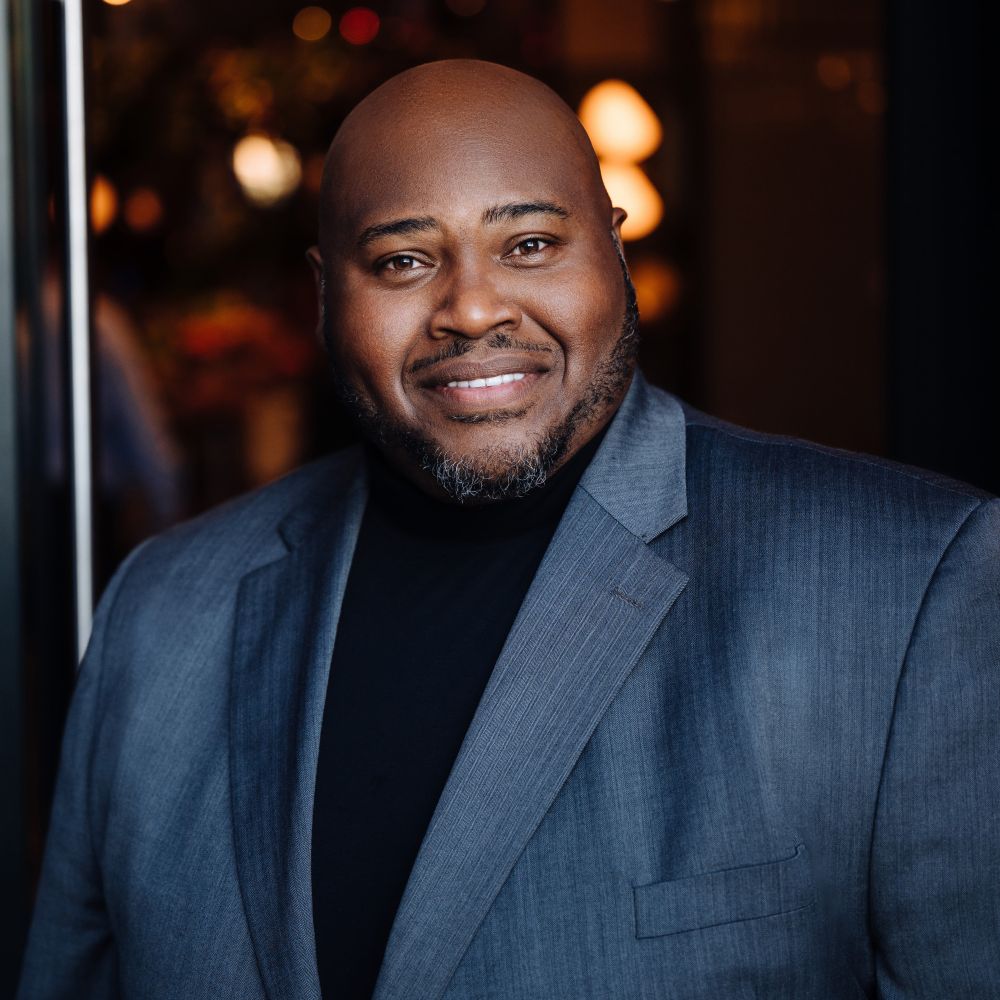
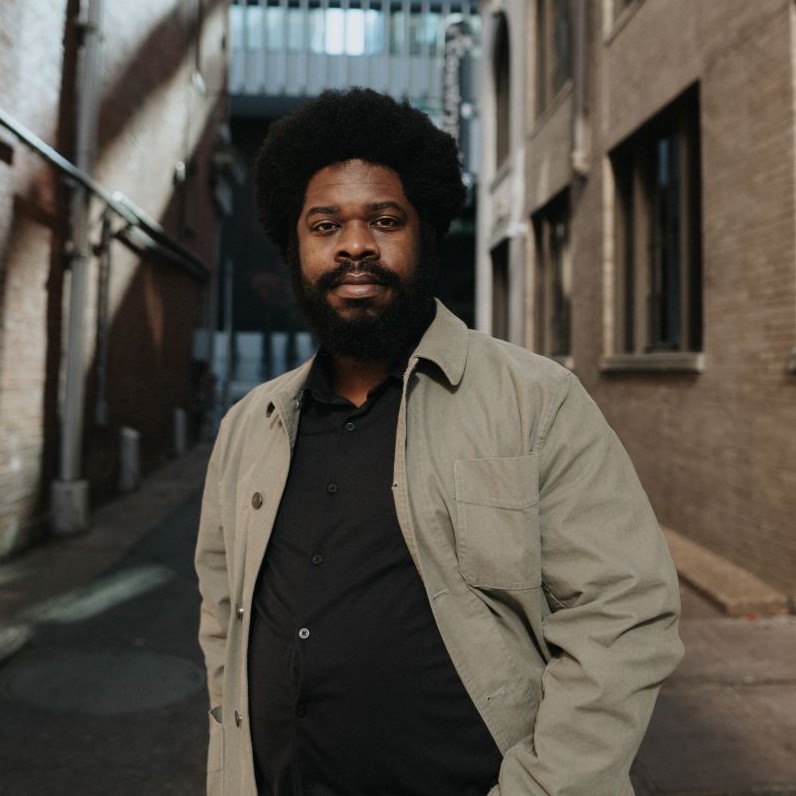
Valerie Coleman
Born September 3, 1970 in Louisville, Kentucky
Resides in New York City, New York
Instrumentation: Two flutes, piccolo, two oboes, English horn, two clarinets, bass clarinet, two bassoons, two horns, two trumpets, trombone, bass trombone, tuba, timpani, ride cymbal, bass drum, snare drum, temple blocks, xylophone, suspended cymbal, vibraphone, cymbals (pair), tambourine, glockenspiel, marimba, harp, piano, and strings.
Coleman’s Umoja began as a Kwanzaa sing-along song for women’s choir. Composed in 2001, its name is Swahili for “unity,” and is the first day of the winter holiday. Coleman has arranged this composition many times, most famously for wind quintet as the founding member of Imani Winds. In 2019, she returned to the work again, this time as a commission for the Philadelphia Orchestra.
This version features an atmospheric introduction, a solo violin the only one with any melodic material. As the texture grows, the main theme — the anthem — begins to emerge, but it is subdued, almost hesitant. The middle section is prickly and skewed, but not at the expense of gorgeous lines in the strings, virtuosic counterpoint in the woodwinds and brass, and warm rhythmic punctuations from the percussion. And then, the whole melody blossoms from a solo horn layered with violas, growing in confidence and instrumental power. It has fought its way to the surface, moving through the orchestra in a deft call and response.
Coleman describes the moments of dissonance as the “clash of injustices, racism, and hate,” with the anthem’s return “a gentle reminder of kindness and humanity.” Umoja speaks to the function of music as not only a mode of artistic expression; it is a method for preservation and communication: of history, our present experience, and hope for the future.
A. Kori Hill specializes in American music, Black composers, and music of the nineteenth and twentieth centuries. She is a program notes annotator for Seattle Symphony and Chamber Music Society at Lincoln and the lead writer for Classics for Kids Blog at Cincinnati Public Radio. She is co-editor of The Cambridge Companion to Florence B. Price, forthcoming from Cambridge University Press.
Ludwig van Beethoven
Born December 17, 1770 in Bonn, Germany
Died March 26, 1827 in Vienna, Austria
Instrumentation: String orchestra, and SATB chorus.
Beethoven’s Elegiac Song holds an archival mystery. There is some disagreement on the origins of the text. It most likely comes from stanzas of Johann Haus’ poem “Bey der Kinde von Jacobi’s Tod.” Or the text may have been written by the commissioner of the work, Beethoven’s long-term patron Baron Johann Baptiste Pasqualati von Osterberg.
But we do know for certain why Beethoven wrote it: Johann commissioned the song as a memorial for his late wife, Eleanore, on the third anniversary of her death. Beethoven completed the work while a resident of Pasqualati House, the stately apartment complex owned by the Baron.
Though Beethoven is not typically seen as a vocal composer, he wrote extensively for choir, chamber groups with voice, voice and piano, and settings of folk songs. Elegiac Song is of the second category, written for four voices (SATB) and string quartet. Beethoven’s use of partsong texture, similar in execution to a chorale, allows for the voices to dominate and drive the melodic line, supported and layered by the strings. Even the modulations from E major to C minor to A major and back to E are so subtle that even the moments of dissonance feel faint and distant.
Stylistically, Elegiac Song sounds tame, perhaps stale, to what we expect from Beethoven. But it must be remembered that he wasn’t writing it for himself. The result is a stately, noble, intimate portrayal of a life lost and never forgotten.
A. Kori Hill specializes in American music, Black composers, and music of the nineteenth and twentieth centuries. She is a program notes annotator for Seattle Symphony and Chamber Music Society at Lincoln and the lead writer for Classics for Kids Blog at Cincinnati Public Radio. She is co-editor of The Cambridge Companion to Florence B. Price, forthcoming from Cambridge University Press.
Ludwig van Beethoven
Born December 17, 1770 in Bonn, Germany
Died March 26, 1827 in Vienna, Austria
Instrumentation: Two flutes, piccolo, two oboes, two clarinets, two bassoons, contrabassoon, four horns, two trumpets, three trombones, timpani, triangle, cymbal, bass drum, strings, and SATB chorus, in addition to the vocal soloists.
What is there to say about this symphony? So popular that the final theme has taken on a life of its own, defining the symphony as an anthem for universal brotherhood. What to say about a piece that is better known as the apex of creative genius than a composition by a man who worried his style was no longer in vogue?
Well, let’s start with that. When Beethoven was commissioned in 1822 by the London Philharmonic Society, he turned to musical ideas he had written down several years prior. Since writing a symphony was nothing new, he decided to give himself a challenge: write a symphony that also called for four vocals and an eighty-plus chorus.
This idea may have had cultural roots: Italian opera was all the rage in Vienna. So much so, that Beethoven thought Berlin would be a better spot to premiere his symphony. The Viennese may not be eager to hear anything that wasn’t Rossini. But thanks to his supporters (and logistical finagling by Theater am Kärntnertor manager Louis Antoine Duport), Beethoven’s Ninth Symphony was premiered in Vienna at the Kärntnertor on May 7, 1824.
Initially, response was mixed. Some were thrilled by the symphony’s uniqueness; others thought Beethoven’s deafness had harmed the quality of his craft. And yet thanks to more than a century of discourse and programming, the Ninth is now known as a masterwork. And yet placing this piece on a pedestal does Beethoven a disservice. It doesn’t make listening very dynamic if you go in already accepting that something is good. How may we listen to the Ninth without the weight of its cultural and symbolic significance? Is such a thing even possible? Should such a thing be possible?
The Ninth is divided into four movements; but then the conventionality starts to break down. First, there’s a massive chorus and four soloists on stage, though we won’t hear from them until the final movement. Second, after the stately, serious I. Allegro ma non troppo, we don’t get the slow, bittersweet second movement that we expect. Instead, it’s the peppy, semi-dark II. Molto vivace, arguably the second most-popular movement from this symphony. Beethoven builds the tension through repetition and dynamic growth of the theme passing around the orchestra.
Why switch the order of the fast and slow movements? Most likely to enhance the contrast, thus making the finale even more memorable. III. Adagio molto e cantabile is tender, akin to a flowing stream, a nice respite before the blustering, stormy theme that opens IV. Finale. It isn’t until we hear this stormy melody a second time that the chorus and soloists stand, a powerful visual indicator of what’s to come. Amidst the introduction, we hear snippets of the “Ode to Joy” theme, but the full statement is delayed; like Coleman, Beethoven introduces the theme softly, almost imperceptibly. Through repetition across the orchestra, the melody blossoms and strengthens. But it is at its full power when sung by the soloists and chorus, imbuing Schiller’s words of friendship and unity with a hopefulness that stops just short of naivete.
The Ninth is a testament to the range of musical emotion the man could conjure. And like Coleman, of the extra-musical function of music. We may enter the concert hall individually; leave the concert hall individually. But regardless of where we go, we have a responsibility to each other. A responsibility that contains beyond the final note and rapturous applause.
A. Kori Hill specializes in American music, Black composers, and music of the nineteenth and twentieth centuries. She is a program notes annotator for Seattle Symphony and Chamber Music Society at Lincoln and the lead writer for Classics for Kids Blog at Cincinnati Public Radio. She is co-editor of The Cambridge Companion to Florence B. Price, forthcoming from Cambridge University Press.
Grieg & Mussorgsky
JAN 8-10, 2027
Dobrinka Tabakova
Born 1980 in Plovdiv, Bulgaria
Resides in London, United Kingdom
Instrumentation: Two flutes, two oboes, two clarinets, two bassoons, four horns, three trumpets, three trombones, tuba, timpani, suspended cymbal, temple blocks, vibraphone, tom toms, xylophone, tam tam, wood block, cymbals (pair), glockenspiel, and strings.
Across concert performances and an already considerable discography, the Bulgarian-born, U.K.-based composer, Dobrinka Tabakova, has garnered widespread acclaim for her “glowing tonal harmonies and grand, sweeping gestures [which] convey a huge emotional depth” (The Strad). She has earned commissions from the BBC, European Broadcasting Union, Royal Philharmonic Society, and Royal Liverpool Philharmonic, among others. Her music has featured in programs at BBC Proms, Bang on a Can, and the Grand Teton Music Festival. Tabakova holds a degree from the Guildhall School of Music & Drama, as well as a PhD from King’s College, London. She was named Artist in Association with the Hallé Orchestra for their 2022-23 season.
Of this piece, Tabakova explains: “Originally planned as a work about bees, inspired by Virgil’s Georgics, buzzing (heard in the opening brass) became cosmic particles and Orpheus’ Comet was born. The signature melody of Euroradio, the opening of Monteverdi’s opera L’Orfeo, becomes the culmination, which is reached through a series of nebula clusters. First, the buzzing horns begin and are answered by low strings, while accents spark throughout the rest of the orchestra. This dialogue continues, until a solemn chorale appears. The chorale is taken up by the strings before being developed and transformed to hypnotic rhythmic loops. A soaring melody in the woodwind hovers above as momentum, underpinned by the trombones, builds towards a spectacular finale.”
Jacob Jahiel is a PhD student in historical musicology at the University of Pennsylvania. He is co-editor of Defending the Music: Michael Steinberg at the Boston Globe, 1964–1976 (Oxford University Press, 2026).
Edvard Hagerup Grieg
Born June 15, 1843 in Bergen, Norway
Died September 4, 1907 in Bergen, Norway
Instrumentation: Two flutes (second doubling piccolo), two oboes, two clarinets, two bassoons, four horns, two trumpets, three trombones, timpani, and strings, in addition to the piano soloist.
In 1858, the virtuoso-composer Clara Schumann performed the Piano Concerto in A minor, Op. 54, by her late husband, Robert Schumann, before a rapt audience at the Leipzig Conservatory. One attendee, a young Norwegian boy of only 15 years old and a first-year student at the conservatory, recalled the experience in glowing terms, writing “inspired from beginning to end, it stands unparalleled in music literature and astonishes as much by its originality as by its noble disdaining of an extravert virtuoso style.” In a decade’s time, the young admirer — Edvard Grieg, of course — would respond with the equally inspired Piano Concerto in A minor, Op. 16, forcefully recalling that by the older master. Far from a mere imitation, however, this concerto would rival Robert’s in originality, pathos, and popularity.
Grieg composed Op. 16 in the summer of 1868 while taking rest in Søllerød, Denmark (now a northern suburb of Copenhagen), whose climate he hoped would benefit his chronic respiratory infections. As a teenager, pleurisy and tuberculosis had virtually destroyed his left lung, and a spinal deformity further weakened his upper back and chest. Nevertheless, supported from afar by colleagues and patrons who paid for his stay in the countryside retreat (including pianist Edmund Neupert, to whom he dedicated Op. 16), Grieg found his sojourn immensely productive, evidenced by the present work.
Grieg casts the Allegro molto moderato in sonata form, comprising an exposition with two contrasting themes, a development which toys with those themes, and a recapitulation restating the opening material in the home key. A dramatic timpani flourish ushers in the solo piano, whose percussive, downward gestures nod to both Schumann’s exposition and elements of Norwegian folk music. A tumultuous transition gives way to a second theme, lyrical and loving in bright C major. The development section conjures up an array of characters in quick succession — some melancholic, others capricious — until the orchestra falls mute and the piano embarks on a lengthy solo cadenza. Grieg keeps his recapitulation short, allowing the opening descent to draw the movement to a quick close.
The Adagio – attacca travels to a tonally distant, harmonically sumptuous D-flat major. When the piano at last enters, it does so with earnest optimism, effortlessly tossing off little roulades in the right hand. The second section, with its foray into faraway F-flat major, reveals sometimes troubled musings before the return of the original material. For the third and final movement, Grieg writes “Allegro moderato molto e marcato,” or “moderately fast, and very marked.” The opening bars evoke the angular heft of the Norwegian Halling dance, demanding nimble articulation from the piano. The texture eventually slackens as a shimmering orchestra welcomes the rhapsodic middle section, offering glimpses of tenderness and introspection. The opening theme reemerges, now with even greater urgency, carrying the concerto to its triumphant and fiery end.
Jacob Jahiel is a PhD student in historical musicology at the University of Pennsylvania. He is co-editor of Defending the Music: Michael Steinberg at the Boston Globe, 1964–1976 (Oxford University Press, 2026).
Modest Petrovich Mussorgsky
Born March 21, 1839 in Karevo, Russian Empire
Died March 28, 1881 in Saint Petersburg, Russia
Instrumentation: Two flutes, piccolo, two oboes, English horn, two clarinets, bass clarinet, two bassoons, contrabassoon, alto saxophone, four horns, three trumpets, three trombones, tuba, timpani, ratchet, slapstick, bass drum, cymbals (pair), gong, xylophone, chimes, orchestra bells, snare drum, triangle, two harps, celeste, and strings.
The sudden death-by-aneurism of famed Russian architect and painter Victor Hartmann in 1873 devastated the many artists and intellectuals in his circle. Among them was the composer Modest Mussorgsky, who had shared Hartmann’s passion for cultivating uniquely Russian art forms. The following year, Vladimir Stasov, an influential art critic, organized an exhibit comprising over 400 works by Hartmann at Saint Petersburg’s Imperial Academy of Arts, to which Mussorgsky lent two pictures. The exhibit, including watercolor paintings, sketches, and set designs, prompted the composer to pen a piano suite in the span of only three short weeks. The piece bears a dedication to Stasov, who had previously helped orchestrate the friendship between Mussorgsky and Hartmann in 1868.
Speaking of orchestration, Pictures at an Exhibition underwent an unusually complex journey from piano suite to beloved symphonic masterwork. Despite indicating he would do so, Mussorgsky never published the piano score during his lifetime; this came five years after his death when, in 1886, Nikolai Rimsky-Korsakov released a heavily revised edition (containing changes some have deemed to be in poor taste). In 1922, at the behest of famed conductor Serge Koussevitzky, Maurice Ravel adapted Mussorgsky’s work for symphonic orchestra, producing the version most commonly heard today.
Pictures at an Exhibition commences with the Promenade, heralded first by the trumpet and unfolding into a majestic chorale-like texture. Metrically varied from one bar to the next, Stasov imagined a viewer “roving through the exhibition, now leisurely, now briskly in order to come close to a picture that had attracted his attention, and at times sadly, thinking of his departed friend.” This theme returns throughout the work, interspersed between episodes described by Stasov as depicting a gnome “clumsily running with crooked legs;” “a swarm of children and nurses” at Paris’s Jardin des Tuileries; oxen drawing a heavy cart; the scampering of canary chicks; portraits of “two Polish Jews: one rich, one poor;” “French women quarreling in the market” of Limoges; the specters of the Paris catacombs; and Baba Yaga, a witchy figure from Slavic folklore who resides in a hut atop giant chicken legs.
The final movement — inspired by a grand design for Kiev’s city gates, never built but considered by Hartmann to be his finest sketch — draws again upon material from the Promenade, intermingled with aspects of Russian Orthodox chant and church bells. Though many of Hartmann’s works prompting this music are now lost, Mussorgsky’s sweeping musical vision, Ravel’s masterful orchestration, and finally Stasov’s lively textual interpretations allow them to live on in vivid detail.
Jacob Jahiel is a PhD student in historical musicology at the University of Pennsylvania. He is co-editor of Defending the Music: Michael Steinberg at the Boston Globe, 1964–1976 (Oxford University Press, 2026).
Women Rock
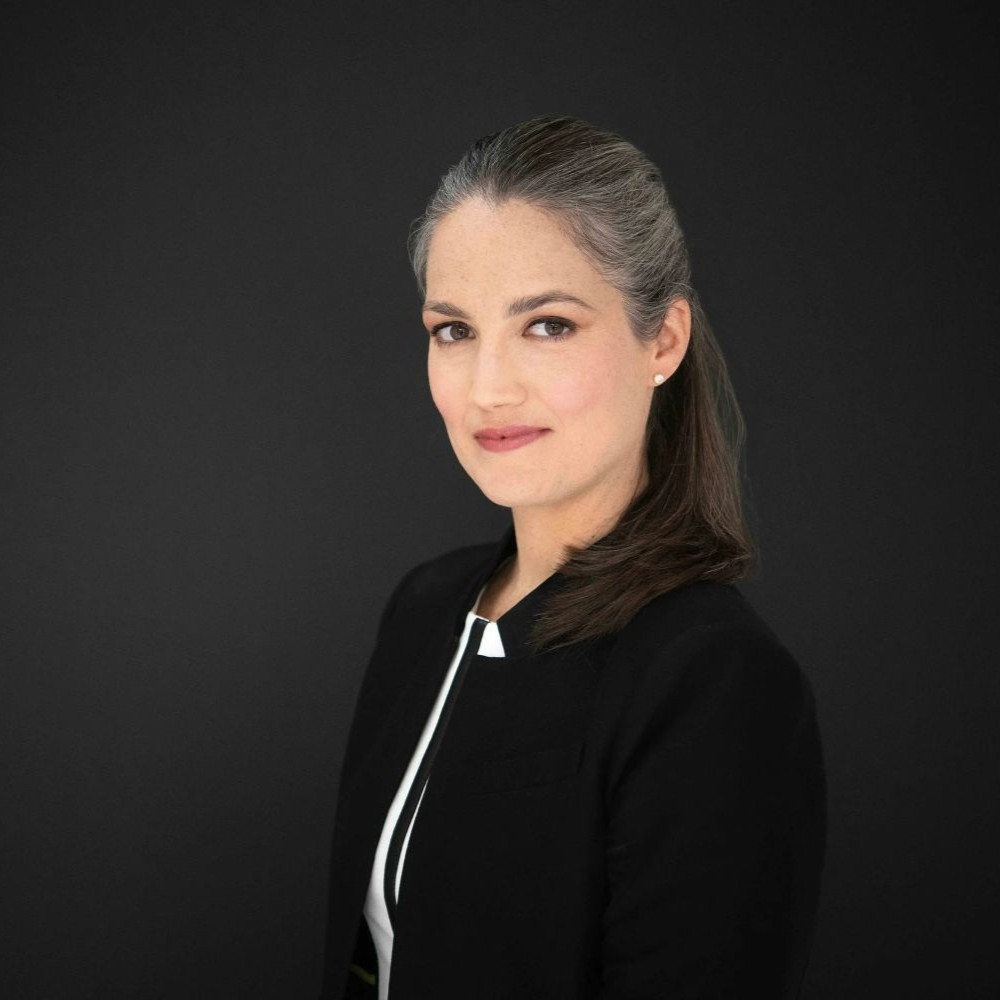
Mahler’s Titan with Heyward
JAN 22-23, 2027
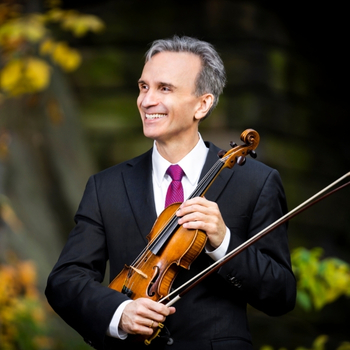
Andrea Tarrodi
Born October 9, 1981 in Stockholm, Sweden
Resides in Stockholm, Sweden
Instrumentation: Two flutes, two oboes, two clarinets, two bassoons, two horns, two trumpets, timpani, suspended cymbal, and strings.
Andrea Tarrodi’s Solus connects with listeners in a viscerally relatable way. The commission from the BBC sought a score for arguably the most unusual Last Night of the Proms concert ever. On September 12, 2020, this celebrated annual event took place with a socially distanced orchestra, without a live audience, and was broadcast across a global livestream. In response to the uncanniness of the human experience during the Covid lockdown era, Tarrodi composed Solus, Latin for “lonely.”
The Swedish composer’s music-color synesthesia informs her compositional method. In an interview with BBC Music Magazine, Tarrodi explained, “I approach music from a visual perspective. Different notes and chords have different colors. When I was young, I was initially torn between painting and composing, and I still approach music through an artistic lens. I do sketches and drawings of the shape of the music before I write it. I prefer writing for orchestra, because of the huge palate of sounds available.”
Emerging out of silence with a timpani roll and tremolo in the low strings, Solus unleashes an unstoppable orchestral crescendo across its five-minute span. To Tarrodi, this crescendo commences the spread of “a small ‘virus’ [that] starts developing in the flutes and clarinets while the brasses, oboes and bassoons enter with a pulsating chord that billows back and forth. The ‘virus’ then is planted in the strings and the rest of the winds and keeps growing and is taken over by the whole orchestra. And then at last, after the final burst, the music travels out into wild nature where we hear the birds sing.”
AARON ZIEGEL is Associate Professor of Music History & Culture and Assistant Chairperson of the Department of Music at Towson University. He is also the Scholar in Residence at Opera Baltimore, where his “Opera Insights” series explores each of the operas in the company’s repertoire. He is a regular collaborator with composer Jonathan Leshnoff, providing background research and program note writing for many of his recent compositions.
Jonathan Leshnoff
Born September 8, 1973 in New Brunswick, NJ
Resides in Baltimore, MD
Instrumentation: Three flutes (third doubling piccolo), three oboes (third doubling English horn), three clarinets (third doubling bass clarinet), three bassoons (third doubling contrabassoon), four horns, three trumpets, three trombones, tuba, timpani, small triangle, snare drum, vibraphone, xylophone, marimba, harp, piano, and strings.
BSO Composer in Residence Jonathan Leshnoff’s musical life began as a child studying the violin. Writing for this instrument thus holds a special place in the composer’s output, as his five previous concerto-type compositions featuring the solo violin reveal (two full-scale solo concertos, one chamber concerto, a concertante for two violins, and a double concerto for violin and viola). For his Third Violin Concerto, Leshnoff revisited a work that carries great emotional significance for the composer.
Leshnoff’s 2022 Violin Sonata was written while his father Stephen Leshnoff, in the final stages of a terminal illness, had lost the ability to speak but could still listen to his son’s music. Leshnoff played parts of the in-progress sonata for his father, receiving the elder Leshnoff’s enthusiastic approval. Consequently, the sonata became the outlet through which he coped with the pain of losing a parent. The finished work was dedicated “in memory of my dear father” and received its premiere at the Aspen Music Festival in 2023 with violinist Gil Shaham and Robert Spano at the piano.
The profound autobiographical expressiveness of the Violin Sonata seems to demand the resources of a full orchestra. In its new form as a violin concerto, Leshnoff reveals the latent symphonic potential of the original piano accompaniment. The solo violin part remains unchanged, allowing returning violinist Shaham to now inhabit a broader public canvas in contrast to the more intimate restraint of chamber music.
The work’s three-movement layout inverts the usual concerto form, with two slow movements that bookend a fast central movement. In the introduction, marked “passionate and mournful,” the solo violin’s lament receives only sparse orchestral support. With a slight quickening of tempo, the concerto’s main theme is heard for the first time. This widely spaced melodic idea, played in a steady quarter-note rhythm above sustained harmonies, serves as a unifying device throughout the work. As the emotional tension of the violin writing accumulates, the steady quarter-note theme functions as a grounding force to which the music continually returns.
The “fast, agitated” second movement balances syncopated and aggressive rhythmic intensity, long-lined melodic lyricism, and virtuosic passagework for the solo violin. Fragments of the steady quarter-note melodic idea reappear throughout the movement until the theme finally reemerges in full at the movement’s climax. The subsequent unaccompanied cadenza continues to develop this theme through a chain of progressively more virtuosic violin techniques. The final movement, “very slow, at peace,” is a musical memorial to the composer’s father, containing what must surely be some of the most heartfelt, eloquent music in Leshnoff’s entire output.
AARON ZIEGEL is Associate Professor of Music History & Culture and Assistant Chairperson of the Department of Music at Towson University. He is also the Scholar in Residence at Opera Baltimore, where his “Opera Insights” series explores each of the operas in the company’s repertoire. He is a regular collaborator with composer Jonathan Leshnoff, providing background research and program note writing for many of his recent compositions.
Gustav Mahler
Born July 7, 1860 in Kaliště, Bohemia
Died May 18, 1911 in Vienna, Austria
Instrumentation: Four flutes (second, third and fourth doubling piccolo), four oboes (third doubling English horn), four clarinets (second and fourth doubling E-flat clarinet, and third doubling bass clarinet), three bassoons (third doubling contrabassoon), seven horns, five trumpets, four trombones, tuba, two timpani, cymbals (pair), bass drum, bass drum with cymbal attached, tam tam, triangle, harp, and strings.
How big can a symphony be? How many different musical ideas can a symphony contain? For Gustav Mahler, the answer was clear: “A symphony must be like the world — it must contain everything,” as he reportedly told fellow composer Jean Sibelius in 1907. Mahler had many models of symphonic largeness near to hand. He regarded Anton Bruckner, a fellow Vienna-based composer whose symphonies pushed the form to new extremes of duration and scale, as a vital predecessor. An all-embracing, intensely emotive expressiveness is of course central to late 19th-century Romanticism. Thus when Mahler felt ready to begin his own first purely orchestral work, he had a clear sense of the scope of his ambitions.
The “everything” encountered in Mahler’s Symphony No. 1 includes nature imagery, birdsong, melodies borrowed from the composer’s own songs for voice and piano, folk dances in Ländler style, a funereal adaptation of “Frère Jacques” (“Bruder Martin” to German speakers), a Bohemian street band, high tragedy, and transcendental triumph. Corralling all these varied impulses into one organized score was no easy feat. Although the bulk of his composing spanned an intense six-week period in early 1888, sketches for the work date back to 1884. Mahler conducted a preliminary version in Budapest in 1889. At that time, he described the five-movement work as a “Symphonic Poem in Two Parts” and had an elaborate programmatic narrative in mind. The original second movement, “Blumine” (referring to meadow flowers), would eventually be eliminated. He settled on a final form by 1896, when he introduced this now Symphony to audiences in Berlin. It only received the appellation First Symphony upon publication in 1899, but Mahler was still revising details of orchestration when he conducted it in New York City in 1909 near the end of his life. None of his subsequent works would undergo such a prolonged period of gestation.
Literary and visual inspirations shaped Mahler’s original programmatic concept, and although he eventually suppressed these ideas, they can help listeners process the music’s complex soundworld. The opening movement, initially titled “Spring without End,” reawakens nature after a frozen winter. For the movement’s primary theme, Mahler repurposed a melody borrowed from one of his songs, in which the lyrics describe a wanderer greeted by the boundless beauty of the natural world. The jovial Scherzo next reflects a youth experiencing life “In Full Sail,” to use the composer’s phrase. The faux-serious funeral march echoes the irony of a woodcut image familiar to Mahler’s audience, “The Hunter’s Funeral Procession,” wherein forest animals in mock mourning accompany the hunter’s coffin to the grave. The finale reaches a new level of orchestral intensity. Initially titled “Dall’Inferno al Paradiso,” Mahler seems to imagine a heroic soul struggling to escape the flames before achieving ultimate triumph in what the composer called a “glorious victory chorale.”
AARON ZIEGEL is Associate Professor of Music History & Culture and Assistant Chairperson of the Department of Music at Towson University. He is also the Scholar in Residence at Opera Baltimore, where his “Opera Insights” series explores each of the operas in the company’s repertoire. He is a regular collaborator with composer Jonathan Leshnoff, providing background research and program note writing for many of his recent compositions.
Elgar, Tchaikovsky & Strauss
JAN 28-31, 2027
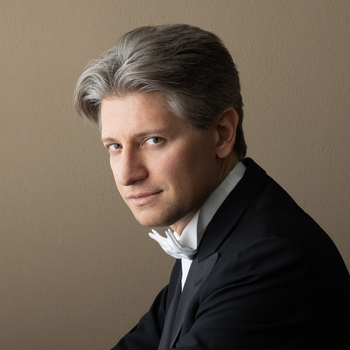
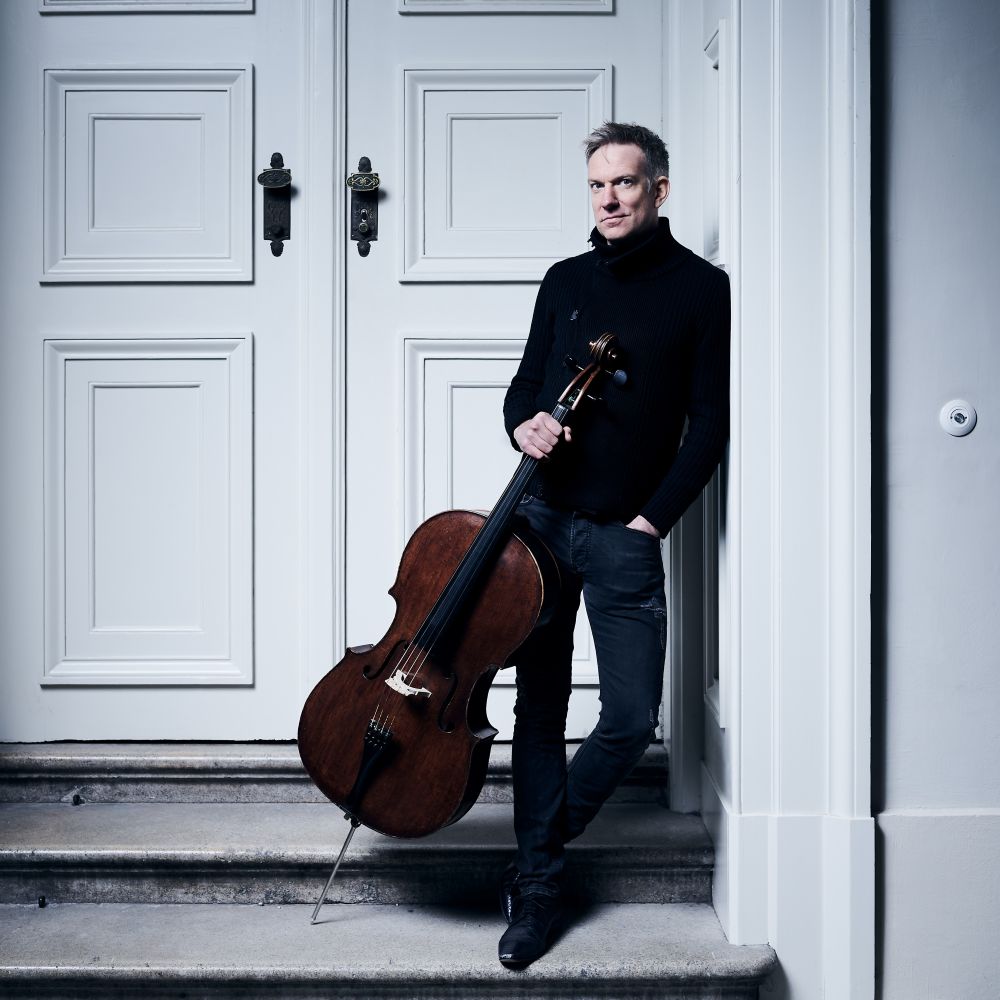
Edward Elgar
Born June 2, 1857 in Lower Broadheath, England
Died February 23, 1934 in Worcester, England
Instrumentation: Three flutes (third doubling piccolo), two oboes, English horn, two clarinets, bass clarinet, two bassoons, contrabassoon, four horns, three trumpets, three trombones, tuba, timpani, soprano snare drum, triangle, glockenspiel, cymbals (pair), bass drum, two harps, and strings.
A self-taught composer from a working-class Roman Catholic family, Edward Elgar struggled for decades to achieve respect as a composer in England, where many of his colleagues were highly educated, wealthy Protestants. By late 1903, however, he had garnered enough acclaim that a monumental three-day festival of his music was planned for March 1904 at the Royal Opera House in London. Edward VII and Queen Victoria planned to attend, and Elgar endeavored to write several impressive new works. He and his family traveled south to the Italian Riviera for the Christmas holiday season in 1903, where Elgar planned to compose a symphony.
The Elgar family stayed in Alassio, a resort town in Northern Italy along the Via Giulia Augusta, an important first-century BCE road that is home to numerous ancient Roman artifacts. Rather than writing a symphony that winter, Elgar composed In the South (Alassio), a concert overture inspired by Alassio’s rich history and stunning landscapes. Elgar was particularly drawn to the Roman Empire’s impact on the region, writing “in a flash, it all came to me — the conflict of the armies on that very spot long ago, where now I stood—the contrast of the ruin and the shepherd — and then, all of a sudden, I came back to reality. In that time, I had composed the overture.”
In the South (Alassio) was premiered by the Hallé Orchestra at the Elgar Festival in March 1904, with the composer himself conducting. Hailed by The Musical Times as Elgar’s “most beautiful orchestral work,” the piece was subsequently performed in Chicago, New York City, Berlin, Vienna, and Prague. In the South (Alassio) opens with a theme Elgar had previously written in 1899 to playfully illustrate a friend’s bulldog that is “triumphant after a fight.” After a calmer section, the music again becomes grandiose, portraying what Elgar describes as “the relentless and domineering onward force” of the Romans. The melody for the next lyrical section, which is presented in the viola, reportedly sounded so authentically Italian that listeners assumed it was a traditional folk song. However, it was entirely original and was so popular that he eventually published it separately as a song called “In Moonlight.” Elgar’s concert overture returns to the thrilling opening theme near the end of the piece, bringing In the South (Alassio) to a triumphant, full-circle finish.
PAULA MAUST is Assistant Professor of Music Theory at The Peabody Conservatory. She is the author of Expanding the Music Theory Canon and performs extensively as a harpsichordist and organist.
Pyotr Ilyich Tchaikovsky
Born April 25 (old style)/May 7 (new style), 1840 in Votkinsk, Vyatka Province, Russia
Died October 25/November 6, 1893 in St. Petersburg, Russia
Instrumentation: Two flutes, two oboes, two clarinets, two bassoons, two horns, and strings, in addition to the solo cello.
In 1876, Pyotr Ilyich Tchaikovsky confided to his brother Modest that he was composing a work for solo cello and orchestra that was inspired by Wolfgang Amadeus Mozart. In the midst of his own tremendous emotional turmoil, Tchaikovsky found respite in Mozart’s “sunny genius.” He wrote, “it is because I am broken, morally ill, that I so like to seek solace and consolation in Mozart’s music, which for the most part serves as an expression of life’s joys, experienced by a healthy, complete nature uncorroded by reflection.” The resulting work was Tchaikovsky’s Variations on a Rococo Theme, a work that exudes both Russian romantic lyricism and neo-classical harmonies and structure.
Emerging in the 1730s in France and peaking in Russia at the end of the century, the rococo style of art, music, and architecture was regarded for its ornate embellishments, pastel colors, motifs made of seashells and pebbles, and smaller rooms intended to foster intimate gatherings. Rococo music often featured charming melodies with brilliant ornamentation, clear formal structures, and straightforward harmonies. Although the theme in Tchaikovsky’s work is not an original melody from the rococo period, it is highly emblematic of the rococo style.
Tchaikovsky’s Variations on a Rococo Theme was premiered in 1877 by Wilhelm Fitzenhagen, a German cellist and professor at the Moscow Conservatory. Fitzenhagen was responsible for several substantial edits to Tchaikovsky’s original score, including adapting the transitions between some variations to provide repose for the soloist and reordering the variations. Even with Fitzenhagen’s revisions, the piece is a true virtuosic tour de force for the cellist. Fitzenhagen performed the piece numerous times to great acclaim, with Franz Liszt notably saying, “You carried me away!”
Scored for a reduced orchestra to emulate the sound of a rococo period orchestra, Tchaikovsky’s work contains the theme followed by a series of eight variations. After a brief orchestral introduction, the cellist presents the theme, which is repeated four times. Each variation creates a different type of contrast, with varying levels of rhythmic intensity, virtuosity, lyricism, and melancholy. Of particular interest are the second variation, in which the cellist unexpectedly has a bold cadenza very early in the work, and the third variation, which is the only variation to visit a minor key. In the other variations, Tchaikovsky explores metric displacement, clever dialogues between the flute and cello, and a variety of different timbres and textures. The excitement builds all the way to the end of the piece, with the soloist reaching up into the highest register of the instrument.
PAULA MAUST is Assistant Professor of Music Theory at The Peabody Conservatory. She is the author of Expanding the Music Theory Canon and performs extensively as a harpsichordist and organist.
Richard Strauss
Born June 11, 1864 in Munich, Bavaria
Died September 8, 1949 in Garmisch-Partenkirchen, West Germany
Instrumentation: Three flutes, piccolo, three oboes, English horn, two clarinets, bass clarinet, E-flat clarinet, three bassoons, contrabassoon, four horns, three trumpets, three trombones, tuba, timpani, ratchet, snare drum, triangle, cymbals (pair), bass drum, and strings.
In the early 16th-century, several German chapbooks were printed detailing the misadventures of Till Eulenspiegel, a trickster who was infamous for exposing vices by playing practical jokes on craftsmen, nobility, priests, and even the pope. The stories were translated to English, Dutch, Flemish, and French, and Till Eulenspiegel ultimately became a permanent fixture in German folklore. Nearly four centuries later, Richard Strauss created his own interpretation of the legend in his tone poem Till Eulenspiegel’s Merry Pranks, which was premiered in 1895.
Scored for a robust orchestra with a full complement of winds, brass, percussion, and strings, the piece has become one of Strauss’s most performed orchestral works. In this rendition of the story, Till mockingly dresses up as a priest and rides a horse through the market. He openly flirts with women, intentionally speaks in confusing riddles, and eventually is led to the scaffold. Strauss employs two different melodic themes to portray Till — the first is stated by the solo horn near the opening of the tone poem, and the second is presented by the clarinet. Throughout the piece, we hear Strauss’s masterful use of varied orchestral timbres and percussion to create the soundscape of riding a horse, subtle musical jokes, a somber funeral march, and an agonizing death portrayed through a penetrating clarinet solo and plucked strings. Even though Till ultimately dies, Strauss concludes the work with a final return to the original joking theme, suggesting that Till’s influence lives on.
PAULA MAUST is Assistant Professor of Music Theory at The Peabody Conservatory. She is the author of Expanding the Music Theory Canon and performs extensively as a harpsichordist and organist.
Richard Strauss
Born June 11, 1864 in Munich, Bavaria
Died September 8, 1949 in Garmisch-Partenkirchen, West Germany
Instrumentation: Three flutes (third doubling piccolo), three oboes (third doubling English horn), three clarinets (third doubling E-flat clarinet), bass clarinet, three bassoons (third doubling contrabassoon), four horns, three trumpets, three trombones, tuba, timpani, ratchet, snare drum, bass drum, cymbals (pair), triangle, tambourine, glockenspiel, two harps, celesta, and strings.
By the time he wrote his opera Der Rosenkavalier in 1910, Richard Strauss was one of the most famous and wealthy composers in Western Europe. The opera is set in 18th-century Vienna, where the Princess Marie Therese (who is married to the Field Marshal) is having a romantic affair with the 17-year-old Count Octavian. The Princess’ cousin, Baron Ochs, hopes to get married soon, and he plans to propose to Sophie, a young bourgeois woman. “Der Rosenkavalier,” (“the bearer of the rose”), was an aristocratic Austrian custom developed for the opera in which a young man is sent to present a silver engagement rose to a young woman on behalf of an older suitor. The Baron sends Octavian to deliver a rose to Sophie, and in an unexpected plot twist, Sophie and Octavian fall in love. This spurs a series of comedic ploys to help Sophie avoid marrying the Baron. Recognizing that her affair with Octavian has run its course, the Princess ultimately helps the two young lovers be together.
Der Rosenkavalier was immediately beloved and has been performed extensively since its premiere. In 1945, Strauss approved the publication of an orchestral Suite of music from the opera, which was most likely compiled by Artur Rodzinski who conducted the Suite’s premiere with the New York Philharmonic in 1944. The Suite encompasses some of the most significant moments of drama in the opera, including the Princess and Octavian’s passionate romance in the prelude, Octavian acting as the “Rosenkavalier,” Sophie and Octavian’s love duet (depicted here in the horn and oboe), the clumsy music accompanying the Baron’s arrival on the scene, and several iconic waltzes. The suite concludes with a dramatic coda that was newly composed in 1944 and has led audiences to leap to their feet in boisterous applause ever since.
PAULA MAUST is Assistant Professor of Music Theory at The Peabody Conservatory. She is the author of Expanding the Music Theory Canon and performs extensively as a harpsichordist and organist.
Stravinsky X Kendrick Lamar
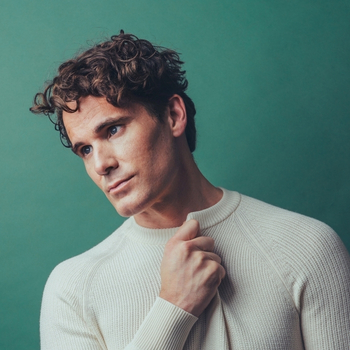
The Planets – An HD Odyssey
FEB 11-13, 2027
Anna Clyne
Born March 9, 1980 in London, England
Resides in rural New York
Instrumentation: One flute, piccolo, two oboes, two bassoons, two horns, trumpet, trombone, and strings.
Anna Clyne’s creative practice is like a wheel that constantly passes, stops, and engages with artforms that can inform her creative ideas and blast apart artistic roadblocks. She has composed works that engage directly with or are inspired by film, dance, visual art, and technological advancement. Hers is the compositional manifestation of a Renaissance woman.
Completed in 2021, PIVOT was premiered by Dalia Stasevska and the BBC Symphony Orchestra at the Edinburgh International Festival in Scotland that same year. And as we should often do with the work of living composers, below are Clyne’s words about PIVOT, quoted in full from her Boosey & Hawkes page:
“PIVOT is inspired by my experiences at The Edinburgh Festival where I enjoyed an array of fantastic performances across the arts. It is this variety that I have tried to capture in PIVOT which, as the title suggests, pivots from one experience to another. The Pivot is also a former name of the 200-year-old folk music venue and pub in Edinburgh, The Royal Oak.
“PIVOT quotes fragments of The Flowers of Edinburgh, a traditional fiddle tune of the 18th-century Scottish lineage that is also prominent in American fiddle music and thus bridges between Edinburgh and St. Louis, where this music was premiered. Thank you to Aidan O’Rourke for his guidance on folk fiddle bowings and ornaments, which are incorporated into PIVOT.”
A. Kori Hill specializes in American music, Black composers, and music of the nineteenth and twentieth centuries. She is a program notes annotator for Seattle Symphony and Chamber Music Society at Lincoln and the lead writer for Classics for Kids Blog at Cincinnati Public Radio. She is co-editor of The Cambridge Companion to Florence B. Price, forthcoming from Cambridge University Press.
Wolfgang Amadeus Mozart
Born January 27, 1756 in Salzburg, Germany
Died May 25, 1791 in Vienna, Austria
Instrumentation: Flute, two oboes, two bassoons, two horns, two trumpets, timpani, and strings.
Fun fact about this piece: Mozart didn’t give it a nickname. That’s thanks to Johann Peter Salomon, according to Mozart’s youngest son, Franz Xaver Wolfgang. Or it may have been music publisher Johann Baptist Cramer, who thought of thunderbolts when he heard the opening chords of the symphony. Either way, the moniker stuck.
Completed in 1788, it is unclear if this symphony was performed in Mozart’s lifetime. I. Allegro vivace is in sonata form, with a jubilant and restrained main theme, optimistic development section, and opening chords that are serious and exciting. II. “Andante cantabile” is a sarabande, descended from the Arabic-Spanish dance of the same name. The soothing, lyrical theme is passed around the orchestra, often in a call-and-response that either repeats or completes a phrase. Mozart’s use of abrupt modulations, shifts in articulations, and rhythmic variation helps maintain a feeling of forward motion, something that is not always achieved in the slow movements of symphonies, concertos, and chamber works.
III. “Menuetto: Allegretto – Trio” is a return to the elegant restraint of the main theme; the IV. “Finale. Molto allegro” is where Mozart truly lets loose. Rather than setting the last movement in rondo form, he again uses sonata form. This allows for the epic transformation of the five main themes within the development, and fugal elevation of these themes in the recapitulation.
A. Kori Hill specializes in American music, Black composers, and music of the nineteenth and twentieth centuries. She is a program notes annotator for Seattle Symphony and Chamber Music Society at Lincoln and the lead writer for Classics for Kids Blog at Cincinnati Public Radio. She is co-editor of The Cambridge Companion to Florence B. Price, forthcoming from Cambridge University Press.
Gustav Holst
Born September 21, 1874 in Cheltenham, England
Died May 25, 1934 in London, England
Instrumentation: Four flutes (third doubling piccolo, fourth doubling piccolo and alto flute), three oboes, (third doubling bass oboe), English horn, three clarinets, bass clarinet, three bassoons, contrabassoon, six horns, four trumpets, three trombones, bass tuba, tenor tuba, two timpani, tambourine, side drum, bass drum, glockenspiel, gong, xylophone, triangle, bells, cymbals, two harps, organ, celeste, SSSAAA chorus, and strings.
Like Clyne, Holst also looked to folk music in his composing life. Not only to quote or arrange, but to incorporate folk music’s economy of simplicity and directness within his style.
Unlike Mozart, Holst was purposeful in naming his composition The Planets. A holiday with friends in 1913 piqued his interest in astrology and horoscopes. Slowly, ideas began to coalesce around a musical work about the planets. Holst started jotting down his ideas a year later and completed the seven-movement work in 1917: 13 years before the discovery of Pluto and 89 years before Pluto’s demotion to dwarf planet.
Archival materials suggest Holst at first planned to structure the suite in the order of the planets’ distance from the Sun. In the end, he set that aside for the dramatic arc of each planet’s character. That’s why we open with I. “Mars, the Bringer of War.” An ominous ferocity percolates thanks to the rhythmic ostinato of col legno strings; the growing majesty of the brass and percussion; and the enhanced tension as the ostinato moves to the foreground and the dynamics reach a fever pitch. II. “Venus, Bringer of Peace” is a tender contrast. Atmospheric, quiet and demure, a melody slowly emerging in the woodwinds — but doesn’t fully develop. The introduction of the strings and solo violin eventually take us to a fuller texture and full realization of the main theme.
III. “Mercury, The Winged Messenger” is a flurry of scalar passages ascending and descending, set in contrast with repetitive punctuations from the woodwinds. Humor and cheekiness is clear in the angular motive before the solo violin introduces the primary theme that is passed throughout the orchestra. Parts of the scalar passages near the end presage those that appear in IV. “Jupiter, Bringer of Jollity,” which opens with an epic brass anthem made even more epic thanks to a fast ostinato in the strings.
The famous lyrical theme that makes this movement even more popular than the entire suite best highlights Holst’s use of folk directness: the melody is given center stage. It is not ornamented or transformed, simply passed around the orchestra, growing in intensity through repetition, dynamics, and chordal punctuations. Holst eventually gave this theme its own name — “Thaxted” — after the village he called home from 1917 to 1925. He would also use the melody for the patriotic hymn “I Vow to Thee, My Country” (1921), a move that was controversial for some.
How to follow up the excitement of “Jupiter?” By leaning into strangeness. V. “Saturn, Bringer of Old Age,” starts quiet and ominous, gets loud and ominous, and ends somewhere between comforting and eerie. Holst uses long notes, minor keys, dissonant chords, and dynamic contrast that are suddenly interrupted by a ticking clock in the percussion and strings; the long notes win, but then the clock takes over, followed by a two-note motive in the brass, repeated softer in the strings. This two-note motive is transformed into something tender in the strings, slowly fading on a chord that feels stable, though without a complete resolution. VI. “Uranus, The Magician,” begins with loud brass chords, followed by a cheeky motive that moves from woodwinds to the rest of the orchestra. We have returned to the humor and flightiness of Mercury, but also with a flair of rambunctious chaos. And lastly, VII. “Neptune, The Mystic,” whose eerie beauty is captured immediately with the main theme in the quiet of the woodwinds. Never getting above a whisper, even when we get a more grounded, lyrical melody and the faint vocalizations of a female choir. Eventually the orchestra falls away, leaving only the choir, who soon too fades as we, the sonic astronauts, continue out in the distant, uncertain, intimidating, entrancing dark.
A. Kori Hill specializes in American music, Black composers, and music of the nineteenth and twentieth centuries. She is a program notes annotator for Seattle Symphony and Chamber Music Society at Lincoln and the lead writer for Classics for Kids Blog at Cincinnati Public Radio. She is co-editor of The Cambridge Companion to Florence B. Price, forthcoming from Cambridge University Press.
Let’s Groove Tonight: Motown & the Philly Sound
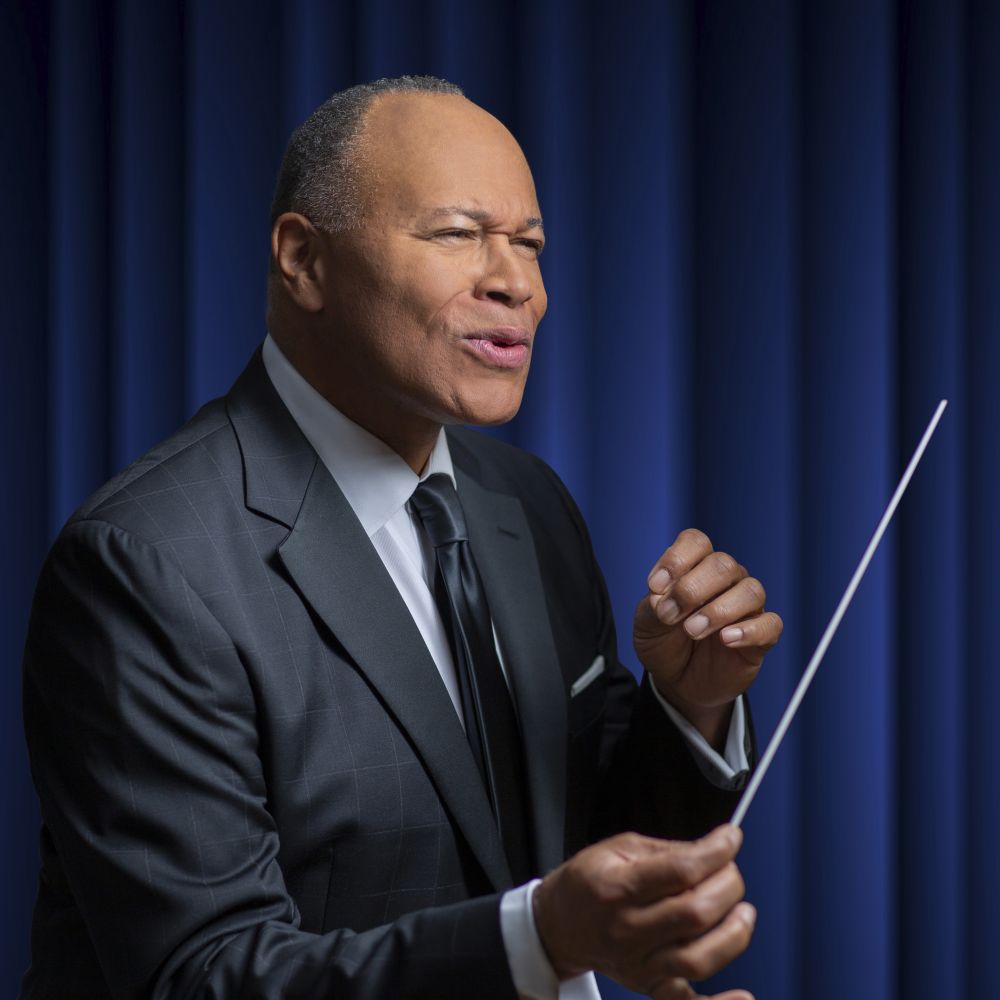
Beethoven’s Complete Piano Concertos with Yeol Eum Son
FEB 25-28, 2027
THU, FEB 25, 7:30 PM MEYERHOFF
SAT, FEB 27, 6 PM MEYERHOFF
SUN FEB 28, 3PM STRATHMORE
BEETHOVEN Piano Concerto No. 3
BEETHOVEN Piano Concerto No. 5
FRI, FEB 26, 8 PM MEYERHOFF
BEETHOVEN Piano Concerto No. 1
BEETHOVEN Piano Concerto No. 2
BEETHOVEN Piano Concerto No. 4
Ludwig van Beethoven
Born December 17, 1770 in Bonn, Germany
Died March 26, 1827 in Vienna, Austria
Instrumentation: Flute, two oboes, two clarinets, two bassoons, two horns, two trumpets, timpani, and strings, in addition to the solo piano.
Beethoven’s first two piano concertos followed the model of Mozart’s, but this one already shows his own stamp in its sprawling scale and combination of boldness and reverie. It is scored for two trumpets and timpani, as well as woodwinds and strings, as was typical for late-18th-century compositions in the “brilliant” key of C Major. The very military opening theme begins softly in the strings, revealing its true character when it is repeated loudly by the full orchestra. The orchestra also introduces the graceful, downward-curving second theme, but we just hear the first part as it keeps seeking a way back to C Major. Only when the piano enters will we hear it in its entirety. Much of the piano’s exposition is devoted to glittering, high-speed passagework to show off Beethoven’s virtuosity, but the composer displayed his poetic side in some lovely quiet playing toward the end. The development section, begun by solo oboe, is also introspective and quiet.
The slow movement is a beautiful rhapsody, which we want to go on forever (as it nearly does). The orchestra is reduced to just strings and the darker winds — clarinets, bassoons, and horns — giving it a moody coloration. The piano’s long, melancholy melodies introduce a Romantic world Mozart never quite entered. Near the conclusion comes a tender duet for the solo clarinet and the piano.
The pianist launches the finale with a high-spirited rondo theme that is easy to recognize on its many returns. The composer includes a perky dialogue between woodwinds and soloist near the end, as well as a quiet passage for soloist with oboe that sets off the boisterous finish all the better.
Janet E. Bedell is a program annotator and feature writer who writes for Carnegie Hall, the Metropolitan Opera, Los Angeles Opera, Caramoor Festival of the Arts, and other musical organizations.
Ludwig van Beethoven
Born December 17, 1770 in Bonn, Germany
Died March 26, 1827 in Vienna, Austria
Instrumentation: Flute, two oboes, two bassoons, two horns, and strings, in addition to the solo piano.
As Beethoven’s composing talents developed rapidly in Vienna’s stimulating environment, he kept returning to revise this most charming of his concertos. Scholars believe he made extensive revisions — including a new finale — in 1795 before its first public performance and in 1801, when he finally published it.
The first movement, an Allegro con brio sonata form, opens with a split-personality first theme, a crisp, staccato fanfare followed by a gracefully flowing violin response. Beethoven breaks these components apart and makes much imaginative use of them throughout the movement. In fact, the violin response is soon developed by the strings and woodwinds into a lyrical theme. However, we don’t hear the true second theme until after the piano makes its entrance, a smooth descending melody that the orchestra introduces and the piano embroiders. The development section is surprisingly tame by the standards of later Olympian Beethoven developments.
The second movement in E-flat major is the first of Beethoven’s marvelous slow movements. A noble, hymn-like meditation is presented by the orchestra and elaborated by the soloist; it forms the substance of the entire movement. This beautiful interlude is crowned with a remarkable coda, in which the soloist spins out a delicate reverie in single notes, with orchestral punctuations.
Beethoven probably created a new finale for the work sometime in the 1790s. This witty, vivacious rondo with its short-long rhythm refrain bears the composer’s personal stamp more than the rest of the concerto. In ebullient 6/8 meter, it allows the soloist to show off his fleet finger work and features a very engaging middle episode in the minor mode, sparked by syncopated rhythms.
Janet E. Bedell is a program annotator and feature writer who writes for Carnegie Hall, the Metropolitan Opera, Los Angeles Opera, Caramoor Festival of the Arts, and other musical organizations.
Ludwig van Beethoven
Born December 17, 1770 in Bonn, Germany
Died March 26, 1827 in Vienna, Austria
Instrumentation: Two flutes, two oboes, two clarinets, two bassoons, two horns, two trumpets, timpani, and strings, in addition to the solo piano.
Beethoven wrote most of the Third Piano Concerto in 1800, in advance of a major debut concert in Vienna, but he chose to play an earlier concerto instead. After a few more years of tinkering, he unveiled the new concerto on an 1803 program that also included the premiere of the Second Symphony. For the new concerto, Beethoven performed from a hastily written score that, in the words of his page turner, contained “almost nothing but empty leaves; at the most, on one page or another a few Egyptian hieroglyphs wholly unintelligible to me were scribbled down to serve as clues for him.”
The concerto opens with a definitive statement from the strings, countered by a questioning response from the winds. In line with the style that would come to dominate Beethoven’s “middle” period, these themes separate into essential fragments to be examined from all angles, with various rising triads, falling scales, and timpani-like alternations appearing in the foreground and background.
The first E-major chord of the central Largo could hardly be more alien, or more luminous. The movement continues as a study in contradictions: humble yet ornate, foreign yet familiar, slow yet restless. A striking exchange occurs when the flute and bassoon trade childlike melodies over a simple plucked background, while the piano issues gusts of sound blurred by the sustain pedal.
The finale returns to the home key with a theme that lands heavily on an unresolved A-flat: the very same pitch that, in a different guise, defined the bright harmonies of the slow movement. (On the piano, A-flat is identical to G-sharp, the major third in the key of E.) Later in the movement, the same musical pun allows the slow movement’s key of E-major to return briefly to put a radiant new sheen on the finale’s main theme.
Aaron Grad has been the exclusive program annotator for the Orpheus Chamber Orchestra since 2005, and contributes program notes to various other symphony orchestras, ensembles, and presenters. His concert reviews have appeared in The Washington Post, and PlaybillArts regularly publishes his feature articles and interviews online.
Ludwig van Beethoven
Born December 17, 1770 in Bonn, Germany
Died March 26, 1827 in Vienna, Austria
Instrumentation: Flute, two oboes, two clarinets, two bassoons, two horns, two trumpets, timpani, and strings, in addition to the solo piano.
Beethoven unveiled his Fourth Piano Concerto at a private concert in the mansion of his patron Prince Franz Josef von Lobkowitz in March 1807. Then he put it away for nearly two years and performed it only one more time, at the marathon concert on December 22, 1808, at Vienna’s Theater an der Wien, which also included the world premieres of his Fifth and Sixth Symphonies, among numerous other works.
Rather than the stentorian sounds of a full orchestra, the first notes are played softly on the piano, the gentle murmuring of a theme based on repeated notes and simple harmonies. And then — just as surprising — following its five-measure presentation of the thematic germ of this movement, the piano simply withdraws, not to be heard from again for another 69 measures, during which suspense mounts as to what is fueling its behavior. The second movement is extraordinary, too, even apart from its uncharacteristic brevity (lasting only about five minutes). The music theorist Adolf Bernhard Marx, in his 1859 biography of Beethoven, suggested that this Andante con moto bore some relationship to Gluck’s opera Orfeo ed Euridice — specifically, to how Orpheus used music to tame wild beasts. More recently, some musicologists have argued that the movement is a point-for-point musical narration of a version of the Orpheus myth that was popular in Viennese theatres. The finale brings this essentially lyrical concerto to an ebullient end, with trumpets and timpani added for the first time.
James M. Keller, the longtime Program Annotator of the San Francisco Symphony and the New York Philharmonic, is the author of Chamber Music: A Listener’s Guide (Oxford University Press).
Ludwig van Beethoven
Born December 17, 1770 in Bonn, Germany
Died March 26, 1827 in Vienna, Austria
Instrumentation: Two flutes, two oboes, two clarinets, two bassoons, two horns, two trumpets, timpani, and strings, in addition to the solo piano.
The bombardment began at 9 pm on a Thursday evening in spring — May 11, 1809. As patrons emerged from Vienna’s restaurants and pedestrians ambled through the streets, they were met with a sudden rain of artillery fire. Caught in the attack were the torchbearers and heirs of Vienna’s cultural elite. One shell struck the imperial school where, then 12-year-old Franz Schubert boarded. Others threatened to raze the neighborhood where Vienna’s star virtuoso pianist and composer, Ludwig van Beethoven, resided; compelled to take refuge in a cellar, Beethoven pressed pillows to his already failing ears, muffling the explosions above. Just before dawn, Vienna capitulated to the invading French forces. Napoleon had won.
Beethoven felt these hardships acutely. With his aristocratic patrons struggling to guarantee his promised annuity, in July 1809 Beethoven appealed to his publisher: “my position, only lately assured, rests on a loose foundation.” He continued: “What a disturbing, wild life all around me, a city filled with nothing but drums, cannons, marching men, and misery of all sorts.” It was under these bleak circumstances that Beethoven completed his fifth piano concerto.
Beethoven’s disdain for Napoleon, the self-proclaimed emperor who sought to reshape Europe into his own “Grand Empire,” is well documented. So then, what of the Concerto’s title, “Emperor?” One likely apocryphal story credits a French officer with exclaiming, C’est l’Empereur! (“It’s an emperor among concertos!”) upon hearing the work. Another theory holds that the title was a marketing ploy conjured by the English publisher of the concerto. Whatever the case, given the political climate, Beethoven almost certainly would have disapproved.
Heather O’Donovan is an artist and writer whose program notes have appeared at Carnegie Hall, the Manhattan School of Music, the Aspen Music Festival and School, and the Baltimore Symphony Orchestra. She is the dramaturg and librettist of Princess Ida: The Glow Up, a Gilbert & Sullivan adaptation.
Stravinsky & Prokofiev with Heyward
OCT 2-4, 2026
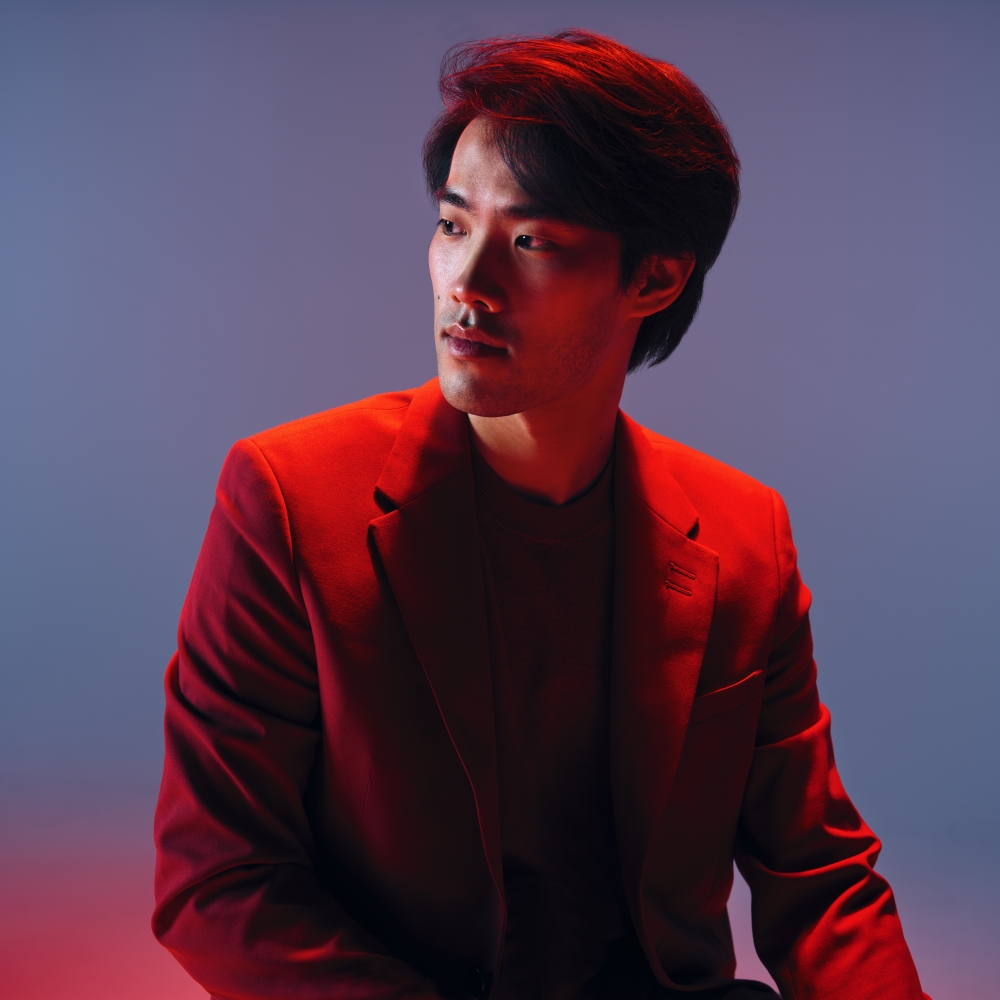
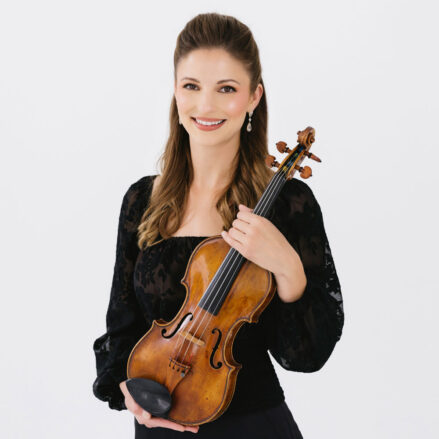
Repertoire
Mikhail Glinka
Born June 1, 1804 in Novospasskoye, Russian Empire Died February 15, 1857 in Berlin, Germany
Instrumentation: Two flutes, two oboes, two clarinets, two bassoons, four horns, two trumpets, three trombones, timpani, and strings.
Considered the “father of Russian music,” Glinka made his dreams of distinctively Russian music a reality with his first opera, A Life for the Tsar. Its 1836 premiere was such a triumph that he promptly began a second opera in 1837. But though Russlan and Lyudmila would become the greater work, it had a rocky genesis. It was set to a colorful and fantastic fairytale by the great Russian poet Alexander Pushkin. The tale tells of the beautiful Lyudmila, pursued by three suitors and abducted by the evil dwarf Chernomor; finally, after many trials and the undoing of assorted magical spells, she is rescued and won by her true love, the noble Russlan. Pushkin promised he would turn this into a suitable libretto for Glinka but was killed in a duel before he could. Thus, Glinka ended up with a messy stew of a libretto, and this contributed to the tepid response at its premiere in St. Petersburg in 1842.
But Glinka’s musical score was beautiful and imaginative, and Russians soon embraced it. Known for its dazzling Overture in a well-crafted sonata form, it is above all a brilliant showcase for the violins. The romantic second theme, sung by the violas and cellos, is taken from Russlan’s second-act aria as he dreams of Lyudmila on the battlefield. A vivacious coda tells us this opera will have a happy ending.
Janet E. Bedell is a program annotator and feature writer who writes for Carnegie Hall, the Metropolitan Opera, Los Angeles Opera, Caramoor Festival of the Arts, and other musical organizations.
Sergei Prokofiev
Born April 27, 1891 in Sontsovka, Russian Empire
Died March 5, 1953 in Moscow, Soviet Union
Instrumentation: Instrumentation: Two flutes (second doubling piccolo) two oboes, two clarinets, two bassoons, four horns, two trumpets, three trombones, timpani, tambourine, castanets, cymbals (pair), bass drum, strings, in addition to the solo piano.
Between 1918 and 1936—from the outbreak of the Russian Revolution until his permanent relocation back to the U.S.S.R.—Sergei Prokofiev lived the life of an international touring pianist, composer, and conductor, first based in the United States and later in Western Europe. Around the same time, Prokofiev’s fellow expatriate Sergei Rachmaninoff was also making his mark on the American concert scene. Audiences here largely preferred Rachmaninoff’s warmly expressive Romanticism over Prokofiev’s more forbidding Modernist style. Critic Richard Aldrich’s brutal takedown in a 1922 New York Times review was typical, dismissing Prokofiev’s compositions as having “only a very few passages that bear recognizable kinship with what has hitherto been recognized as music.”
Of the works completed during Prokofiev’s American years, his Third Piano Concerto achieved the greatest success. He sought a more approachable style in this work, adjusting his idiom to something he hoped would appeal more broadly to American tastes. The composer played the concerto’s premiere on December 16, 1921, with the Chicago Symphony Orchestra under the direction of Frederick Stock. Subsequent performances quickly followed in New York, London, and Paris. The accessibility and directness of this concerto have earned it a reputation as one of Prokofiev’s most popular and frequently performed compositions, aided in no small part by his pioneering 1932 Abbey Road Studios recording accompanied by the London Symphony Orchestra.
A Russian folksong-like melody for clarinet opens the concerto in unassuming fashion, but once the tempo picks up, the piano is rarely absent from the texture. Much of the piano writing in the first movement is characterized by a motoric, perpetual-motion drive that contrasts with moments of thick chordal dissonance and occasional lyrical respites, including some that revisit the opening clarinet melody. A set of variations follows, offering five distinct takes on an old-fashioned, gavotte-like theme. The finale begins with what at first seems like some sort of macabre, off-kilter waltz before growing into a veritable “argument” (to use Prokofiev’s term) between the piano and orchestra. A slower, lyrical central section approaches the kind of emotional expressiveness that we more strongly associate with Rachmaninoff, but Prokofiev’s brilliantly inventive virtuosity comes to the fore in the concerto’s conclusion.
AARON ZIEGEL is Associate Professor of Music History & Culture and Assistant Chairperson of the Department of Music at Towson University. He is also the Scholar in Residence at Opera Baltimore, where his “Opera Insights” series explores each of the operas in the company’s repertoire. He is a regular collaborator with composer Jonathan Leshnoff, providing background research and program note writing for many of his recent compositions.
Jonathan Leshnoff
Born September 8, 1973 in New Brunswick, NJ Resides in Baltimore, MD
Instrumentation: Instrumentation: Two flutes, two oboes, two clarinets, two bassoons, two horns, two trumpets, two trombones, timpani, snare drum, vibraphone, crotales, suspended cymbal, harp, and strings.
With this weekend’s concerts, Baltimore-based composer Jonathan Leshnoff makes his first appearance of the 2026–27 season as the Baltimore Symphony Orchestra’s Composer in Residence. Upcoming concerts will include the world premieres of his Sixth Symphony and a new Violin Concerto—two genres that occupy the core of Leshnoff’s diverse output. Longtime BSO patrons may recall past premieres here, including Starburst (2010), the Guitar Concerto (2014), and Dancing Blue Crabs! (2017).
Rush (2008) is the earliest of Leshnoff’s growing catalog of concise, celebratory concert openers—a list that, in addition to Starburst and Dancing Blue Crabs!, includes Rogue Sparks (2017) and Score (2022). Collectively these pieces have been widely performed across the United States and abroad. Written just four years after the composer’s First Symphony (2004), Rush is a notable early example of Leshnoff’s mature, personal voice, and thus it provides a useful introduction to his characteristic soundworld ahead of this season’s upcoming premieres.
The expressive character of Rush is made evident by its title. A scalar, stepwise motive emerges first in the orchestra’s lower register and quickly climbs through the entire ensemble. This upwelling ignites a rhythm of continuous eighth notes that persist almost without interruption through the fast sections of the piece. Frequent meter changes heighten the intensity of the music’s kinetic, forward drive. Yet despite the onrushing insistence of the principal material, Leshnoff finds several opportunities to suspend the music’s momentum in midair, as it were. Elongated melodies above sustained string harmonies provide welcome moments of contrast, most notably in two cadenza-like passages for solo clarinet and harp, respectively. Inevitably, the music’s energy erupts anew, and in one final dash, the piece arrives at its sudden conclusion.
AARON ZIEGEL is Associate Professor of Music History & Culture and Assistant Chairperson of the Department of Music at Towson University. He is also the Scholar in Residence at Opera Baltimore, where his “Opera Insights” series explores each of the operas in the company’s repertoire. He is a regular collaborator with composer Jonathan Leshnoff, providing background research and program note writing for many of his recent compositions.
Igor Stravinsky
Born June 17, 1882 in Oranienbaum, Russia
Died April 6, 1971 in New York City, NY
Instrumentation: Instrumentation: Two flutes (second doubling piccolo), two oboes (second doubling English horn), two clarinets, two bassoons, four horns, two trumpets, three trombones, tuba, timpani, tambourine, bass drum, xylophone, triangle, cymbal, harp, piano celesta, and strings.
Sergei Diaghilev, impresario of the Paris-based Ballets Russes, an itinerant company consisting primarily of Russian-trained dancers, was always on the lookout for talented new composers from whom he could commission original ballet scores. A list of composers included in Diaghilev’s “stable” reads as a who’s who of early 20th century music: Ravel, Debussy, Satie, Dukas, Milhaud, Poulenc, Auric, Prokofiev, de Falla, Respighi, and Richard Strauss, among others. Diaghilev seems to have become aware of Stravinsky’s music sometime in early 1909, first at a performance of the Scherzo fantastique and, significantly, from Stravinsky’s own piano rendition of Fireworks played at a St. Petersburg Conservatory concert. Diaghilev reportedly observed that the music of Fireworks was “new and original, with a tonal quality that should surprise the public.” Stravinsky was exactly the kind of composer he was hoping to hire. Diaghilev initially had Stravinsky orchestrate some piano pieces by Chopin for a revival of the ballet Chopiniana before presenting him with the kind of “big break” that can make a young composer’s career. In the fall of 1909, Stravinsky accepted a commission to write music for a ballet enacting a familiar Russian fairy tale in which, with the aid of the magical Firebird, Prince Ivan defeats the fearsome sorcerer Kastchei the Immortal, freeing the captive Princesses and winning the hand of his beloved. Stravinsky completed the score in just under six months. The Firebird received a triumphant premiere with the Ballets Russes in Paris on June 25, 1910.
The 1919 suite (one of three different suites published by Stravinsky) whittles down the 45-minute ballet into a concise concert work of memorable highlights. The suite begins with an “Introduction” that establishes the fairytale setting of Kastchei’s enchanted garden, in which his enemies have been imprisoned as stone statues. The “Dance” and “Variation” of the Firebird are closely related to the musical idiom of Fireworks, heard earlier in today’s concert. Next, the expressive “Round Dance” (khorovod), quoting a folk song also used by Stravinsky’s late mentor, Rimsky-Korsakov, presents music for the thirteen Princesses held captive by Kastchei; Prince Ivan, of course, falls in love with the most beautiful one. Kastchei’s “Infernal Dance” unfolds as the Firebird causes Kastchei and his minions to furiously dance themselves into exhaustion. The “Berceuse” provides a moment of stillness as the Firebird lulls Kastchei to sleep, while the “Finale,” again borrowing a folk melody found in Rimsky-Korsakov’s music, brings the ballet to a triumphant conclusion.
Following the success of The Firebird, Stravinsky’s career direction was set. Ballet scores would remain at the heart of his output. His subsequent collaborations with Diaghilev’s Ballets Russes, Petrushka and The Rite of Spring, would catapult Stravinsky to the forefront of modern composers.
AARON ZIEGEL is Associate Professor of Music History & Culture and Assistant Chairperson of the Department of Music at Towson University. He is also the Scholar in Residence at Opera Baltimore, where his “Opera Insights” series explores each of the operas in the company’s repertoire. He is a regular collaborator with composer Jonathan Leshnoff, providing background research and program note writing for many of his recent compositions.
Disco Inferno: A 70’s Celebration
OCT 9-11, 2026
Alsop Conducts Tchaikovsky’s Pathétique
OCT 15-18, 2026
Dr. Eugene Rogers, artistic director
MaryAnn Poling, interim director

Repertoire
Samuel Barber
Born March 9, 1910 in West Chester, PA
Died January 23, 1981 in New York City, NY
Instrumentation: String orchestra
Like most American music lovers in the 1930s, Samuel Barber was mesmerized by Arturo Toscanini and his fiery interpretations of the great symphonic and operatic literature. In 1933, the 23-year-old composer used his status as nephew of the celebrated operatic contralto Louise Homer to pay a visit to the maestro at his summer retreat on Italy’s Lake Maggiore. They struck up an immediate friendship, and the old conductor expressed interest in performing a work by Barber, despite the fact that he generally avoided contemporary music. But Barber was by no means a typical contemporary composer. Although only recently graduated from Philadelphia’s Curtis Institute, he was a precocious artist who had already found his own creative voice: lyrical, deeply expressive and rooted in the harmonic language of the late 19th century.
It took Barber several years to produce two works he thought worthy of Toscanini’s attention. Finally, early in 1938 he sent the maestro his newly completed First Essay for Orchestra and the Adagio for string orchestra he had fashioned from the slow movement of his String Quartet of 1936.
Toscanini’s selection of both pieces for his evening radio broadcast with the NBC Symphony on November 5, 1938 was the ultimate promotional coup for Barber’s career. The Toscanini radio concerts had a passionate nationwide following, and by the next morning, Samuel Barber was a household name for American music lovers.
The Adagio for Strings remains his most beloved and frequently performed composition. Called our “national funeral music,” it has eloquently expressed Americans’ grief at the ceremonies for Franklin D. Roosevelt in 1945 and John F. Kennedy in 1963. In 1986, it moved a new generation in the Academy Award-winning Plantoon, mourning the young lives snuffed out by the Vietnam War.
Janet E. Bedell is a program annotator and feature writer who writes for Carnegie Hall, the Metropolitan Opera, Los Angeles Opera, Caramoor Festival of the Arts, and other musical organizations.
John Adams
Born February 15, 1947 in Worcester, MA
Resides in San Francisco Bay Area, CA
Instrumentation: Three flutes, two piccolos, three oboes, two clarinets, bass clarinet, contrabass clarinet, two bassoons, contrabassoon, four horns, four trumpets, three trombones, tuba, timpani, percussion, celesta, piano, sampler, strings, adult choir, children’s choir, and pre-recorded sounds.
When the New York Philharmonic approached John Adams in 2002 about creating a work to commemorate the lives lost on September 11, 2001 for the opening concerts of its 2002-03 season, which would fall close to the first anniversary of that terrible tragedy, the composer remembers that he said “yes” without any hesitation.
There were indeed good reasons to refuse. Usually, Adams explained, a commission for such a major work would come at least a year in advance, but this one would need to be accomplished in no more than six months. Nevertheless, I knew immediately that I very much wanted to do this piece – in fact, I needed to do it. …I was probably no different from most Americans in not knowing how to cope with the enormous complexities suddenly thrust open us. Being given the opportunity to make a work of art that would speak directly to people’s emotions allowed me not only to come to grips personally with all that had happened, but also gave me a chance to give something to others.”
It was hardly surprising that the New York Philharmonic would choose Adams for this special commission, for more than any other American Composer working today he has shown an extraordinary gift for taking events right out of the newspapers and turning them into eloquent works of art. In collaboration with the iconoclastic director Peter Sellars, he first stunned audiences with a singing Richard Nixon and a dancing Chairman Mao in his 1987 opera Nixon in China, based on Nixon’s dramatic visit to China in 1972. This was followed in 1991 by another topical opera, The Death of Klinghoffer, about the hijacking of the cruise ship Achille Lauro by Palestinian terrorists and the murder of one of its Jewish passengers, as well as Doctor Atomic (2005), about the physicist J. Robert Oppenheimer and the scientific and moral crises surrounding the creation of the first atomic bomb. But creating music in response to 9/11 seemed a far more difficult task for that day was far too recent and its pain not yet cauterized.
Adams decided that this should be quite different from a conventional memorial piece. “I want to avoid words like ‘requiem’ or ‘memorial’ when describing this piece because they too easily suggest conventions that this piece doesn’t share. If pressed, I’d probably call [it] a ‘memory space.’ It’s a place where you can go and be alone with your thoughts and emotions. …My desire … is to achieve in musical terms the same sort of feeling one gets upon entering one of those old, majestic cathedrals in France or Italy. …Even though you might be with a group of people … you feel very much alone with your thoughts and you find them focused in a most extraordinary and spiritual way.”
Ultimately, Adams decided on a sound-collage approach that would mingle a large orchestra and mixed chorus, including a children’s chorus, with a pre-recorded tape of voices speaking words and phrases about the event drawn from a variety of sources. “I eventually settled on a surprisingly small amount of text. One is the simple reading of names [of the dead], like a litany, …starting with the voice of a nine-year-old boy [saying over and over, “missing”] and ending with two middle-aged women, both mothers themselves.”
The two women at the end repeat an enigmatic phrase: “I see water and buildings”; these were among the last recorded words of Madeline Amy Sweeny, a flight attendant on American Airlines Flight 11, as she tried to tell her supervisor what was happening on her doomed plane. Adams continues “I mixed this with taped sounds of the city – traffic, people walking, distant voices of laughter or shouting, … sirens, breaks squealing – all the familiar sounds of the big city which are so common that we usually never notice them.” These ambient street sounds are what we hear at both the beginning and the end of Transmigration, it is as though we are still outside the door of Adams’ imaginary cathedral, about to enter and later depart from the sacred space of the music.
The composer chose other bits of texts from the New York Times’ remarkable series “Portraits of Grief”: brief, touching biographies of the victims as remembered by family members and friends. Another source was the missing-persons signs that dotted New York in the days and weeks after the tragedy.
The completed work was given the evocative title On the Transmigration of Souls. Adams explains its meaning: “‘Transmigration’ means ‘the movement from one place to another’ or ‘the transition from one state of being to another.’ … In this case I mean it to imply the movement of the soul from one state to another. And I don’t just mean the transition from living to dead, but also the change that takes place within the souls of those who stay behind, of those who suffer pain and loss and then themselves come away from that experience transformed.”
For its first audiences in New York in mid-September 2002, On the Transmigration of Souls seems to have had the deep cathartic effect Adams had intended; it has since traveled around the United States and to Europe as well. In 2003, it won the coveted Pulitzer Prize for Music, and in 2005 a recording made at those inaugural performances received three Grammy awards. But more than most musical works, its effect depends to a large degree on the depth of concentration and feeling its listeners bring to it. “modern people have learned all too well how to keep our emotions in check,” says Adams, “and we know how to mask them with humor or irony. Music has a singular capacity to unlock those controls and bring us face to face with our raw, uncensored and unattenuated feelings. That is why during times when we are grieving or in need of being in touch with the core of our beings, we seek out those pieces that speak to us with that sense of gravitas and serenity.”
Janet E. Bedell is a program annotator and feature writer who writes for Carnegie Hall, the Metropolitan Opera, Los Angeles Opera, Caramoor Festival of the Arts, and other musical organizations.
Piotr Ilyich Tchaikovsky
Born May 7, 1840 in Votkinsk, Russia
Died November 6, 1893 in Saint Petersburg, Russia
Instrumentation: Three flutes, two oboes, two clarinets, two bassoons, four horns, two trumpets, three trombones, tuba, timpani, bass drum, cymbals (pair), tam-tam, and strings.
Best to be clear: Tchaikovsky did not write the “Pathétique” as a prelude to suicide. The composer’s choice to drink cold, un-boiled water in the midst of a cholera epidemic – when all water was to be boiled – led to his death nine days after the premiere of his sixth symphony. What began as surprise that a wealthy person could die from a “poor man’s” disease, morphed into speculations of suicide, and then the myth that continues to make rounds today: Tchaikovsky intended his B minor symphony as his swan song.
But the reality doesn’t rob the Symphony No. 6, Op. 74 of its emotive power. It remains a work of tremendous passion, hence the “pathétique” descriptor. It features some of Tchaikovsky’s most recognizable techniques: ear-catching melodies; drama; massive orchestral forces, all for the service of an ending that is not expected and anything but underwhelming.
- Adagio-Allegro non troppo begins with a slow, morose introduction. The strings bring in the main theme unspooling into a polyphonic, sonata form ranging from fragmented thematic statements to call-and-response between strings, woodwinds, and brass. But Tchaikovsky doesn’t let standards of form determine his direction: the concluding section shifts to a rhapsodic resignation, the second theme serving as a de-escalation, to a tender brass and woodwind chorale supported by pizzicato in the strings.
II. Allegro con grazia reminds us that Tchaikovsky is all about movement and elegance. While 5/4 meter is not typical in the western canon, it is no less elegant than its more common 3/4 counterpart. The movement is in ternary form, featuring a more somber melody in the B section. Like many symphonists before (Haydn) and after (Price), Tchaikovsky drew upon dance meter and character. But unlike most of his fellow symphonists, this dance movement comes second rather than third. His reason?
It serves the story, as III. Allegro molto vivace is a rush; a virtuosic caper; full of joy, confidence, and exuberance. Tchaikovsky doesn’t have time for a development section, because that’s not the point: the main theme and its variants are the draw, emerging in different textures and instrumentations, all towards a triumph that’s almost tragic. Like all good things, it can’t last forever.
Which brings us to IV. Finale: Adagio lamentoso. The opening melody signals something tragic and sorrowful. But it’s the second melody that takes your heart and squeezes. Leaves that ache in your chest, the tears come, the ones you don’t brush away. Here is the passion, that flurry of emotion that can only be sustained for so long. That must come to an end. That must be let go.
A. Kori Hill specializes in American music, Black composers, and music of the nineteenth and twentieth centuries. She is a program notes annotator for Seattle Symphony and Chamber Music Society at Lincoln and the lead writer for Classics for Kids Blog at Cincinnati Public Radio. She is co-editor of The Cambridge Companion to Florence B. Price, forthcoming from Cambridge University Press.
Mozart Meets Latin Masters
OCT 23-25, 2026
Repertoire
Alberto Ginastera
Born April 11, 1916 in Buenos Aires, Argentina
Died June 25, 1983 in Geneva, Switzerland
Instrumentation: Flute (doubling piccolo), piccolo, two oboes, two clarinets, two bassoons, four horns, two trumpets, timpani, tenor drum, tambourine, military drum, cymbals (pair), bass drum, xylophone, castanets, tam tam, triangle, piano, and strings.
Alberto Ginastera was a twentieth-century Argentine composer revered for masterfully melding traditional South American folk music with Western classical music. With the 1940 premiere of his first ballet Panambí, Ginastera was launched to fame as a young composer. Lincoln Kirstein, an impresario and philanthropist from New York City, was in Argentina directing a tour of the American Ballet Caravan at this time. Kirstein was so impressed with Ginastera’s work that he immediately commissioned him to write a second ballet for the company—Estancia.
Ginastera completed the music for Estancia in 1941, and the original choreography was designed by the renowned George Balanchine. Unfortunately, Kirstein’s ballet company went out of business before the piece could be premiered, and World War II further delayed getting the work on stage. Estancia was eventually brought to life in 1952 by the Teatro Colón Ballet in Buenos Aires. In the meantime, Ginastera created an orchestral suite with four dances from the ballet, which was first performed in 1943.
Estancia was inspired by José Hernández’s Martín Fierro, an epic poem about a gaucho (semi-nomadic horseman) in rural Argentina that is regarded as one of the most significant works depicting Argentine national identity. The four dances in the suite transport listeners to Argentina’s countryside, with an energetic depiction of land workers, a lyrical wheat dance, and a rhythmically driving portrayal of cattlemen. The suite concludes with a “Malambo,” a traditional gaucho dance featuring rapid footwork that was performed as a competitive match between two men trying to outdo each other’s complex choreography.
PAULA MAUST is Assistant Professor of Music Theory at The Peabody Conservatory. She is the author of Expanding the Music Theory Canon and performs extensively as a harpsichordist and organist.
Max Bruch
Born January 6, 1838 in Cologne, Prussia
Died October 2, 1920 in Berlin, Germany
Instrumentation: Two flutes, two oboes, two clarinets, two bassoons, four horns, two trumpets, three trombones, tuba, timpani, cymbals (pair), bass drum, harp, strings, in addition to the solo violin.
German composer Max Bruch’s works have often been overshadowed by those of his contemporaries Johannes Brahms and Richard Wagner. Bruch was an avowed conservative in the “War of the Romantics,” a spirited division between nineteenth-century composers over issues such as chromatic harmony, dissonance, and the structure of musical works. Despite his compositional prowess and long roster of successful students, Bruch’s conservative positions relegated him to the sidelines at a time when the more progressive styles of Wagner and Richard Strauss were taking center stage. Bruch’s most beloved works are his magnificent pieces for solo violin and orchestra, which were premiered by some of the most prominent violinists of the time. A close friend of violin virtuosos Joseph Joachim and Pablo de Sarasate, Bruch believed the violin could “sing a melody better than a piano.”
An avid reader of writings by Sir Walter Scott and Robert Burns, Bruch was enamored with Scottish culture. In 1868, he intently studied a book of Scottish folk music he found in the Munich library, which provided ample source material for his Scottish Fantasy, op. 46, for orchestra and solo violin. Composed in the winter of 1879–80, the piece was premiered in Liverpool in 1881, with Joachim playing the solo part and Bruch himself conducting. A year later, Bruch finally had the opportunity to visit Scotland.
Across the four movements of the Scottish Fantasy, Bruch gorgeously interweaves numerous Scottish folk tunes. The piece begins ominously with a misty chorale in the low brass, setting the stage for the intensely lyrical solo entrance. About halfway through the movement, the soloist prominently introduces a new melody based on “Auld Robb Morris,” a tune that returns at key moments throughout the piece. The violinist and strings playfully trade musical phrases back and forth in the lively scherzo, which features passages from “The Dusty Miller.” After what seems like it will be a rousing conclusion to the movement, the violas unexpectedly reprise “Auld Robb Morris,” and the soloist plays an improvisatory passage to seamlessly transition into the third movement.
The work concludes with a rollicking “Allegro guerriero,” an unusual score marking that was originally used in Mendelssohn’s Scottish Symphony. Based on a Scottish war song dating back to Robert the Bruce’s defeat of the English in 1314, the movement prominently features the brass and virtuosic passagework for the violinist, including a stunning cadenza. “Auld Robb Morris” is heard one last time just before the triumphant end of the work.
PAULA MAUST is Assistant Professor of Music Theory at The Peabody Conservatory. She is the author of Expanding the Music Theory Canon and performs extensively as a harpsichordist and organist.
Wolfgang Amadeus Mozart
Born January 27, 1756 in Salzburg, Austria
Died December 5, 1791 in Vienna, Austria
Instrumentation: Two flutes, two oboes, two clarinets, two bassoons, two horns, two trumpets, timpani, and strings.
In 1777, Wolfgang Amadeus Mozart resigned from his post as a court musician in Salzburg and began traveling with his mother Anna Maria across Europe to search for better working conditions. They arrived in Paris in 1778, where the twenty-two-year-old composer was once again unsuccessful at securing a new position. Moreover, the trip also proved to be personally disastrous, because his mother became ill and tragically died while they were in Paris. Within a few months, the young composer was forced to return to Salzburg. Although the entire endeavor must have felt like a failure, Mozart did compose what is now regarded as one of his most important orchestral works of the late 1770s while he was in Paris—the Symphony No. 31 in D Major, “Paris.”
Mozart’s letters to his father are full of disdain for Parisian musical culture, and he uncouthly declared that many French concert goers were stupid. Nevertheless, he managed to successfully craft his Paris Symphony to appeal to the local tastes of the time. In fact, the piece was so popular after its premiere in June 1778 that it continued to be performed regularly in Paris for several years. Perhaps the most French element of the piece is Mozart’s use of the so-called “noisy” Parisian orchestration, which includes flutes, oboes, clarinets, bassoons, horns, trumpets, and timpani. In fact, this was Mozart’s first symphony to utilize the clarinet, which was a relatively new instrument at the time. Other Parisian trends include the opening premier coup d’archet (all the instruments play together loudly at the beginning), exposed colorful passages for the winds, dramatic surprises, brilliant passagework, and powerful unisons.
The Paris Symphony opens with the expected grand proclamation from the full orchestra, and the first movement contains several well-placed theatrical moments that elicited enthusiastic applause from the audience at the premiere. The delicate and nuanced version of the second movement that is most frequently performed today is not the same music audiences originally heard. After receiving criticism that the slow movement contained too many musical ideas, Mozart wrote a new slow movement. Parisian audiences also expected the final movement to start with another coup d’archet, but Mozart instead daringly opted to have the movement start softly. When the music finally got loud, the premiere audience cheered with glee!
PAULA MAUST is Assistant Professor of Music Theory at The Peabody Conservatory. She is the author of Expanding the Music Theory Canon and performs extensively as a harpsichordist and organist.
Astor Piazzolla
Born March 11, 1921 in Mar del Plata, Argentina
Died July 4, 1992 in Buenos Aires, Argentina
Instrumentation: Two flutes, piccolo, two oboes, English horn, two clarinets, bass clarinet, four horns, three trumpets, three trombones, tuba, timpani, tamboriles, bass drum, sandpaper blocks, snare drum, triangle, cymbals, xylophone, tam tam, glockenspiel, harp, celesta, piano, and strings.
Astor Piazzolla’s multifaceted musical career as a virtuoso bandoneon (button accordion) player and composer of tangos and classical music took him to prestigious concert halls during the day and to the famous tango clubs of Buenos Aires at night. By his late teens, Piazzolla was performing and arranging for some of the most elite tango orchestras of his time, ultimately earning enough money to study classical composition with Alberto Ginastera. Influenced by both jazz and classical music as a child, Piazzolla spent the next few decades creating a unique compositional style that fused Western classical idioms with tango, Latin American folk music, and jazz. His hard work of observing the Teatro Colón orchestra early every morning, studying in the afternoon, and performing each night paid off. In 1953, he entered the score for his Sinfonia Buenos Aires in the Fabien Sevitzky Competition and won a scholarship to study with the renowned Nadia Boulanger in Paris.
Although the Sinfonia Buenos Aires was successful in the competition, it was so controversial at its premiere by the Buenos Aires Philharmonic that the audience devolved into a heated fight! The opposing sides of the dispute seem to capture the two distinctive musical worlds that Piazzolla found himself residing in throughout his career. On one side, there were audience members who preferred Western classical music and were incensed that Piazzolla had included bandoneons in a piece scored for an orchestra. On the other side, tango aficionados felt that he had pushed the traditional genre too far beyond their expectations. Across all three movements, the Sinfonia Buenos Aires is infused with striking dissonances, passionate melodies, driving rhythms, and an unmistakable ethos of the tango.
PAULA MAUST is Assistant Professor of Music Theory at The Peabody Conservatory. She is the author of Expanding the Music Theory Canon and performs extensively as a harpsichordist and organist.
Coco Live-to-Film Concert
OCT 25, 2026
Psycho in Concert
OCT 30-NOV 1, 2026
The Marin Festival Commemorative Book
BSO Sessions, 2020-2021