Program Notes
Stravinsky & Prokofiev with Heyward
OCT 2-4, 2026

Repertoire
Mikhail Glinka
Born June 1, 1804 in Novospasskoye, Russian Empire Died February 15, 1857 in Berlin, Germany
Instrumentation: Two flutes, two oboes, two clarinets, two bassoons, four horns, two trumpets, three trombones, timpani, and strings.
Considered the “father of Russian music,” Glinka made his dreams of distinctively Russian music a reality with his first opera, A Life for the Tsar. Its 1836 premiere was such a triumph that he promptly began a second opera in 1837. But though Russlan and Lyudmila would become the greater work, it had a rocky genesis. It was set to a colorful and fantastic fairytale by the great Russian poet Alexander Pushkin. The tale tells of the beautiful Lyudmila, pursued by three suitors and abducted by the evil dwarf Chernomor; finally, after many trials and the undoing of assorted magical spells, she is rescued and won by her true love, the noble Russlan. Pushkin promised he would turn this into a suitable libretto for Glinka but was killed in a duel before he could. Thus, Glinka ended up with a messy stew of a libretto, and this contributed to the tepid response at its premiere in St. Petersburg in 1842.
But Glinka’s musical score was beautiful and imaginative, and Russians soon embraced it. Known for its dazzling Overture in a well-crafted sonata form, it is above all a brilliant showcase for the violins. The romantic second theme, sung by the violas and cellos, is taken from Russlan’s second-act aria as he dreams of Lyudmila on the battlefield. A vivacious coda tells us this opera will have a happy ending.
Janet E. Bedell is a program annotator and feature writer who writes for Carnegie Hall, the Metropolitan Opera, Los Angeles Opera, Caramoor Festival of the Arts, and other musical organizations.
Sergei Prokofiev
Born April 27, 1891 in Sontsovka, Russian Empire
Died March 5, 1953 in Moscow, Soviet Union
Instrumentation: Instrumentation: Two flutes (second doubling piccolo) two oboes, two clarinets, two bassoons, four horns, two trumpets, three trombones, timpani, tambourine, castanets, cymbals (pair), bass drum, strings, in addition to the solo piano.
Between 1918 and 1936—from the outbreak of the Russian Revolution until his permanent relocation back to the U.S.S.R.—Sergei Prokofiev lived the life of an international touring pianist, composer, and conductor, first based in the United States and later in Western Europe. Around the same time, Prokofiev’s fellow expatriate Sergei Rachmaninoff was also making his mark on the American concert scene. Audiences here largely preferred Rachmaninoff’s warmly expressive Romanticism over Prokofiev’s more forbidding Modernist style. Critic Richard Aldrich’s brutal takedown in a 1922 New York Times review was typical, dismissing Prokofiev’s compositions as having “only a very few passages that bear recognizable kinship with what has hitherto been recognized as music.”
Of the works completed during Prokofiev’s American years, his Third Piano Concerto achieved the greatest success. He sought a more approachable style in this work, adjusting his idiom to something he hoped would appeal more broadly to American tastes. The composer played the concerto’s premiere on December 16, 1921, with the Chicago Symphony Orchestra under the direction of Frederick Stock. Subsequent performances quickly followed in New York, London, and Paris. The accessibility and directness of this concerto have earned it a reputation as one of Prokofiev’s most popular and frequently performed compositions, aided in no small part by his pioneering 1932 Abbey Road Studios recording accompanied by the London Symphony Orchestra.
A Russian folksong-like melody for clarinet opens the concerto in unassuming fashion, but once the tempo picks up, the piano is rarely absent from the texture. Much of the piano writing in the first movement is characterized by a motoric, perpetual-motion drive that contrasts with moments of thick chordal dissonance and occasional lyrical respites, including some that revisit the opening clarinet melody. A set of variations follows, offering five distinct takes on an old-fashioned, gavotte-like theme. The finale begins with what at first seems like some sort of macabre, off-kilter waltz before growing into a veritable “argument” (to use Prokofiev’s term) between the piano and orchestra. A slower, lyrical central section approaches the kind of emotional expressiveness that we more strongly associate with Rachmaninoff, but Prokofiev’s brilliantly inventive virtuosity comes to the fore in the concerto’s conclusion.
AARON ZIEGEL is Associate Professor of Music History & Culture and Assistant Chairperson of the Department of Music at Towson University. He is also the Scholar in Residence at Opera Baltimore, where his “Opera Insights” series explores each of the operas in the company’s repertoire. He is a regular collaborator with composer Jonathan Leshnoff, providing background research and program note writing for many of his recent compositions.
Jonathan Leshnoff
Born September 8, 1973 in New Brunswick, NJ Resides in Baltimore, MD
Instrumentation: Instrumentation: Two flutes, two oboes, two clarinets, two bassoons, two horns, two trumpets, two trombones, timpani, snare drum, vibraphone, crotales, suspended cymbal, harp, and strings.
With this weekend’s concerts, Baltimore-based composer Jonathan Leshnoff makes his first appearance of the 2026–27 season as the Baltimore Symphony Orchestra’s Composer in Residence. Upcoming concerts will include the world premieres of his Sixth Symphony and a new Violin Concerto—two genres that occupy the core of Leshnoff’s diverse output. Longtime BSO patrons may recall past premieres here, including Starburst (2010), the Guitar Concerto (2014), and Dancing Blue Crabs! (2017).
Rush (2008) is the earliest of Leshnoff’s growing catalog of concise, celebratory concert openers—a list that, in addition to Starburst and Dancing Blue Crabs!, includes Rogue Sparks (2017) and Score (2022). Collectively these pieces have been widely performed across the United States and abroad. Written just four years after the composer’s First Symphony (2004), Rush is a notable early example of Leshnoff’s mature, personal voice, and thus it provides a useful introduction to his characteristic soundworld ahead of this season’s upcoming premieres.
The expressive character of Rush is made evident by its title. A scalar, stepwise motive emerges first in the orchestra’s lower register and quickly climbs through the entire ensemble. This upwelling ignites a rhythm of continuous eighth notes that persist almost without interruption through the fast sections of the piece. Frequent meter changes heighten the intensity of the music’s kinetic, forward drive. Yet despite the onrushing insistence of the principal material, Leshnoff finds several opportunities to suspend the music’s momentum in midair, as it were. Elongated melodies above sustained string harmonies provide welcome moments of contrast, most notably in two cadenza-like passages for solo clarinet and harp, respectively. Inevitably, the music’s energy erupts anew, and in one final dash, the piece arrives at its sudden conclusion.
AARON ZIEGEL is Associate Professor of Music History & Culture and Assistant Chairperson of the Department of Music at Towson University. He is also the Scholar in Residence at Opera Baltimore, where his “Opera Insights” series explores each of the operas in the company’s repertoire. He is a regular collaborator with composer Jonathan Leshnoff, providing background research and program note writing for many of his recent compositions.
Igor Stravinsky
Born June 17, 1882 in Oranienbaum, Russia
Died April 6, 1971 in New York City, NY
Instrumentation: Instrumentation: Two flutes (second doubling piccolo), two oboes (second doubling English horn), two clarinets, two bassoons, four horns, two trumpets, three trombones, tuba, timpani, tambourine, bass drum, xylophone, triangle, cymbal, harp, piano celesta, and strings.
Sergei Diaghilev, impresario of the Paris-based Ballets Russes, an itinerant company consisting primarily of Russian-trained dancers, was always on the lookout for talented new composers from whom he could commission original ballet scores. A list of composers included in Diaghilev’s “stable” reads as a who’s who of early 20th century music: Ravel, Debussy, Satie, Dukas, Milhaud, Poulenc, Auric, Prokofiev, de Falla, Respighi, and Richard Strauss, among others. Diaghilev seems to have become aware of Stravinsky’s music sometime in early 1909, first at a performance of the Scherzo fantastique and, significantly, from Stravinsky’s own piano rendition of Fireworks played at a St. Petersburg Conservatory concert. Diaghilev reportedly observed that the music of Fireworks was “new and original, with a tonal quality that should surprise the public.” Stravinsky was exactly the kind of composer he was hoping to hire. Diaghilev initially had Stravinsky orchestrate some piano pieces by Chopin for a revival of the ballet Chopiniana before presenting him with the kind of “big break” that can make a young composer’s career. In the fall of 1909, Stravinsky accepted a commission to write music for a ballet enacting a familiar Russian fairy tale in which, with the aid of the magical Firebird, Prince Ivan defeats the fearsome sorcerer Kastchei the Immortal, freeing the captive Princesses and winning the hand of his beloved. Stravinsky completed the score in just under six months. The Firebird received a triumphant premiere with the Ballets Russes in Paris on June 25, 1910.
The 1919 suite (one of three different suites published by Stravinsky) whittles down the 45-minute ballet into a concise concert work of memorable highlights. The suite begins with an “Introduction” that establishes the fairytale setting of Kastchei’s enchanted garden, in which his enemies have been imprisoned as stone statues. The “Dance” and “Variation” of the Firebird are closely related to the musical idiom of Fireworks, heard earlier in today’s concert. Next, the expressive “Round Dance” (khorovod), quoting a folk song also used by Stravinsky’s late mentor, Rimsky-Korsakov, presents music for the thirteen Princesses held captive by Kastchei; Prince Ivan, of course, falls in love with the most beautiful one. Kastchei’s “Infernal Dance” unfolds as the Firebird causes Kastchei and his minions to furiously dance themselves into exhaustion. The “Berceuse” provides a moment of stillness as the Firebird lulls Kastchei to sleep, while the “Finale,” again borrowing a folk melody found in Rimsky-Korsakov’s music, brings the ballet to a triumphant conclusion.
Following the success of The Firebird, Stravinsky’s career direction was set. Ballet scores would remain at the heart of his output. His subsequent collaborations with Diaghilev’s Ballets Russes, Petrushka and The Rite of Spring, would catapult Stravinsky to the forefront of modern composers.
AARON ZIEGEL is Associate Professor of Music History & Culture and Assistant Chairperson of the Department of Music at Towson University. He is also the Scholar in Residence at Opera Baltimore, where his “Opera Insights” series explores each of the operas in the company’s repertoire. He is a regular collaborator with composer Jonathan Leshnoff, providing background research and program note writing for many of his recent compositions.
Disco Inferno: A 70’s Celebration
OCT 9-11, 2026
Alsop Conducts Tchaikovsky’s Pathétique
OCT 15-18, 2026
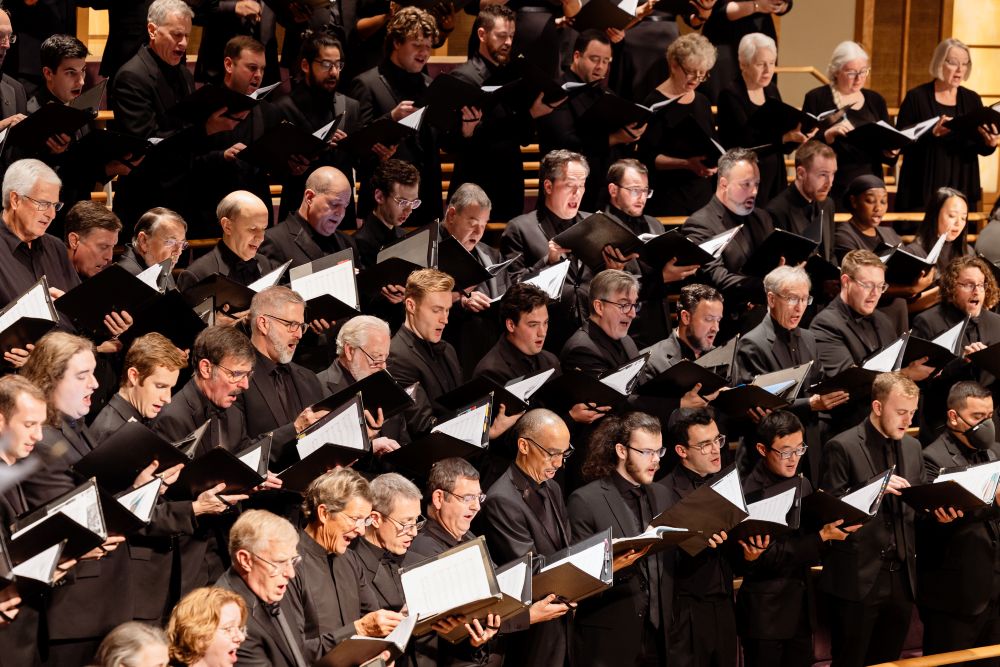
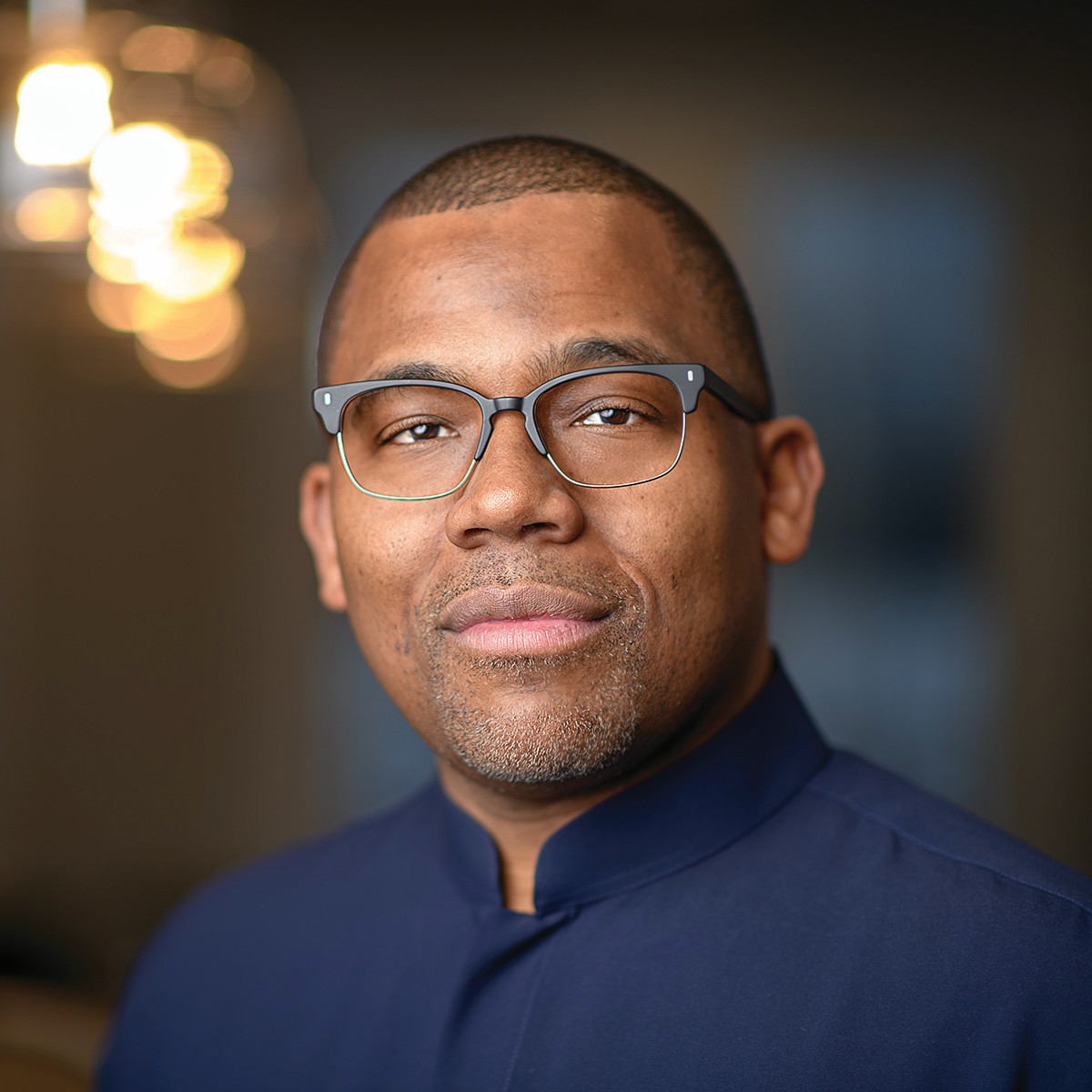
Dr. Eugene Rogers, artistic director
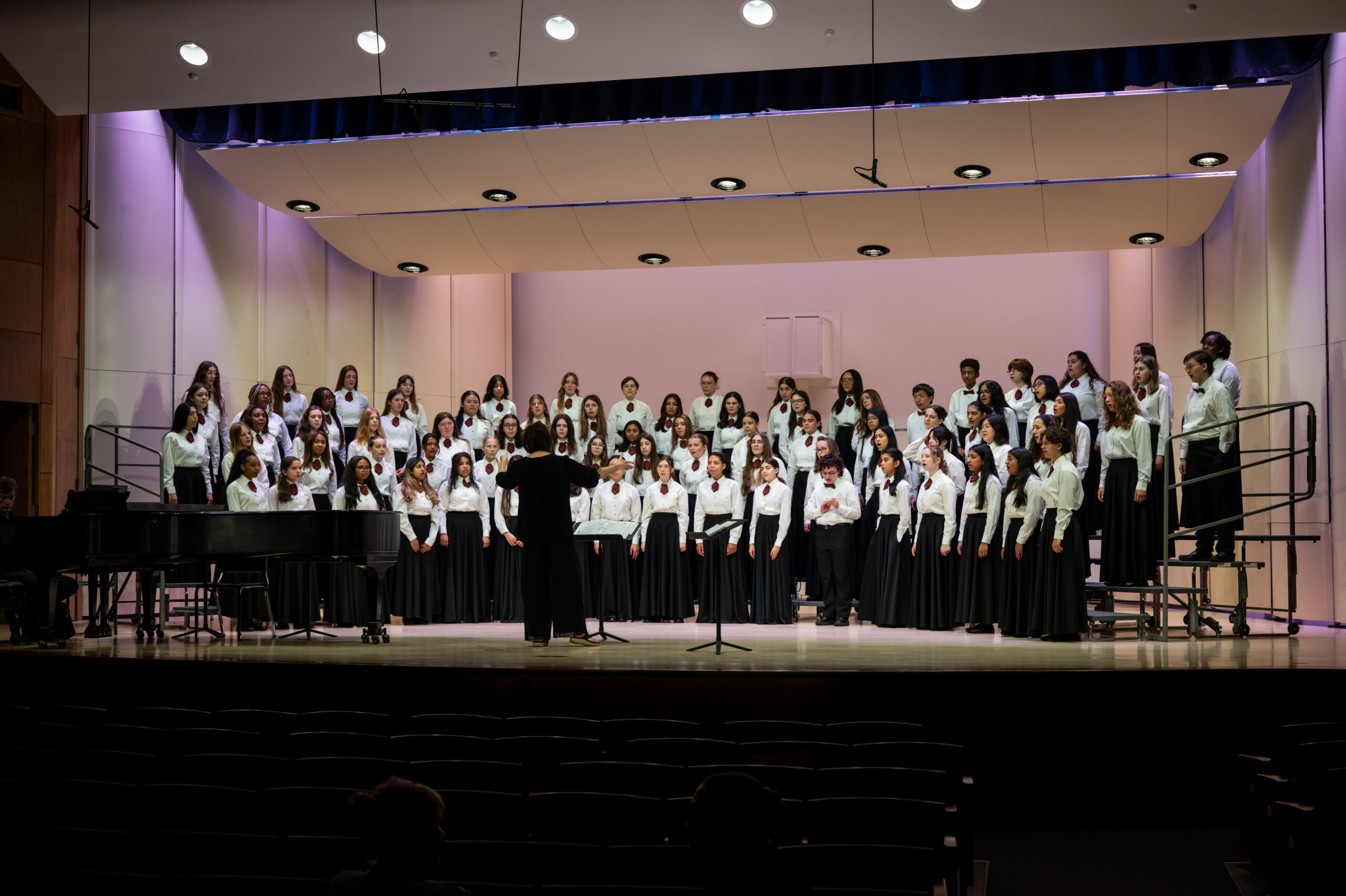
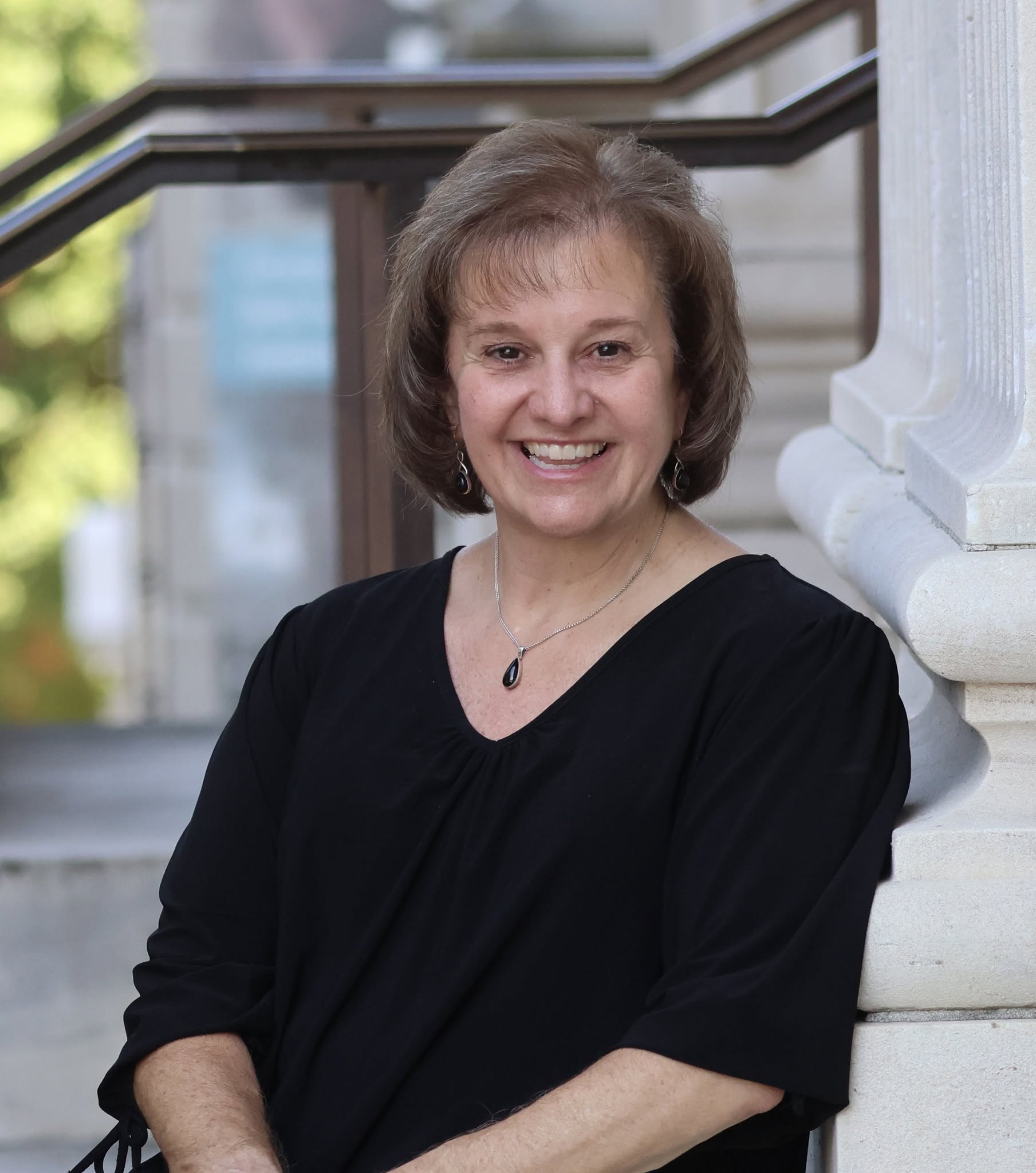
MaryAnn Poling, interim director

Repertoire
Samuel Barber
Born March 9, 1910 in West Chester, PA
Died January 23, 1981 in New York City, NY
Instrumentation: String orchestra
Like most American music lovers in the 1930s, Samuel Barber was mesmerized by Arturo Toscanini and his fiery interpretations of the great symphonic and operatic literature. In 1933, the 23-year-old composer used his status as nephew of the celebrated operatic contralto Louise Homer to pay a visit to the maestro at his summer retreat on Italy’s Lake Maggiore. They struck up an immediate friendship, and the old conductor expressed interest in performing a work by Barber, despite the fact that he generally avoided contemporary music. But Barber was by no means a typical contemporary composer. Although only recently graduated from Philadelphia’s Curtis Institute, he was a precocious artist who had already found his own creative voice: lyrical, deeply expressive and rooted in the harmonic language of the late 19th century.
It took Barber several years to produce two works he thought worthy of Toscanini’s attention. Finally, early in 1938 he sent the maestro his newly completed First Essay for Orchestra and the Adagio for string orchestra he had fashioned from the slow movement of his String Quartet of 1936.
Toscanini’s selection of both pieces for his evening radio broadcast with the NBC Symphony on November 5, 1938 was the ultimate promotional coup for Barber’s career. The Toscanini radio concerts had a passionate nationwide following, and by the next morning, Samuel Barber was a household name for American music lovers.
The Adagio for Strings remains his most beloved and frequently performed composition. Called our “national funeral music,” it has eloquently expressed Americans’ grief at the ceremonies for Franklin D. Roosevelt in 1945 and John F. Kennedy in 1963. In 1986, it moved a new generation in the Academy Award-winning Plantoon, mourning the young lives snuffed out by the Vietnam War.
Janet E. Bedell is a program annotator and feature writer who writes for Carnegie Hall, the Metropolitan Opera, Los Angeles Opera, Caramoor Festival of the Arts, and other musical organizations.
John Adams
Born February 15, 1947 in Worcester, MA
Resides in San Francisco Bay Area, CA
Instrumentation: Three flutes, two piccolos, three oboes, two clarinets, bass clarinet, contrabass clarinet, two bassoons, contrabassoon, four horns, four trumpets, three trombones, tuba, timpani, percussion, celesta, piano, sampler, strings, adult choir, children’s choir, and pre-recorded sounds.
When the New York Philharmonic approached John Adams in 2002 about creating a work to commemorate the lives lost on September 11, 2001 for the opening concerts of its 2002-03 season, which would fall close to the first anniversary of that terrible tragedy, the composer remembers that he said “yes” without any hesitation.
There were indeed good reasons to refuse. Usually, Adams explained, a commission for such a major work would come at least a year in advance, but this one would need to be accomplished in no more than six months. Nevertheless, I knew immediately that I very much wanted to do this piece – in fact, I needed to do it. …I was probably no different from most Americans in not knowing how to cope with the enormous complexities suddenly thrust open us. Being given the opportunity to make a work of art that would speak directly to people’s emotions allowed me not only to come to grips personally with all that had happened, but also gave me a chance to give something to others.”
It was hardly surprising that the New York Philharmonic would choose Adams for this special commission, for more than any other American Composer working today he has shown an extraordinary gift for taking events right out of the newspapers and turning them into eloquent works of art. In collaboration with the iconoclastic director Peter Sellars, he first stunned audiences with a singing Richard Nixon and a dancing Chairman Mao in his 1987 opera Nixon in China, based on Nixon’s dramatic visit to China in 1972. This was followed in 1991 by another topical opera, The Death of Klinghoffer, about the hijacking of the cruise ship Achille Lauro by Palestinian terrorists and the murder of one of its Jewish passengers, as well as Doctor Atomic (2005), about the physicist J. Robert Oppenheimer and the scientific and moral crises surrounding the creation of the first atomic bomb. But creating music in response to 9/11 seemed a far more difficult task for that day was far too recent and its pain not yet cauterized.
Adams decided that this should be quite different from a conventional memorial piece. “I want to avoid words like ‘requiem’ or ‘memorial’ when describing this piece because they too easily suggest conventions that this piece doesn’t share. If pressed, I’d probably call [it] a ‘memory space.’ It’s a place where you can go and be alone with your thoughts and emotions. …My desire … is to achieve in musical terms the same sort of feeling one gets upon entering one of those old, majestic cathedrals in France or Italy. …Even though you might be with a group of people … you feel very much alone with your thoughts and you find them focused in a most extraordinary and spiritual way.”
Ultimately, Adams decided on a sound-collage approach that would mingle a large orchestra and mixed chorus, including a children’s chorus, with a pre-recorded tape of voices speaking words and phrases about the event drawn from a variety of sources. “I eventually settled on a surprisingly small amount of text. One is the simple reading of names [of the dead], like a litany, …starting with the voice of a nine-year-old boy [saying over and over, “missing”] and ending with two middle-aged women, both mothers themselves.”
The two women at the end repeat an enigmatic phrase: “I see water and buildings”; these were among the last recorded words of Madeline Amy Sweeny, a flight attendant on American Airlines Flight 11, as she tried to tell her supervisor what was happening on her doomed plane. Adams continues “I mixed this with taped sounds of the city – traffic, people walking, distant voices of laughter or shouting, … sirens, breaks squealing – all the familiar sounds of the big city which are so common that we usually never notice them.” These ambient street sounds are what we hear at both the beginning and the end of Transmigration, it is as though we are still outside the door of Adams’ imaginary cathedral, about to enter and later depart from the sacred space of the music.
The composer chose other bits of texts from the New York Times’ remarkable series “Portraits of Grief”: brief, touching biographies of the victims as remembered by family members and friends. Another source was the missing-persons signs that dotted New York in the days and weeks after the tragedy.
The completed work was given the evocative title On the Transmigration of Souls. Adams explains its meaning: “‘Transmigration’ means ‘the movement from one place to another’ or ‘the transition from one state of being to another.’ … In this case I mean it to imply the movement of the soul from one state to another. And I don’t just mean the transition from living to dead, but also the change that takes place within the souls of those who stay behind, of those who suffer pain and loss and then themselves come away from that experience transformed.”
For its first audiences in New York in mid-September 2002, On the Transmigration of Souls seems to have had the deep cathartic effect Adams had intended; it has since traveled around the United States and to Europe as well. In 2003, it won the coveted Pulitzer Prize for Music, and in 2005 a recording made at those inaugural performances received three Grammy awards. But more than most musical works, its effect depends to a large degree on the depth of concentration and feeling its listeners bring to it. “modern people have learned all too well how to keep our emotions in check,” says Adams, “and we know how to mask them with humor or irony. Music has a singular capacity to unlock those controls and bring us face to face with our raw, uncensored and unattenuated feelings. That is why during times when we are grieving or in need of being in touch with the core of our beings, we seek out those pieces that speak to us with that sense of gravitas and serenity.”
Janet E. Bedell is a program annotator and feature writer who writes for Carnegie Hall, the Metropolitan Opera, Los Angeles Opera, Caramoor Festival of the Arts, and other musical organizations.
Piotr Ilyich Tchaikovsky
Born May 7, 1840 in Votkinsk, Russia
Died November 6, 1893 in Saint Petersburg, Russia
Instrumentation: Three flutes, two oboes, two clarinets, two bassoons, four horns, two trumpets, three trombones, tuba, timpani, bass drum, cymbals (pair), tam-tam, and strings.
Best to be clear: Tchaikovsky did not write the “Pathétique” as a prelude to suicide. The composer’s choice to drink cold, un-boiled water in the midst of a cholera epidemic – when all water was to be boiled – led to his death nine days after the premiere of his sixth symphony. What began as surprise that a wealthy person could die from a “poor man’s” disease, morphed into speculations of suicide, and then the myth that continues to make rounds today: Tchaikovsky intended his B minor symphony as his swan song.
But the reality doesn’t rob the Symphony No. 6, Op. 74 of its emotive power. It remains a work of tremendous passion, hence the “pathétique” descriptor. It features some of Tchaikovsky’s most recognizable techniques: ear-catching melodies; drama; massive orchestral forces, all for the service of an ending that is not expected and anything but underwhelming.
- Adagio-Allegro non troppo begins with a slow, morose introduction. The strings bring in the main theme unspooling into a polyphonic, sonata form ranging from fragmented thematic statements to call-and-response between strings, woodwinds, and brass. But Tchaikovsky doesn’t let standards of form determine his direction: the concluding section shifts to a rhapsodic resignation, the second theme serving as a de-escalation, to a tender brass and woodwind chorale supported by pizzicato in the strings.
II. Allegro con grazia reminds us that Tchaikovsky is all about movement and elegance. While 5/4 meter is not typical in the western canon, it is no less elegant than its more common 3/4 counterpart. The movement is in ternary form, featuring a more somber melody in the B section. Like many symphonists before (Haydn) and after (Price), Tchaikovsky drew upon dance meter and character. But unlike most of his fellow symphonists, this dance movement comes second rather than third. His reason?
It serves the story, as III. Allegro molto vivace is a rush; a virtuosic caper; full of joy, confidence, and exuberance. Tchaikovsky doesn’t have time for a development section, because that’s not the point: the main theme and its variants are the draw, emerging in different textures and instrumentations, all towards a triumph that’s almost tragic. Like all good things, it can’t last forever.
Which brings us to IV. Finale: Adagio lamentoso. The opening melody signals something tragic and sorrowful. But it’s the second melody that takes your heart and squeezes. Leaves that ache in your chest, the tears come, the ones you don’t brush away. Here is the passion, that flurry of emotion that can only be sustained for so long. That must come to an end. That must be let go.
A. Kori Hill specializes in American music, Black composers, and music of the nineteenth and twentieth centuries. She is a program notes annotator for Seattle Symphony and Chamber Music Society at Lincoln and the lead writer for Classics for Kids Blog at Cincinnati Public Radio. She is co-editor of The Cambridge Companion to Florence B. Price, forthcoming from Cambridge University Press.
Mozart Meets Latin Masters
OCT 23-25, 2026

Repertoire
Alberto Ginastera
Born April 11, 1916 in Buenos Aires, Argentina
Died June 25, 1983 in Geneva, Switzerland
Instrumentation: Flute (doubling piccolo), piccolo, two oboes, two clarinets, two bassoons, four horns, two trumpets, timpani, tenor drum, tambourine, military drum, cymbals (pair), bass drum, xylophone, castanets, tam tam, triangle, piano, and strings.
Alberto Ginastera was a twentieth-century Argentine composer revered for masterfully melding traditional South American folk music with Western classical music. With the 1940 premiere of his first ballet Panambí, Ginastera was launched to fame as a young composer. Lincoln Kirstein, an impresario and philanthropist from New York City, was in Argentina directing a tour of the American Ballet Caravan at this time. Kirstein was so impressed with Ginastera’s work that he immediately commissioned him to write a second ballet for the company—Estancia.
Ginastera completed the music for Estancia in 1941, and the original choreography was designed by the renowned George Balanchine. Unfortunately, Kirstein’s ballet company went out of business before the piece could be premiered, and World War II further delayed getting the work on stage. Estancia was eventually brought to life in 1952 by the Teatro Colón Ballet in Buenos Aires. In the meantime, Ginastera created an orchestral suite with four dances from the ballet, which was first performed in 1943.
Estancia was inspired by José Hernández’s Martín Fierro, an epic poem about a gaucho (semi-nomadic horseman) in rural Argentina that is regarded as one of the most significant works depicting Argentine national identity. The four dances in the suite transport listeners to Argentina’s countryside, with an energetic depiction of land workers, a lyrical wheat dance, and a rhythmically driving portrayal of cattlemen. The suite concludes with a “Malambo,” a traditional gaucho dance featuring rapid footwork that was performed as a competitive match between two men trying to outdo each other’s complex choreography.
PAULA MAUST is Assistant Professor of Music Theory at The Peabody Conservatory. She is the author of Expanding the Music Theory Canon and performs extensively as a harpsichordist and organist.
Max Bruch
Born January 6, 1838 in Cologne, Prussia
Died October 2, 1920 in Berlin, Germany
Instrumentation: Two flutes, two oboes, two clarinets, two bassoons, four horns, two trumpets, three trombones, tuba, timpani, cymbals (pair), bass drum, harp, strings, in addition to the solo violin.
German composer Max Bruch’s works have often been overshadowed by those of his contemporaries Johannes Brahms and Richard Wagner. Bruch was an avowed conservative in the “War of the Romantics,” a spirited division between nineteenth-century composers over issues such as chromatic harmony, dissonance, and the structure of musical works. Despite his compositional prowess and long roster of successful students, Bruch’s conservative positions relegated him to the sidelines at a time when the more progressive styles of Wagner and Richard Strauss were taking center stage. Bruch’s most beloved works are his magnificent pieces for solo violin and orchestra, which were premiered by some of the most prominent violinists of the time. A close friend of violin virtuosos Joseph Joachim and Pablo de Sarasate, Bruch believed the violin could “sing a melody better than a piano.”
An avid reader of writings by Sir Walter Scott and Robert Burns, Bruch was enamored with Scottish culture. In 1868, he intently studied a book of Scottish folk music he found in the Munich library, which provided ample source material for his Scottish Fantasy, op. 46, for orchestra and solo violin. Composed in the winter of 1879–80, the piece was premiered in Liverpool in 1881, with Joachim playing the solo part and Bruch himself conducting. A year later, Bruch finally had the opportunity to visit Scotland.
Across the four movements of the Scottish Fantasy, Bruch gorgeously interweaves numerous Scottish folk tunes. The piece begins ominously with a misty chorale in the low brass, setting the stage for the intensely lyrical solo entrance. About halfway through the movement, the soloist prominently introduces a new melody based on “Auld Robb Morris,” a tune that returns at key moments throughout the piece. The violinist and strings playfully trade musical phrases back and forth in the lively scherzo, which features passages from “The Dusty Miller.” After what seems like it will be a rousing conclusion to the movement, the violas unexpectedly reprise “Auld Robb Morris,” and the soloist plays an improvisatory passage to seamlessly transition into the third movement.
The work concludes with a rollicking “Allegro guerriero,” an unusual score marking that was originally used in Mendelssohn’s Scottish Symphony. Based on a Scottish war song dating back to Robert the Bruce’s defeat of the English in 1314, the movement prominently features the brass and virtuosic passagework for the violinist, including a stunning cadenza. “Auld Robb Morris” is heard one last time just before the triumphant end of the work.
PAULA MAUST is Assistant Professor of Music Theory at The Peabody Conservatory. She is the author of Expanding the Music Theory Canon and performs extensively as a harpsichordist and organist.
Wolfgang Amadeus Mozart
Born January 27, 1756 in Salzburg, Austria
Died December 5, 1791 in Vienna, Austria
Instrumentation: Two flutes, two oboes, two clarinets, two bassoons, two horns, two trumpets, timpani, and strings.
In 1777, Wolfgang Amadeus Mozart resigned from his post as a court musician in Salzburg and began traveling with his mother Anna Maria across Europe to search for better working conditions. They arrived in Paris in 1778, where the twenty-two-year-old composer was once again unsuccessful at securing a new position. Moreover, the trip also proved to be personally disastrous, because his mother became ill and tragically died while they were in Paris. Within a few months, the young composer was forced to return to Salzburg. Although the entire endeavor must have felt like a failure, Mozart did compose what is now regarded as one of his most important orchestral works of the late 1770s while he was in Paris—the Symphony No. 31 in D Major, “Paris.”
Mozart’s letters to his father are full of disdain for Parisian musical culture, and he uncouthly declared that many French concert goers were stupid. Nevertheless, he managed to successfully craft his Paris Symphony to appeal to the local tastes of the time. In fact, the piece was so popular after its premiere in June 1778 that it continued to be performed regularly in Paris for several years. Perhaps the most French element of the piece is Mozart’s use of the so-called “noisy” Parisian orchestration, which includes flutes, oboes, clarinets, bassoons, horns, trumpets, and timpani. In fact, this was Mozart’s first symphony to utilize the clarinet, which was a relatively new instrument at the time. Other Parisian trends include the opening premier coup d’archet (all the instruments play together loudly at the beginning), exposed colorful passages for the winds, dramatic surprises, brilliant passagework, and powerful unisons.
The Paris Symphony opens with the expected grand proclamation from the full orchestra, and the first movement contains several well-placed theatrical moments that elicited enthusiastic applause from the audience at the premiere. The delicate and nuanced version of the second movement that is most frequently performed today is not the same music audiences originally heard. After receiving criticism that the slow movement contained too many musical ideas, Mozart wrote a new slow movement. Parisian audiences also expected the final movement to start with another coup d’archet, but Mozart instead daringly opted to have the movement start softly. When the music finally got loud, the premiere audience cheered with glee!
PAULA MAUST is Assistant Professor of Music Theory at The Peabody Conservatory. She is the author of Expanding the Music Theory Canon and performs extensively as a harpsichordist and organist.
Astor Piazzolla
Born March 11, 1921 in Mar del Plata, Argentina
Died July 4, 1992 in Buenos Aires, Argentina
Instrumentation: Two flutes, piccolo, two oboes, English horn, two clarinets, bass clarinet, four horns, three trumpets, three trombones, tuba, timpani, tamboriles, bass drum, sandpaper blocks, snare drum, triangle, cymbals, xylophone, tam tam, glockenspiel, harp, celesta, piano, and strings.
Astor Piazzolla’s multifaceted musical career as a virtuoso bandoneon (button accordion) player and composer of tangos and classical music took him to prestigious concert halls during the day and to the famous tango clubs of Buenos Aires at night. By his late teens, Piazzolla was performing and arranging for some of the most elite tango orchestras of his time, ultimately earning enough money to study classical composition with Alberto Ginastera. Influenced by both jazz and classical music as a child, Piazzolla spent the next few decades creating a unique compositional style that fused Western classical idioms with tango, Latin American folk music, and jazz. His hard work of observing the Teatro Colón orchestra early every morning, studying in the afternoon, and performing each night paid off. In 1953, he entered the score for his Sinfonia Buenos Aires in the Fabien Sevitzky Competition and won a scholarship to study with the renowned Nadia Boulanger in Paris.
Although the Sinfonia Buenos Aires was successful in the competition, it was so controversial at its premiere by the Buenos Aires Philharmonic that the audience devolved into a heated fight! The opposing sides of the dispute seem to capture the two distinctive musical worlds that Piazzolla found himself residing in throughout his career. On one side, there were audience members who preferred Western classical music and were incensed that Piazzolla had included bandoneons in a piece scored for an orchestra. On the other side, tango aficionados felt that he had pushed the traditional genre too far beyond their expectations. Across all three movements, the Sinfonia Buenos Aires is infused with striking dissonances, passionate melodies, driving rhythms, and an unmistakable ethos of the tango.
PAULA MAUST is Assistant Professor of Music Theory at The Peabody Conservatory. She is the author of Expanding the Music Theory Canon and performs extensively as a harpsichordist and organist.
Coco Live-to-Film Concert
OCT 25, 2026
Psycho in Concert
OCT 30-NOV 1, 2026

Shéhérazade & Sibelius
NOV 6-8, 2026

Grace-Evangeline Mason
Born October 1994 in West Midlands, England
Currently resides in the U.K.
Instrumentation: Two flutes, piccolo, two oboes, English horn, three clarinets (third doubling bass clarinet), two bassoons, contrabassoon, four horns, three trumpets, three trombones, tuba, timpani, bass drum, snare drum, vibraphone, tom toms, tam tam, glockenspiel, harp, and strings.
First performed by BBC Philharmonic Orchestra conducted by Mark Wigglesworth, July 18th 2023 as part of the BBC Proms at the Royal Albert Hall, London.
‘ABLAZE THE MOON’ (2023) for orchestra is inspired by the poem ‘Tonight’ by the American lyric poet, Sara Teasdale (1884-1933). The melodies in the piece follow the lines of the poem, which are full of vivid descriptions and begin ‘The moon is a curving flower of gold, the sky is still and blue; The moon was made for the sky to hold, and I for you.’
In this short concert opener, the image of the moon as a flower of gold hanging in a dark sky is alluded to by atmospheric passages that begin in the circling woodwinds. These are contrasted with deep punctuations in the strings suggesting the vast darkness that surrounds it. These forceful interjections ignite the woodwinds to intersperse, fall, and spiral, momentarily accentuating the inky backdrop of the sky. The music drives forward through the expanse, with the horns and brass building the texture, until the piece opens out into an ethereal, and celestial space as ‘the sky is luminous; eternity was made for them, to-night for us.’
Grace-Evangeline Mason, 2023
Maurice Ravel
Born March 7, 1875 in Ciboure, France
Died December 28, 1937 in Paris, France
Instrumentation: Two flutes, piccolo, two oboes, English horn, two clarinets, two bassoons, four horns, two trumpets, three trombones, tuba, timpani, tambourine, suspended cymbal, bass drum, cymbals (pair), keyboard, glockenspiel, snare drum, tam tam, triangle, two harps, celeste, and strings, in addition to the soprano soloist.
Around 1900, Maurice Ravel was one of the founding members of the Apaches, a group of forward-looking young French artists, including writers, painters and composers, who claimed to share a passion “for Chinese art … Cézanne and Van Gogh, Rameau and Chopin, … the Russians and Debussy.” Another member was the poet/painter/composer Arthur Justin Léon Leclère (1874-1966), who adopted the exotic nom de plume Tristan Klingsor after two leading characters in Richard Wagner’s operas; the Apaches’ meetings were often held at his home. In 1902, Klingsor completed a collection of 100 poems inspired by the tale of Scheherazade in the Thousand and One Nights as expressed musically by Nikolai Rimsky-Korsakov in his famous orchestral tone poem. The theme of Klingsor’s poems was the allure of the lands and cultures of Asia to European observers.
One year later, in 1903, Ravel chose three of these poems for his second work on this theme; the first had been a Shéhérazade Overture, written in 1898. He had Klingsor declaim his selected poems over and over for him, so Ravel could capture the rhythms and stresses of his readings accurately in his music. Originally, the song triptych opened with “La Flûte enchantée” and closed with “Asie,” but Ravel later altered this to make “Asie” the first number. This change makes for an unusual musical and expressive trajectory because “Asie” is more than twice as long as the other songs and uses by far the largest, lushest orchestra. In this order, the songs move from the epic and grand to the intimate and personal.
Set in the haunting and rarely used key of E-flat minor, “Asie” evokes the exotic attractions of the various lands of Asia from the Middle East to China. Klingsor had structured his poem with repetitions of the words “Je voudrais voir” (“I would like to see”). In Michael Steinberg’s words, “Each ‘je voudrais’ is a springboard from which to plunge into new realms of harmonies and sounds,” as Ravel paints vivid pictures of the beauties — and cruelties — of the places to which our magic ship of the imagination, “spreading its purple sails,” carries us. The singer’s lines are molded closely to the words like recitative over the large, subtly colored orchestra.
Steinberg calls “La Flûte enchantée”: “a masterpiece made with few notes.” The orchestra is reduced so that it is essentially a duet between the flute and the singer. While her master sleeps, a young slave girl listens in the night to the languorous song played outside by her lover, which caresses her “like a mysterious kiss.”
Ambiguity rules the final song, “L’Indifférent,” in which the singer — whose gender we do not know — longingly observes a youth whose feminine beauty obscures his own sexual identity. Though the singer signals him to stop a while, the young man saunters past. Flutes and clarinets, solo and in pairs, lead the fragile woodwind sounds, and an unresolved harmony at the end seals the ambiguous atmosphere.
Janet E. Bedell is a program annotator and feature writer who writes for Carnegie Hall, the Metropolitan Opera, Los Angeles Opera, Caramoor Festival of the Arts, and other musical organizations.
Jean Sibelius
Born December 8, 1865 in Hämeenlinna, Russian Empire
Died September 20, 1957 in Järvenpää, Finland
Instrumentation: Two flutes, two oboes, two clarinets, two bassoons, four horns, three trumpets, three trombones, tuba, timpani, and strings.
Jean Sibelius was Finland’s first and greatest musical hero. He rose to fame at the turn of the 20th century on the strengths of his First Symphony and the tone poem Finlandia, works that gave voice to a burgeoning national identity just when Finland began agitating for independence from Russia. It was also around 1900 that Sibelius’ music started appearing in concert halls around Europe, and he was particularly pleased in 1901 to receive a kind word from Richard Strauss, who was just a year older than Sibelius but already a star. Adopting Strauss’ preferred format, Sibelius planned a series of four tone poems related to the Don Juan legend, but the sketches he started in Italy and completed in Helsinki ultimately took an abstract form in the Symphony No. 2.
Sibelius disavowed any political underpinnings in the Second Symphony, but that did not stop the Finnish people from embracing it as an anthem of their struggle after the Helsinki premiere in 1902. Much of the perceived “protest” aspect of the music traces to the second movement, with its trudging pizzicato, lugubrious bassoon melody, and impassioned climaxes. The scherzo, a blur of perpetual-motion string figures and hovering woodwind lines, continues the sense of struggle.
Sibelius’ widow explained that the finale’s somber music over a spinning bass line was composed in memory of a sister-in-law who committed suicide. This unsettled material lends extra poignancy to the symphony’s ultimate resolution in a realm of uplift and triumph.
Aaron Grad has been the exclusive program annotator for the Orpheus Chamber Orchestra since 2005, and contributes program notes to various other symphony orchestras, ensembles, and presenters. His concert reviews have appeared in The Washington Post, and PlaybillArts regularly publishes his feature articles and interviews online.
Nemanja Radulovic & Double Sens in Recital
NOV 9, 2026

Ohlsson Plays Brahms
NOV 13-15, 2026
Johannes Brahms
Born May 7, 1833 in Hamburg, Germany
Died April 3, 1897 in Vienna, Austria
Instrumentation: Two flutes (second doubling piccolo), two oboes, two clarinets, two bassoons, four horns, two trumpets, timpani, and strings in addition to the solo piano.
While it may be shocking for listeners today to imagine any works by Johannes Brahms flopping, the audience was particularly hostile at the 1859 Leipzig premiere of his First Piano Concerto. Brahms himself was surprised and disheartened when the crowd hissed in displeasure at the conclusion of the piece, and the critic Edward Bernsdorf declared that the work had “nothing to offer but waste.” Although the piece’s poor reception damaged Brahms’s compositional reputation for several years, the experience spurred him to work harder at meticulously honing his craft. It was twenty-two years before Brahms, who was known to be a perfectionist, would write another piano concerto. By the time his Second Piano Concerto was completed in 1881, his compositional style had matured, and he had cemented his reputation as a celebrated master.
The Second Piano Concerto was especially successful. Even though he had long since retired from performing as a professional pianist, Brahms learned the incredibly difficult solo piano part and played it for the Budapest premiere. In the ensuing months, he performed the piece twenty-two times in different cities across Europe. Audiences at the time routinely leapt to their feet with roaring ovations at the end of the first and second movements, a stark contrast to the tepid applause, hisses, and unfavorable reviews from his first foray into the piano concerto genre two decades earlier. Brahms, too, must have been pleased with the Concerto, since it is the only one of his numerous piano works that he dedicated to his beloved teacher Eduard Marxsen.
The Second Piano Concerto is a true tour de force on many levels—the orchestration is powerful, the solo piano part is intensely virtuosic, and the sheer size of the piece is monumental. At the time, however, Brahms had taken to ironically describing his most substantial works as “miniatures.” He mentioned in a letter to Clara Schumann that he was composing “a very small piano concerto with a very small and pretty scherzo.” Yet with its expanded structure of four movements instead of the standard three, the unusual interweaving of the orchestral parts with the solo piano part, and the inclusion of a scherzo, the Second Piano Concerto is more like the grand symphonies of the time than any other nineteenth-century concerto.
From the outset of the piece, Brahms sets listeners up to have their expectations defied. After a tender horn call at the beginning of the first movement, the pianist unexpectedly interrupts the orchestral exposition with a bold cadenza spanning nearly the full range of the piano. The entire first movement is a model of refined virtuosity, full of musical fireworks and technical complexity that never spin out of control. It was unheard of for a concerto at this time to include a scherzo, and this movement is particularly full of memorable turbulence. A scherzo is a musical joke, and Brahms utilizes syncopation (musical accents on weak beats), dynamic contrasts, and melodies with unexpected twists and turns to convey humor in this scherzo. The third movement opens with an exquisite cello solo, which Brahms also used as the melody in his song “Immer leiser wird mein Schlummer” (Ever gentler grows my slumber). The final movement is sophisticated and poised and ends with a much-anticipated triumphant flourish.
PAULA MAUST is Assistant Professor of Music Theory at The Peabody Conservatory. She is the author of Expanding the Music Theory Canon and performs extensively as a harpsichordist and organist.
Emilie Mayer
Born May 14, 1812 in Friedland, Germany
Died April 10, 1883 in Berlin, Germany
Instrumentation: Two flutes, two oboes, two clarinets, two bassoons, two horns, two trumpets, three trombones, tuba, timpani, and strings.
At a time when many women composers primarily composed art songs and solo keyboard pieces, Emilie Mayer broke boundaries with her numerous large-scale orchestral works. Her impressive output includes a Singspiel, eight symphonies, seven orchestral overtures, nearly 130 songs, seven string quartets, eleven piano trios, and twenty-two instrumental sonatas. Although audiences in Berlin, Brussels, Lyons, Budapest, Dessau, Halle, Leipzig, and Munich warmly received Mayer’s music during her lifetime, her works were unfortunately forgotten after her death and have only recently begun to be performed again.
Mayer’s 1880 Faust Overture joins a number of other nineteenth-century musical works that were inspired by Johann Wolfgang von Goethe’s tragic play Faust. In the play, the disillusioned scholar Faust has grown tired of seeking transcendent experiences and feeling unfulfilled. He makes a pact to serve the Devil for eternity if the demon Mephistopheles is able to grant him one truly satisfying earthly moment. Mephistopheles then manufactures a whirlwind romance between Faust and Margaret, a pious young woman. Pursuing the relationship ultimately results in the drowning of their newborn child and the murder of Margaret’s family. Full of remorse, Margaret chooses to accept the punishment for her crimes rather than escape from prison with Faust, and she is sentenced to death. Near the end of the saga, voices from Heaven proclaim that Margaret will be redeemed.
While Mayer’s Faust Overture is inspired by the events in Goethe’s play, the piece is not an explicit musical representation of the drama as a whole. Mayer’s only specific reference to the story in the score is the indication “She is saved,” which occurs near the end of the piece when the music dramatically shifts from minor to major.
PAULA MAUST is Assistant Professor of Music Theory at The Peabody Conservatory. She is the author of Expanding the Music Theory Canon and performs extensively as a harpsichordist and organist.
Antonín Dvořák
Born September 8, 1841 in Nelahozeves, Austrian Empire
Died May 1, 1904 in Prague, Austria-Hungary
Instrumentation: Two flutes (first doubling piccolo), two oboes, English horn, two clarinets, two bassoons, contrabassoon, four horns, two trumpets, three trombones, tuba, timpani, bass drum, triangle, suspended cymbal, cymbals (pair), harp, and strings.
Composers in the nineteenth century began writing orchestral works that could aurally evoke a poem, painting, or story without using words. These so-called symphonic tone poems utilize rich orchestral colors and musical motives associated with different characters to tell the story. Antonín Dvořák wrote five such pieces in 1896, including The Golden Spinning Wheel. Yearning to return to his Czech roots, Dvořák drew on stories from Karel Jaromír Erben’s poetic ballads, and his musical motives in the symphonic tone poems closely mirror the declamatory style of the Czech language.
The Golden Spinning Wheel received its first full public premiere in London, with Hans Richter conducting. Based on Erben’s poem by the same name, the work portrays a dramatic story full of gruesome crimes, deception, love, magic, and justice. While riding in the countryside one day, a king stops for water and meets Dornička, a beautiful village girl who is sitting at her spinning wheel. The king falls in love with Dornička and asks her stepmother to bring her to the castle to marry him. What follows is an astonishingly evil plot between the stepmother and her own unwed daughter (Dornička’s stepsister). On the way to the castle, the stepmother and stepsister violently murder and dismember Dornička, and the stepsister hides Dornička’s severed feet, hands, and eyes in her luggage. She then marries the unsuspecting king, who is called away to war shortly after the wedding.
An old man who practices magic finds Dornička’s remains in the forest and decides to bring her back to life. In exchange for a golden spinning wheel, distaff, and spindle, Dornička’s stepsister willingly surrenders the missing limbs to the old man. Unbeknownst to the stepsister, the golden spinning wheel is enchanted, and when the triumphant king returns from battle the wheel sings a song that reveals the treacherous plot. Infuriated, the king returns to the forest where he is joyously reunited with the resurrected Dornička. The evil stepmother and stepsister are thrown to the wolves, the golden spinning wheel magically disappears, and Dornička and the king live happily ever after.
PAULA MAUST is Assistant Professor of Music Theory at The Peabody Conservatory. She is the author of Expanding the Music Theory Canon and performs extensively as a harpsichordist and organist.
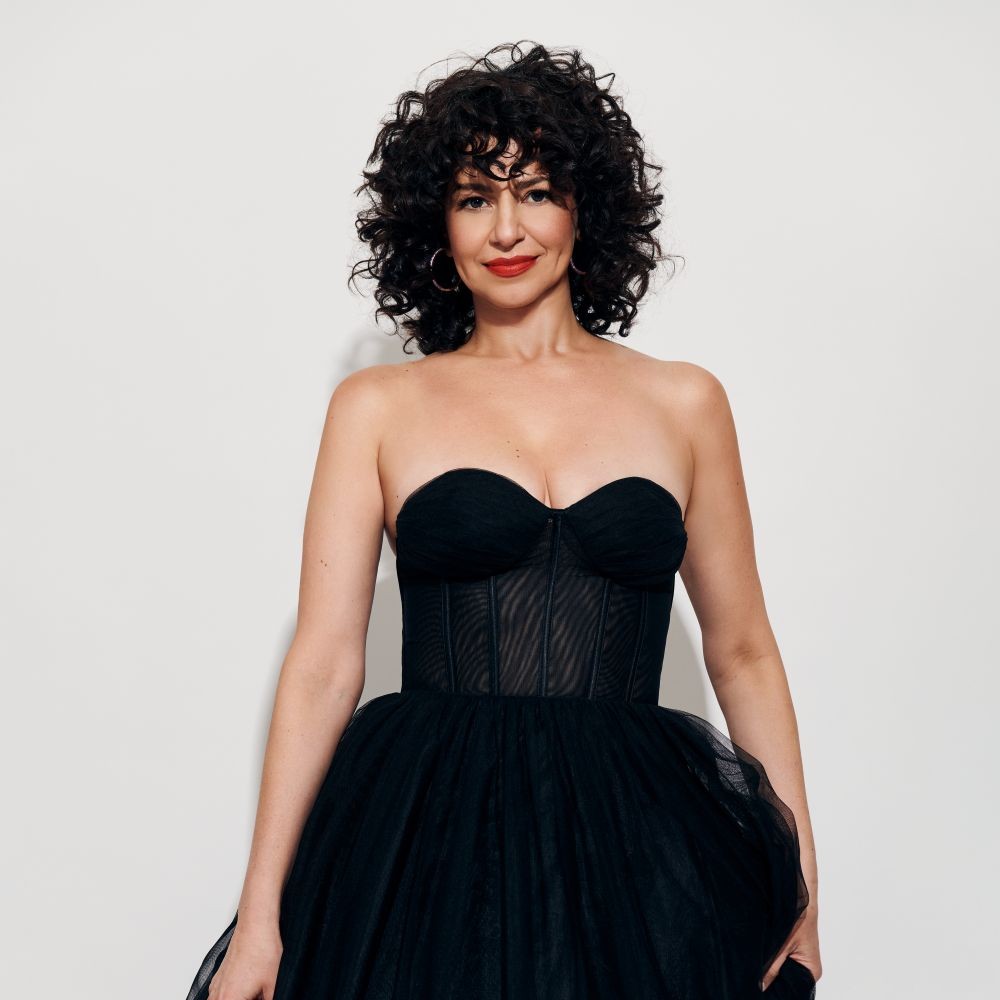
Everything I Know: Mandy Gonzalez Sings Lin-Manuel Miranda
NOV 20-22, 2026
Home Alone in Concert
Cirque Nutcracker
DEC 11-12, 2026


Holiday Pops
DEC 19-20, 2026

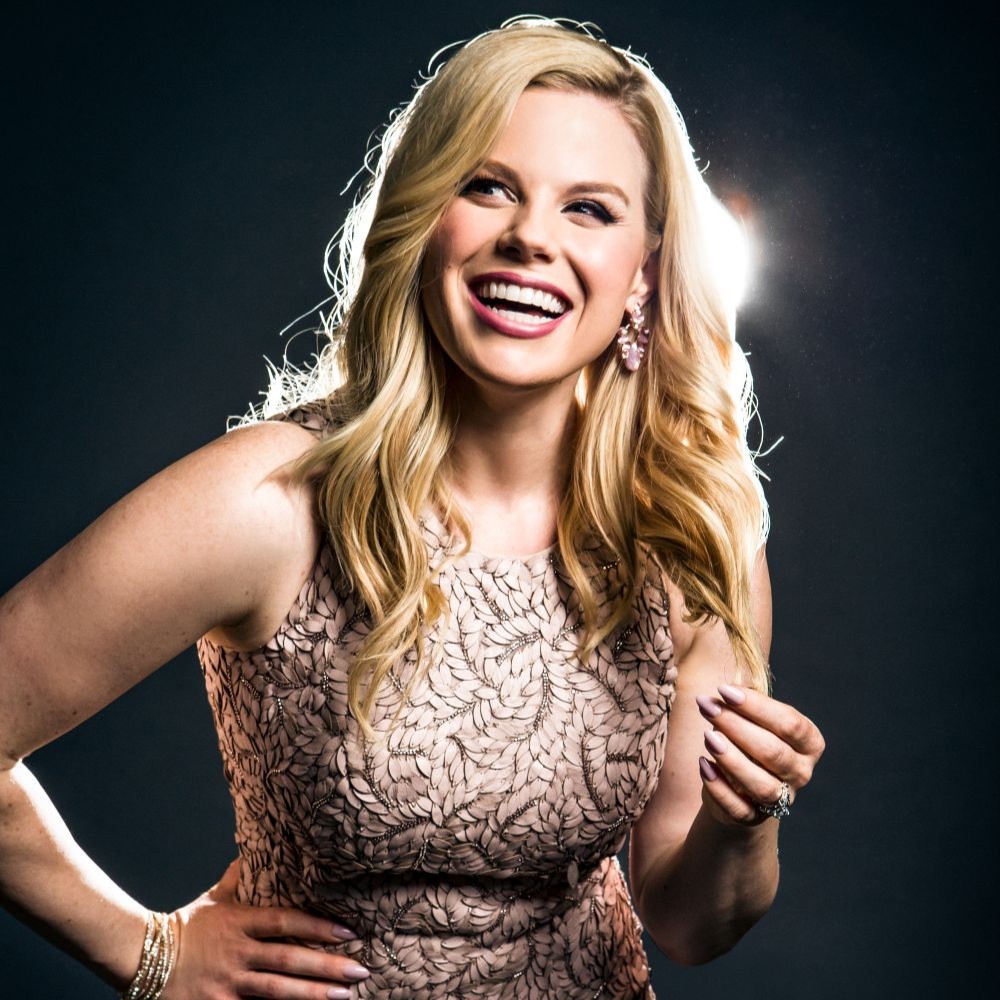
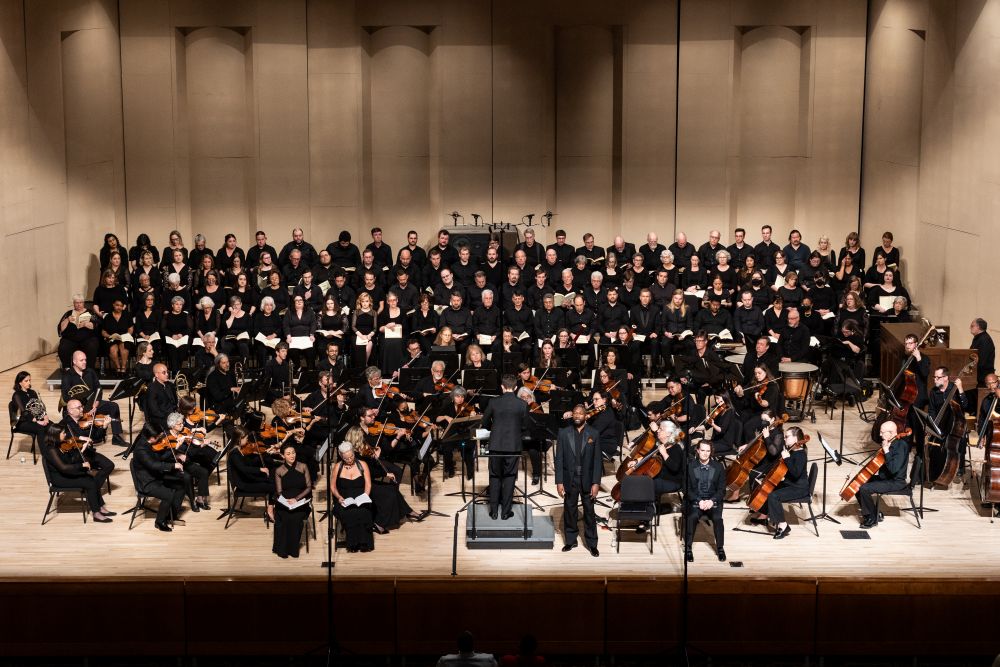
Beethoven’s Ninth: New Year’s Celebration
JAN 1-3, 2027

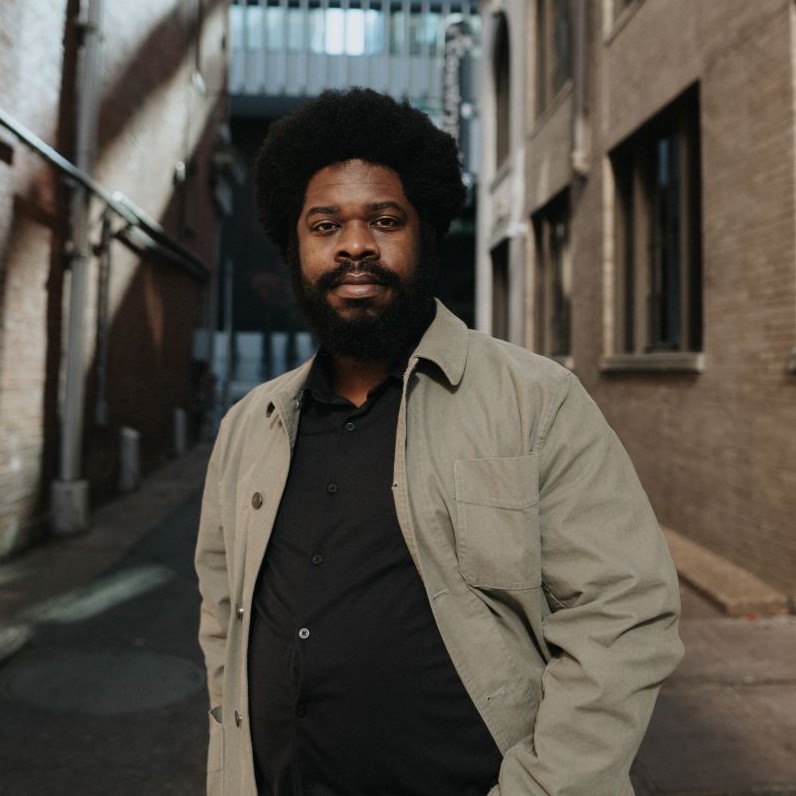
Valerie Coleman
Born September 3, 1970 in Louisville, Kentucky
Resides in New York City, New York
Instrumentation: Two flutes, piccolo, two oboes, English horn, two clarinets, bass clarinet, two bassoons, two horns, two trumpets, trombone, bass trombone, tuba, timpani, ride cymbal, bass drum, snare drum, temple blocks, xylophone, suspended cymbal, vibraphone, cymbals (pair), tambourine, glockenspiel, marimba, harp, piano, and strings.
Coleman’s Umoja began as a Kwanzaa sing-along song for women’s choir. Composed in 2001, its name is Swahili for “unity,” and is the first day of the winter holiday. Coleman has arranged this composition many times, most famously for wind quintet as the founding member of Imani Winds. In 2019, she returned to the work again, this time as a commission for the Philadelphia Orchestra.
This version features an atmospheric introduction, a solo violin the only one with any melodic material. As the texture grows, the main theme — the anthem — begins to emerge, but it is subdued, almost hesitant. The middle section is prickly and skewed, but not at the expense of gorgeous lines in the strings, virtuosic counterpoint in the woodwinds and brass, and warm rhythmic punctuations from the percussion. And then, the whole melody blossoms from a solo horn layered with violas, growing in confidence and instrumental power. It has fought its way to the surface, moving through the orchestra in a deft call and response.
Coleman describes the moments of dissonance as the “clash of injustices, racism, and hate,” with the anthem’s return “a gentle reminder of kindness and humanity.” Umoja speaks to the function of music as not only a mode of artistic expression; it is a method for preservation and communication: of history, our present experience, and hope for the future.
A. Kori Hill specializes in American music, Black composers, and music of the nineteenth and twentieth centuries. She is a program notes annotator for Seattle Symphony and Chamber Music Society at Lincoln and the lead writer for Classics for Kids Blog at Cincinnati Public Radio. She is co-editor of The Cambridge Companion to Florence B. Price, forthcoming from Cambridge University Press.
Ludwig van Beethoven
Born December 17, 1770 in Bonn, Germany
Died March 26, 1827 in Vienna, Austria
Instrumentation: String orchestra, and SATB chorus.
Beethoven’s Elegiac Song holds an archival mystery. There is some disagreement on the origins of the text. It most likely comes from stanzas of Johann Haus’ poem “Bey der Kinde von Jacobi’s Tod.” Or the text may have been written by the commissioner of the work, Beethoven’s long-term patron Baron Johann Baptiste Pasqualati von Osterberg.
But we do know for certain why Beethoven wrote it: Johann commissioned the song as a memorial for his late wife, Eleanore, on the third anniversary of her death. Beethoven completed the work while a resident of Pasqualati House, the stately apartment complex owned by the Baron.
Though Beethoven is not typically seen as a vocal composer, he wrote extensively for choir, chamber groups with voice, voice and piano, and settings of folk songs. Elegiac Song is of the second category, written for four voices (SATB) and string quartet. Beethoven’s use of partsong texture, similar in execution to a chorale, allows for the voices to dominate and drive the melodic line, supported and layered by the strings. Even the modulations from E major to C minor to A major and back to E are so subtle that even the moments of dissonance feel faint and distant.
Stylistically, Elegiac Song sounds tame, perhaps stale, to what we expect from Beethoven. But it must be remembered that he wasn’t writing it for himself. The result is a stately, noble, intimate portrayal of a life lost and never forgotten.
A. Kori Hill specializes in American music, Black composers, and music of the nineteenth and twentieth centuries. She is a program notes annotator for Seattle Symphony and Chamber Music Society at Lincoln and the lead writer for Classics for Kids Blog at Cincinnati Public Radio. She is co-editor of The Cambridge Companion to Florence B. Price, forthcoming from Cambridge University Press.
Ludwig van Beethoven
Born December 17, 1770 in Bonn, Germany
Died March 26, 1827 in Vienna, Austria
Instrumentation: Two flutes, piccolo, two oboes, two clarinets, two bassoons, contrabassoon, four horns, two trumpets, three trombones, timpani, triangle, cymbal, bass drum, strings, and SATB chorus, in addition to the vocal soloists.
What is there to say about this symphony? So popular that the final theme has taken on a life of its own, defining the symphony as an anthem for universal brotherhood. What to say about a piece that is better known as the apex of creative genius than a composition by a man who worried his style was no longer in vogue?
Well, let’s start with that. When Beethoven was commissioned in 1822 by the London Philharmonic Society, he turned to musical ideas he had written down several years prior. Since writing a symphony was nothing new, he decided to give himself a challenge: write a symphony that also called for four vocals and an eighty-plus chorus.
This idea may have had cultural roots: Italian opera was all the rage in Vienna. So much so, that Beethoven thought Berlin would be a better spot to premiere his symphony. The Viennese may not be eager to hear anything that wasn’t Rossini. But thanks to his supporters (and logistical finagling by Theater am Kärntnertor manager Louis Antoine Duport), Beethoven’s Ninth Symphony was premiered in Vienna at the Kärntnertor on May 7, 1824.
Initially, response was mixed. Some were thrilled by the symphony’s uniqueness; others thought Beethoven’s deafness had harmed the quality of his craft. And yet thanks to more than a century of discourse and programming, the Ninth is now known as a masterwork. And yet placing this piece on a pedestal does Beethoven a disservice. It doesn’t make listening very dynamic if you go in already accepting that something is good. How may we listen to the Ninth without the weight of its cultural and symbolic significance? Is such a thing even possible? Should such a thing be possible?
The Ninth is divided into four movements; but then the conventionality starts to break down. First, there’s a massive chorus and four soloists on stage, though we won’t hear from them until the final movement. Second, after the stately, serious I. Allegro ma non troppo, we don’t get the slow, bittersweet second movement that we expect. Instead, it’s the peppy, semi-dark II. Molto vivace, arguably the second most-popular movement from this symphony. Beethoven builds the tension through repetition and dynamic growth of the theme passing around the orchestra.
Why switch the order of the fast and slow movements? Most likely to enhance the contrast, thus making the finale even more memorable. III. Adagio molto e cantabile is tender, akin to a flowing stream, a nice respite before the blustering, stormy theme that opens IV. Finale. It isn’t until we hear this stormy melody a second time that the chorus and soloists stand, a powerful visual indicator of what’s to come. Amidst the introduction, we hear snippets of the “Ode to Joy” theme, but the full statement is delayed; like Coleman, Beethoven introduces the theme softly, almost imperceptibly. Through repetition across the orchestra, the melody blossoms and strengthens. But it is at its full power when sung by the soloists and chorus, imbuing Schiller’s words of friendship and unity with a hopefulness that stops just short of naivete.
The Ninth is a testament to the range of musical emotion the man could conjure. And like Coleman, of the extra-musical function of music. We may enter the concert hall individually; leave the concert hall individually. But regardless of where we go, we have a responsibility to each other. A responsibility that contains beyond the final note and rapturous applause.
A. Kori Hill specializes in American music, Black composers, and music of the nineteenth and twentieth centuries. She is a program notes annotator for Seattle Symphony and Chamber Music Society at Lincoln and the lead writer for Classics for Kids Blog at Cincinnati Public Radio. She is co-editor of The Cambridge Companion to Florence B. Price, forthcoming from Cambridge University Press.
The Marin Festival Commemorative Book
BSO Sessions, 2020-2021